
Adani University revamps curriculum: What's new for students? Here's the full plan
Artificial intelligence continues to transform industries and reshape the future of work, the university has made a compulsory course titled AI for Engineers a key part of the academic redesign
- Jun 30, 2026,
- Updated Jun 30, 2026 1:55 PM IST
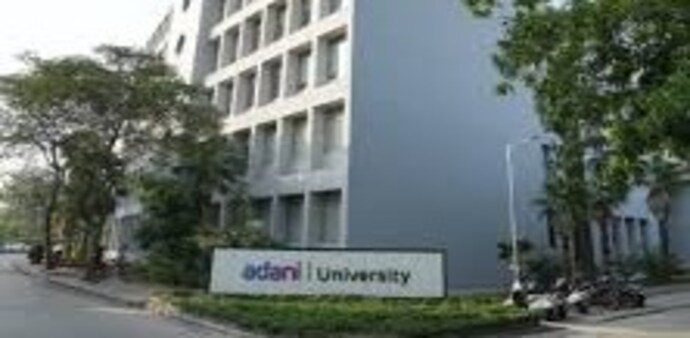
Adani University announced a major overhaul of its academic curriculum for the 2026-27 academic year, introducing AI-focused learning, expanded industry exposure and a stronger emphasis on holistic development. The revised curriculum covers programmes in Engineering, Science and Management and aims to equip students with future-ready skills while balancing technological knowledge with human values and practical experience.
AI becomes a core subject
As artificial intelligence (AI) continues to transform industries and reshape the future of work, the university has made a compulsory course titled AI for Engineers a key part of the academic redesign. The course will be offered to all Engineering and Science students and will provide a foundational understanding of AI, prompt engineering and ethical AI practices. AI concepts and applications have also been integrated across multiple disciplines to prepare students for an increasingly AI-driven workplace.
AI in MBA
The Faculty of Management Sciences has also redesigned its flagship MBA in Infrastructure Management programme. The updated curriculum includes emerging themes such as artificial intelligence, analytics, environmental, social and governance principles, and Indian Knowledge Systems. The programme will also offer sector-specific specialisations and expanded experiential learning opportunities through internships and capstone projects.
According to the university, the revised curriculum was developed after extensive benchmarking with leading academic institutions in India and abroad, along with consultations with industry experts and academicians. The changes are aligned with the National Education Policy 2020 and are aimed at enhancing employability, innovation and holistic student development.
Experiential learning
The university has also strengthened experiential learning by increasing the emphasis on project-based education, laboratory work and industry engagement. Students will undergo three structured internships during their academic journey, including community service internships after the first year, professional development internships after the second year and industry internships after the third year.
Students will also have access to more flexible learning pathways through Massive Open Online Courses (MOOCs), interdisciplinary electives and opportunities to pursue minor degrees alongside their major programmes. Emerging fields such as Robotics, VLSI Design and Financial Data Analytics have been introduced as minor specialisations.
To further enhance practical learning, the university has incorporated project-based courses developed by e-Yantra, IIT Bombay, focusing on hardware development and software programming, while Studio Learning modules have been introduced in selected programmes to encourage hands-on problem-solving from the first year itself.
Adani University announced a major overhaul of its academic curriculum for the 2026-27 academic year, introducing AI-focused learning, expanded industry exposure and a stronger emphasis on holistic development. The revised curriculum covers programmes in Engineering, Science and Management and aims to equip students with future-ready skills while balancing technological knowledge with human values and practical experience.
AI becomes a core subject
As artificial intelligence (AI) continues to transform industries and reshape the future of work, the university has made a compulsory course titled AI for Engineers a key part of the academic redesign. The course will be offered to all Engineering and Science students and will provide a foundational understanding of AI, prompt engineering and ethical AI practices. AI concepts and applications have also been integrated across multiple disciplines to prepare students for an increasingly AI-driven workplace.
AI in MBA
The Faculty of Management Sciences has also redesigned its flagship MBA in Infrastructure Management programme. The updated curriculum includes emerging themes such as artificial intelligence, analytics, environmental, social and governance principles, and Indian Knowledge Systems. The programme will also offer sector-specific specialisations and expanded experiential learning opportunities through internships and capstone projects.
According to the university, the revised curriculum was developed after extensive benchmarking with leading academic institutions in India and abroad, along with consultations with industry experts and academicians. The changes are aligned with the National Education Policy 2020 and are aimed at enhancing employability, innovation and holistic student development.
Experiential learning
The university has also strengthened experiential learning by increasing the emphasis on project-based education, laboratory work and industry engagement. Students will undergo three structured internships during their academic journey, including community service internships after the first year, professional development internships after the second year and industry internships after the third year.
Students will also have access to more flexible learning pathways through Massive Open Online Courses (MOOCs), interdisciplinary electives and opportunities to pursue minor degrees alongside their major programmes. Emerging fields such as Robotics, VLSI Design and Financial Data Analytics have been introduced as minor specialisations.
To further enhance practical learning, the university has incorporated project-based courses developed by e-Yantra, IIT Bombay, focusing on hardware development and software programming, while Studio Learning modules have been introduced in selected programmes to encourage hands-on problem-solving from the first year itself.