
'BYE BYE DIDI': How Amit Shah’s West Bengal prediction is coming true
With early trends pointing to a dramatic shift in power and putting Chief Minister Mamata Banerjee in one of the toughest political moments of her career.
- May 4, 2026,
- Updated May 4, 2026 3:43 PM IST
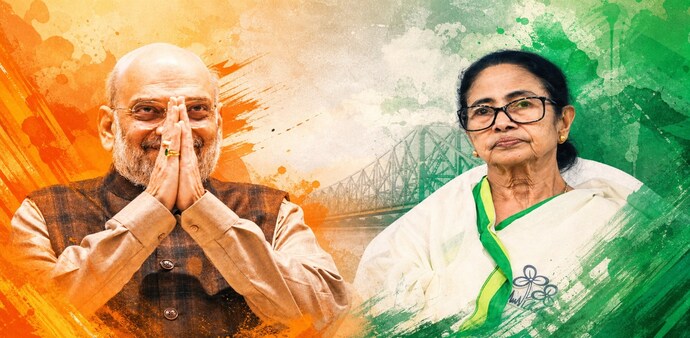
West Bengal election 2026: As counting trends today, begin to reshape the political map of West Bengal, a bold prediction made days ago by Union Home Minister Amit Shah has returned to the spotlight. What once sounded like high-voltage campaign rhetoric is now being tested against fast-changing numbers, with early trends pointing to a dramatic shift in power and putting Chief Minister Mamata Banerjee in one of the toughest political moments of her career.
Don't Miss: Ab Ki Baar Suvendu Sarkar? BJP surges ahead in West Bengal
What Amit Shah had said
Addressing a rally in Dum Dum on April 22, Amit Shah made a claim about the outcome day timeline.
"On May 4, the counting of votes will start in the morning. The ballot boxes will be opened at 8 am. The first round will be done at 9 am. The second round will be over at 10 am. The counting will end at 1 pm and Didi will be out of power… Tata, goodbye," he said.
Today, as counting progresses, that timeline is being watched almost hour by hour.
What’s happening in Bengal today
Counting began at 8 am under tight security across the state, with central forces stationed at counting centres and multiple monitoring layers in place. Early trends indicate a strong surge for the BJP, with leads coming in from both urban and semi-urban belts.
What makes this election stand out:
- High-voltage, multi-phase polling through April
- Allegations around voter rolls and electoral irregularities
- Exceptionally high voter turnout, signalling intense public engagement
All of this has turned the 2026 Bengal election into one of the most closely watched political contests in the country.
Bhabanipur: Where the battle turns personal
At the centre of today’s political drama is Bhabanipur.
Mamata Banerjee chose to contest from Bhabanipur, a seat closely tied to her political identity. Her challenger, Suvendu Adhikari, was once a key aide in her camp before switching to the BJP, turning this into one of the most closely watched face-offs of the election.
Don't Miss | ELECTIONS 2026 | WEST BENGAL RESULTS | TAMIL NADU RESULTS | KERALA RESULTS | ASSAM RESULTS | PUDUCHERRY RESULTS
Polling here took place during April under heavy security, drawing high turnout and intense campaigning from both sides. In the final stretch, Banerjee held a key meeting in the constituency, reinforcing her connection with voters, while the BJP framed the contest as a direct referendum on her leadership.
As counting unfolds, Bhabanipur is not just another seat—it is a signal of where Bengal may be heading.
BJP vs TMC: What did they promised
BJP's manifesto
Beyond the political clash, this election is also about two sharply different visions being offered to voters in West Bengal.
-₹3,000 per month to be transferred directly into the bank accounts of women
-Implementation of the 7th Pay Commission within 45 days of coming to power
-Ensuring dearness allowance for all government employees and salaried workers
Implementation of Uniform Civil Code within six months
-33% reservation for women in all state government jobs, including the police
-A “zero tolerance” policy against infiltration and a stronger law and order framework
The BJP, through its “Sankalp Patra” released by Amit Shah, has focused on governance overhaul and administrative reforms, while also promising direct financial support and structural policy changes.
TMC's manifesto
The All India Trinamool Congress has built its manifesto around welfare expansion through its “ten Protigya” or commitments, focusing on schemes that directly impact households.
-Expansion of Lakshmir Bhandar to further strengthen financial support for women
-Youth-focused schemes like Bangla Yuba-Sathi to boost employment and assistance
-Support measures for landless agricultural labourers and rural families
-A ₹30,000 crore agriculture budget aimed at strengthening the rural economy
-Assured housing and piped drinking water for every household
-Regular health camps and expansion of public healthcare services
-Upgradation of government schools and continued focus on social welfare delivery
West Bengal election 2026: As counting trends today, begin to reshape the political map of West Bengal, a bold prediction made days ago by Union Home Minister Amit Shah has returned to the spotlight. What once sounded like high-voltage campaign rhetoric is now being tested against fast-changing numbers, with early trends pointing to a dramatic shift in power and putting Chief Minister Mamata Banerjee in one of the toughest political moments of her career.
Don't Miss: Ab Ki Baar Suvendu Sarkar? BJP surges ahead in West Bengal
What Amit Shah had said
Addressing a rally in Dum Dum on April 22, Amit Shah made a claim about the outcome day timeline.
"On May 4, the counting of votes will start in the morning. The ballot boxes will be opened at 8 am. The first round will be done at 9 am. The second round will be over at 10 am. The counting will end at 1 pm and Didi will be out of power… Tata, goodbye," he said.
Today, as counting progresses, that timeline is being watched almost hour by hour.
What’s happening in Bengal today
Counting began at 8 am under tight security across the state, with central forces stationed at counting centres and multiple monitoring layers in place. Early trends indicate a strong surge for the BJP, with leads coming in from both urban and semi-urban belts.
What makes this election stand out:
- High-voltage, multi-phase polling through April
- Allegations around voter rolls and electoral irregularities
- Exceptionally high voter turnout, signalling intense public engagement
All of this has turned the 2026 Bengal election into one of the most closely watched political contests in the country.
Bhabanipur: Where the battle turns personal
At the centre of today’s political drama is Bhabanipur.
Mamata Banerjee chose to contest from Bhabanipur, a seat closely tied to her political identity. Her challenger, Suvendu Adhikari, was once a key aide in her camp before switching to the BJP, turning this into one of the most closely watched face-offs of the election.
Don't Miss | ELECTIONS 2026 | WEST BENGAL RESULTS | TAMIL NADU RESULTS | KERALA RESULTS | ASSAM RESULTS | PUDUCHERRY RESULTS
Polling here took place during April under heavy security, drawing high turnout and intense campaigning from both sides. In the final stretch, Banerjee held a key meeting in the constituency, reinforcing her connection with voters, while the BJP framed the contest as a direct referendum on her leadership.
As counting unfolds, Bhabanipur is not just another seat—it is a signal of where Bengal may be heading.
BJP vs TMC: What did they promised
BJP's manifesto
Beyond the political clash, this election is also about two sharply different visions being offered to voters in West Bengal.
-₹3,000 per month to be transferred directly into the bank accounts of women
-Implementation of the 7th Pay Commission within 45 days of coming to power
-Ensuring dearness allowance for all government employees and salaried workers
Implementation of Uniform Civil Code within six months
-33% reservation for women in all state government jobs, including the police
-A “zero tolerance” policy against infiltration and a stronger law and order framework
The BJP, through its “Sankalp Patra” released by Amit Shah, has focused on governance overhaul and administrative reforms, while also promising direct financial support and structural policy changes.
TMC's manifesto
The All India Trinamool Congress has built its manifesto around welfare expansion through its “ten Protigya” or commitments, focusing on schemes that directly impact households.
-Expansion of Lakshmir Bhandar to further strengthen financial support for women
-Youth-focused schemes like Bangla Yuba-Sathi to boost employment and assistance
-Support measures for landless agricultural labourers and rural families
-A ₹30,000 crore agriculture budget aimed at strengthening the rural economy
-Assured housing and piped drinking water for every household
-Regular health camps and expansion of public healthcare services
-Upgradation of government schools and continued focus on social welfare delivery