
India’s deep-tech startups face a new test: Crossing the valley of death
India’s deep-tech startups are moving from prototypes to commercialisation, but inadequate testing infrastructure, patient capital, procurement and supply chains threaten to widen the gap.
- Aug 21, 2026,
- Updated Aug 21, 2026 7:22 PM IST
India’s deep-tech ecosystem may finally be moving beyond the stage of proving that its engineers can build difficult technologies. The harder test now is whether these startups can survive the long, capital-intensive journey from laboratory prototypes to commercially viable products.
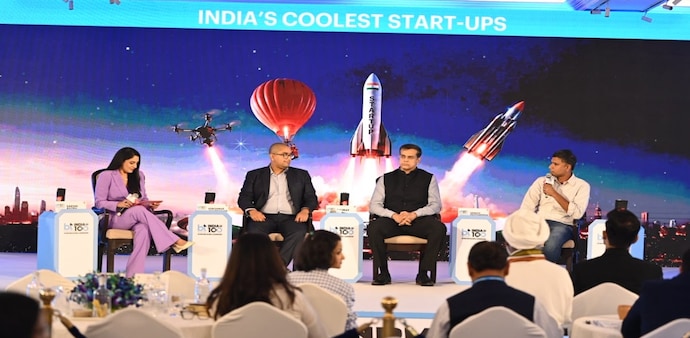
That was the central challenge that emerged from a panel discussion on India’s space and deep-tech ambitions at Business Today’s India@100 Summit, where leaders from space, propulsion and drone startups highlighted gaps in testing infrastructure, government procurement, supply chains and patient capital.
For Saurav Jha, founder and CEO of D-Propulse, the immediate challenge is helping deep-tech companies survive the middle technology-readiness levels. “The main thing is about how do you hasten testing and certification,” Jha said, arguing that government support needs to extend beyond grants to early procurement. He said the government, as an anchor customer for deep tech, should be willing to place intermittent orders and support spiral development even when a product meets only a significant portion of the requirements.
Jha also stressed that funding needs to support the infrastructure that allows companies to test and de-risk technologies. For a propulsion company, this could mean precision machining, connected test facilities and specialised equipment. Without such infrastructure, startups risk spending months waiting for access to national facilities, slowing development precisely at the stage when capital requirements are rising.
Srinath Ravichandran, co-founder and CEO of Agnikul Cosmos, pointed to a second hurdle: building a business around the technology. India has moved beyond simply developing engineering solutions, he said, but startups now need to solve business problems alongside technical ones. “Beyond a certain level of technology development, you cannot ignore business. Otherwise, this will always be a hobby part,” Ravichandran said.
For him, the gap extends to supply chains and the economics of scaling. Indian startups cannot simply replicate models developed by SpaceX or other global companies because the domestic ecosystem has different constraints. Companies need to determine how testing programmes translate into commercial returns, how supply chains should be structured and how R&D can transition into manufacturing.
Agnishwar Jayaprakash, founder and CEO of Garuda Aerospace, offered a different perspective on the capital challenge. While deep-tech companies need funding, he argued that founders also need to become less dependent on external capital. “One must start to help themselves before starting to ask for others,” Jayaprakash said, pointing to Garuda’s customer-funded approach and its efforts to take products developed and tested in India to overseas markets.
The contrasting views point to the next phase of India’s deep-tech journey. The country has increasingly built the talent and technological capability to develop rockets, propulsion systems and sophisticated drones. But getting those technologies through testing, certification, manufacturing and into the hands of paying customers will require a deeper ecosystem.
The challenge for India’s deep-tech startups, therefore, is no longer just whether they can build. It is whether they can survive long enough to test, manufacture, sell and scale what they have built.
India@2047: Blueprint for a Developed Nation
India’s deep-tech ecosystem may finally be moving beyond the stage of proving that its engineers can build difficult technologies. The harder test now is whether these startups can survive the long, capital-intensive journey from laboratory prototypes to commercially viable products.
That was the central challenge that emerged from a panel discussion on India’s space and deep-tech ambitions at Business Today’s India@100 Summit, where leaders from space, propulsion and drone startups highlighted gaps in testing infrastructure, government procurement, supply chains and patient capital.
For Saurav Jha, founder and CEO of D-Propulse, the immediate challenge is helping deep-tech companies survive the middle technology-readiness levels. “The main thing is about how do you hasten testing and certification,” Jha said, arguing that government support needs to extend beyond grants to early procurement. He said the government, as an anchor customer for deep tech, should be willing to place intermittent orders and support spiral development even when a product meets only a significant portion of the requirements.
Jha also stressed that funding needs to support the infrastructure that allows companies to test and de-risk technologies. For a propulsion company, this could mean precision machining, connected test facilities and specialised equipment. Without such infrastructure, startups risk spending months waiting for access to national facilities, slowing development precisely at the stage when capital requirements are rising.
Srinath Ravichandran, co-founder and CEO of Agnikul Cosmos, pointed to a second hurdle: building a business around the technology. India has moved beyond simply developing engineering solutions, he said, but startups now need to solve business problems alongside technical ones. “Beyond a certain level of technology development, you cannot ignore business. Otherwise, this will always be a hobby part,” Ravichandran said.
For him, the gap extends to supply chains and the economics of scaling. Indian startups cannot simply replicate models developed by SpaceX or other global companies because the domestic ecosystem has different constraints. Companies need to determine how testing programmes translate into commercial returns, how supply chains should be structured and how R&D can transition into manufacturing.
Agnishwar Jayaprakash, founder and CEO of Garuda Aerospace, offered a different perspective on the capital challenge. While deep-tech companies need funding, he argued that founders also need to become less dependent on external capital. “One must start to help themselves before starting to ask for others,” Jayaprakash said, pointing to Garuda’s customer-funded approach and its efforts to take products developed and tested in India to overseas markets.
The contrasting views point to the next phase of India’s deep-tech journey. The country has increasingly built the talent and technological capability to develop rockets, propulsion systems and sophisticated drones. But getting those technologies through testing, certification, manufacturing and into the hands of paying customers will require a deeper ecosystem.
The challenge for India’s deep-tech startups, therefore, is no longer just whether they can build. It is whether they can survive long enough to test, manufacture, sell and scale what they have built.
India@2047: Blueprint for a Developed Nation