
'We do not censor content': MeitY Secretary S Krishnan breaks down India's social media blocking framework
On blocking online content, Krishnan said that government-ordered content removals are only one part of the overall takedown, as the majority of content removals happen from the social media front.
- Aug 21, 2026,
- Updated Aug 21, 2026 8:37 PM IST
Recently, social media platforms like Meta’s Facebook, Instagram, and other platforms have created concerns over their impact on users. However, S Krishnan, Secretary, Ministry of Electronics and Information Technology, states that the concerns and anxieties are not India-specific. He highlighted that “every major democracy in the world” is facing similar challenges.
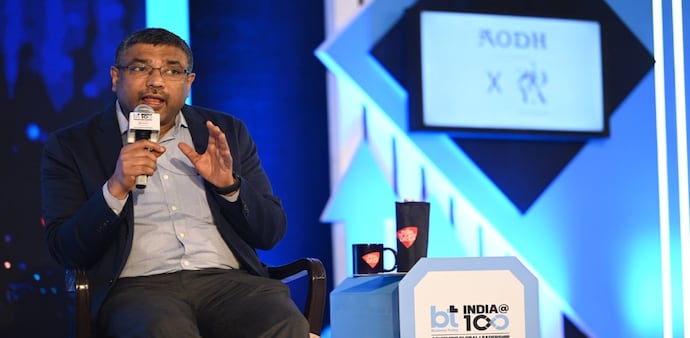
Speaking at Business Today's India@100 event, Krishnan highlighted that other nations have taken note of India's approach. “In some of our conversations with the EU, they are quite impressed with the kind of legal framework that we actually have in India,” he said, adding that the government has “been very thoughtful” in how it exercises its powers.
Government-ordered content blocking happens on four grounds
On blocking online content, Krishnan said that government-ordered content removals are only one part of the overall takedown, as the majority of content removals happen because platforms themselves decide that the content violates their rules.
The official said the power available under Section 69A of the Information Technology Act is used only in specific circumstances. The section allows the government to block on four broad grounds: security of the state, defence of India, public order, and friendly relations with foreign countries. “It is very, very sparingly used, with a great deal of restraint. It's not my view that this is obscene. I have to establish that it falls within one of these grounds,” he added.
99% of removals happen under platform rules
Krishnan highlighted that the majority of takedown requests and content is removed directly by social media platforms. “99%, or more than 99% of the takedowns, actually happen on the basis of the community guidelines of the various social media companies themselves,” he said.
What happens when unlawful content is flagged?
Under India's legal framework, Krishnan explained that an authorised government agency or official can send a notice to social media platforms when content is believed to violate Indian law.
He also revealed that the government can send a notice to a social media platform saying that the person who posted the content may face criminal charges. In addition, the platform could also face legal consequences itself if it does not take action against the content. Krishnan also talks about Section 79 of the IT Act, which provides intermediaries with safe-harbour protection from liability for third-party content.
Therefore, it's up to the platform to remove the content or potentially face legal consequences under the applicable law.
Social media platforms need to understand India’s cultural context
Krishnan argued that global social media companies cannot rely solely on a universal content-moderation system when dealing with diverse countries like India. Platforms need to understand India's cultural and linguistic context, particularly when content involves violence, sexual abuse or other forms of harm that may not be immediately apparent from a purely visual assessment.
“Social media platforms need to be alert to the cultural and linguistic context of respective states.”
“They can't say, ‘We didn't see frontal nudity in this particular content, and therefore, we didn't take it down,’ without realising that it is an act of sexual assault or violence,” he added.
Watch the full conversation here
India@2047: Blueprint for a Developed Nation
Recently, social media platforms like Meta’s Facebook, Instagram, and other platforms have created concerns over their impact on users. However, S Krishnan, Secretary, Ministry of Electronics and Information Technology, states that the concerns and anxieties are not India-specific. He highlighted that “every major democracy in the world” is facing similar challenges.
Speaking at Business Today's India@100 event, Krishnan highlighted that other nations have taken note of India's approach. “In some of our conversations with the EU, they are quite impressed with the kind of legal framework that we actually have in India,” he said, adding that the government has “been very thoughtful” in how it exercises its powers.
Government-ordered content blocking happens on four grounds
On blocking online content, Krishnan said that government-ordered content removals are only one part of the overall takedown, as the majority of content removals happen because platforms themselves decide that the content violates their rules.
The official said the power available under Section 69A of the Information Technology Act is used only in specific circumstances. The section allows the government to block on four broad grounds: security of the state, defence of India, public order, and friendly relations with foreign countries. “It is very, very sparingly used, with a great deal of restraint. It's not my view that this is obscene. I have to establish that it falls within one of these grounds,” he added.
99% of removals happen under platform rules
Krishnan highlighted that the majority of takedown requests and content is removed directly by social media platforms. “99%, or more than 99% of the takedowns, actually happen on the basis of the community guidelines of the various social media companies themselves,” he said.
What happens when unlawful content is flagged?
Under India's legal framework, Krishnan explained that an authorised government agency or official can send a notice to social media platforms when content is believed to violate Indian law.
He also revealed that the government can send a notice to a social media platform saying that the person who posted the content may face criminal charges. In addition, the platform could also face legal consequences itself if it does not take action against the content. Krishnan also talks about Section 79 of the IT Act, which provides intermediaries with safe-harbour protection from liability for third-party content.
Therefore, it's up to the platform to remove the content or potentially face legal consequences under the applicable law.
Social media platforms need to understand India’s cultural context
Krishnan argued that global social media companies cannot rely solely on a universal content-moderation system when dealing with diverse countries like India. Platforms need to understand India's cultural and linguistic context, particularly when content involves violence, sexual abuse or other forms of harm that may not be immediately apparent from a purely visual assessment.
“Social media platforms need to be alert to the cultural and linguistic context of respective states.”
“They can't say, ‘We didn't see frontal nudity in this particular content, and therefore, we didn't take it down,’ without realising that it is an act of sexual assault or violence,” he added.
Watch the full conversation here
India@2047: Blueprint for a Developed Nation