
Supreme Court flags social media platforms over POCSO reporting compliance, seeks Centre’s response
The Supreme Court has sought the Centre’s response over allegations that social media platforms are failing to meet mandatory POCSO reporting requirements while handling child sexual abuse material.
- Aug 17, 2026,
- Updated Aug 17, 2026 12:06 PM IST
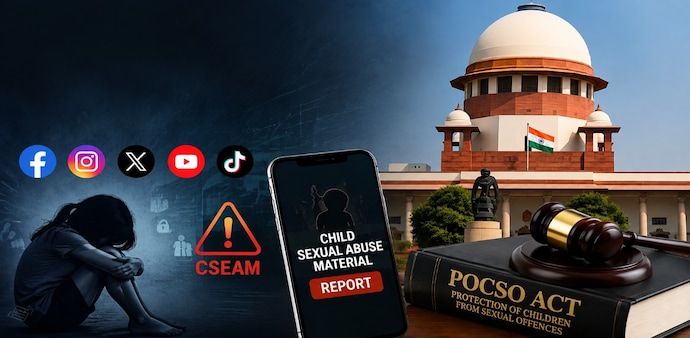
Social media platforms could face closer scrutiny over how they handle child sexual exploitative and abuse material (CSEAM) after the Supreme Court raised concerns about their compliance with mandatory reporting requirements under the Protection of Children from Sexual Offences (POCSO) Act.
The court was hearing an application alleging that some platforms report CSEAM cases to the US-based National Center for Missing & Exploited Children (NCMEC), but do not directly report them to the Special Juvenile Police Unit (SJPU) or local police, as required under Indian law.
What is the concern over social media platforms?
The plea has raised questions about whether platforms are following the reporting process prescribed under POCSO when they detect CSEAM on their services. It alleges that relying on reporting mechanisms outside India may not fulfil the platforms’ legal obligations to Indian authorities.
Must Read: X reveals what makes posts go viral, and likes are not the biggest factor
The application has sought criminal action against intermediaries that fail to comply with mandatory POCSO reporting requirements. It has also called for a uniform standard operating procedure (SOP) covering the detection of CSEAM, reporting of cases, preservation of digital evidence and sharing of relevant IP details with investigating agencies.
The petitioners have further sought the prompt inclusion of people involved in CSEAM cases in the National Database of Sexual Offenders, wherever legally applicable.
Supreme Court’s earlier ruling on intermediary responsibility
The concerns come against the backdrop of a 2024 Supreme Court ruling on the responsibilities of intermediaries in cases involving child sexual abuse.
Must Read: Meta under NHRC scanner over ‘paid promotion’ of adult content; Report
The court had held that intermediaries must comply with due diligence requirements to claim safe-harbour protection under the Information Technology Act. It also said that POCSO requires intermediaries to report child sexual abuse cases to the SJPU, local police or the designated cyber-crime reporting mechanism.
The court had further clarified that intermediaries cannot rely on IT Act safe-harbour protection if they fail to meet mandatory POCSO reporting obligations. It also observed that POCSO would prevail in case of any inconsistency with other laws.
What happens next?
The Supreme Court has allowed the petitioners to implead the Ministry of Electronics and Information Technology (MeitY) and the Ministry of Law and Justice as parties. It has directed both ministries to respond to the concerns raised over the alleged violations by social media intermediaries.
The plea also seeks a centralised online portal through which intermediaries can report CSEAM and securely share digital evidence with Indian authorities.
The court scheduled the next hearing for September 24, 2026, instructing the Centre to submit its counter-affidavit two weeks prior.
For Unparalleled coverage of India's Businesses and Economy – Subscribe to Business Today Magazine
Social media platforms could face closer scrutiny over how they handle child sexual exploitative and abuse material (CSEAM) after the Supreme Court raised concerns about their compliance with mandatory reporting requirements under the Protection of Children from Sexual Offences (POCSO) Act.
The court was hearing an application alleging that some platforms report CSEAM cases to the US-based National Center for Missing & Exploited Children (NCMEC), but do not directly report them to the Special Juvenile Police Unit (SJPU) or local police, as required under Indian law.
What is the concern over social media platforms?
The plea has raised questions about whether platforms are following the reporting process prescribed under POCSO when they detect CSEAM on their services. It alleges that relying on reporting mechanisms outside India may not fulfil the platforms’ legal obligations to Indian authorities.
Must Read: X reveals what makes posts go viral, and likes are not the biggest factor
The application has sought criminal action against intermediaries that fail to comply with mandatory POCSO reporting requirements. It has also called for a uniform standard operating procedure (SOP) covering the detection of CSEAM, reporting of cases, preservation of digital evidence and sharing of relevant IP details with investigating agencies.
The petitioners have further sought the prompt inclusion of people involved in CSEAM cases in the National Database of Sexual Offenders, wherever legally applicable.
Supreme Court’s earlier ruling on intermediary responsibility
The concerns come against the backdrop of a 2024 Supreme Court ruling on the responsibilities of intermediaries in cases involving child sexual abuse.
Must Read: Meta under NHRC scanner over ‘paid promotion’ of adult content; Report
The court had held that intermediaries must comply with due diligence requirements to claim safe-harbour protection under the Information Technology Act. It also said that POCSO requires intermediaries to report child sexual abuse cases to the SJPU, local police or the designated cyber-crime reporting mechanism.
The court had further clarified that intermediaries cannot rely on IT Act safe-harbour protection if they fail to meet mandatory POCSO reporting obligations. It also observed that POCSO would prevail in case of any inconsistency with other laws.
What happens next?
The Supreme Court has allowed the petitioners to implead the Ministry of Electronics and Information Technology (MeitY) and the Ministry of Law and Justice as parties. It has directed both ministries to respond to the concerns raised over the alleged violations by social media intermediaries.
The plea also seeks a centralised online portal through which intermediaries can report CSEAM and securely share digital evidence with Indian authorities.
The court scheduled the next hearing for September 24, 2026, instructing the Centre to submit its counter-affidavit two weeks prior.
For Unparalleled coverage of India's Businesses and Economy – Subscribe to Business Today Magazine