
'2 hours for 17 kms’: Bengaluru founder shares image of empty desks, blames traffic snarls
A LinkedIn post by Bala Panneerselvam has sparked a wider conversation about Bengaluru’s traffic crisis and its impact on the city’s workforce
- Aug 20, 2026,
- Updated Aug 20, 2026 9:30 AM IST
Bengaluru’s notorious traffic is once again at the centre of a workplace debate after a LinkedIn post highlighted how daily commuting is affecting employee productivity, energy and work-life balance.
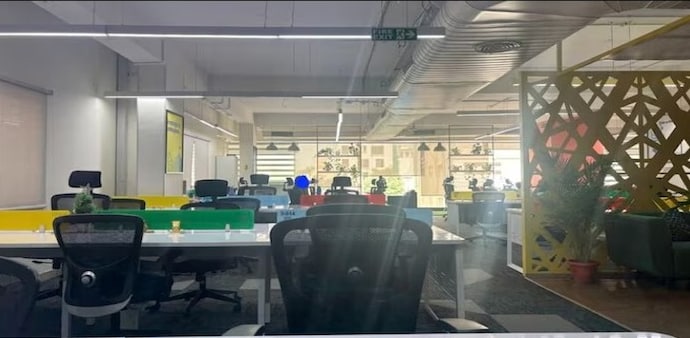
A LinkedIn post by Bala Panneerselvam has sparked a wider conversation about Bengaluru’s traffic crisis and its impact on the city’s workforce. Sharing a picture of an office around 10:15 am, Panneerselvam questioned how companies can expect employees to perform at their best when reaching the workplace itself has become a daily struggle.
‘How do we expect to do good work if we don’t show up?’
Panneerselvam argued that the issue is not simply about employees arriving late. According to him, the bigger problem is the amount of effort and energy workers have to spend just to reach their offices.
He cited the example of a 4-km journey around Bengaluru’s HSR area, saying the distance can take about 20 minutes on a scooter and around 30 minutes by car. During peak hours, another 10 minutes can be added to the journey.
The situation becomes even more difficult in the evening. Leaving work after 6 pm can reportedly double the travel time, leaving employees exhausted by the time they reach home.
17 km journey took two hours
Panneerselvam also shared a personal experience to underline the scale of the problem. He said a 17-km journey from Whitefield to HSR took him two hours at around 4 pm, despite it being a non-peak period and without rain or any other major disruption.
DON'T MISS: Bengaluru engineer builds AI system that detects potholes and prepares complaints
The long commute, he argued, does more than waste hours. It leaves people mentally and physically drained, affecting their ability to concentrate, think creatively and maintain a healthy personal life.
“If you're so overwhelmed with noise all around you, how do you spend time thinking?” he wrote in the post.
Calls for better public transport and cycling infrastructure
Panneerselvam later suggested that the solutions are relatively straightforward, although difficult to implement.
He called for fewer cars on the roads, better public transport and dedicated cycling infrastructure. He also suggested creating cycle-only lanes through narrow parts of Bengaluru to reduce congestion and make short-distance commuting easier.
He argued that buses, trucks and cabs should not be allowed to further crowd already congested roads without adequate infrastructure being created first.
ALSO READ: Onam gift for Kerala: Bengaluru-Ernakulam Vande Bharat adds 8 coaches, doubles capacity
Social media reactions
The post quickly attracted reactions from professionals, with some agreeing that Bengaluru's infrastructure is causing significant productivity losses, while others questioned whether office attendance itself should be treated as a measure of productivity.
One user wrote, "Corporates should try to build centres in tier2 cities like Kochi in KL / Coimbatore or Hosur in TN or Mysuru in KA. South India has so much talent pool, and this is triggering reverse migration from Bangalore to Tier-2 cities"
Another user wrote, "Bala, it would be a great example for you to lead by encouraging employees to work from home when it's not essential for them to be in the office. Infrastructure failures are obvious, but the empathy for bringing the change (eg., taking public commute despite having the solace of a car) is still a people problem. The change starts with you."
A third user wrote, "The real commute boss isn't the distance or the traffic—it's arriving at the office so exhausted that your main contribution to the morning standup is staring blankly at the wall and questioning your life choices."