
‘35 by 35’: World Bank’s solutions for tackling air pollution crisis
Sets out a road map for reducing annual average PM2.5 concentrations below 35 µg/m³ by 2035 across the Indo-Gangetic Plains and Himalayan Foothills region
- Dec 17, 2025,
- Updated Dec 17, 2025 4:54 PM IST
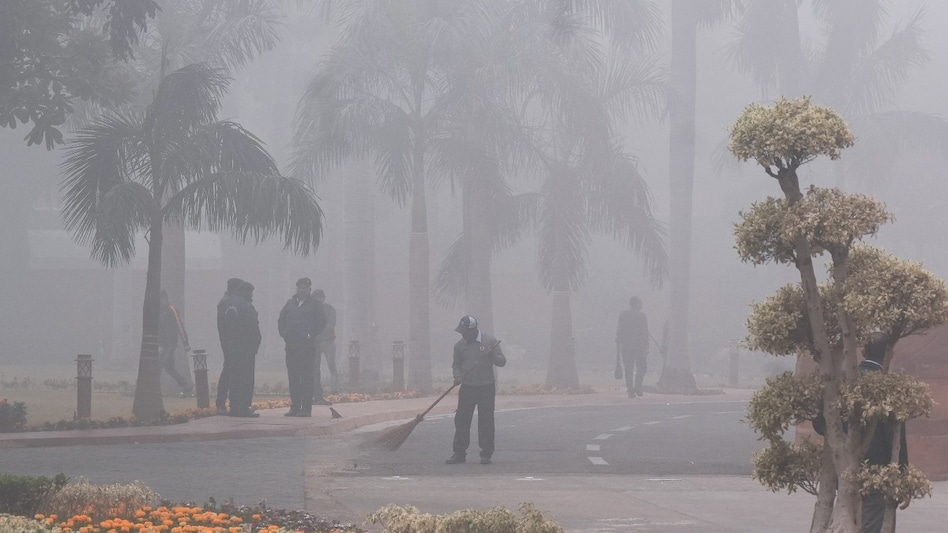
With toxic air pollution in the National Capital Region, a new World Bank report has highlighted a portfolio of interventions that could help tackle the crisis across the Indo-Gangetic Plains and Himalayan Foothills.
The report, titled A Breath of Change: Solutions for Cleaner Air in the Indo-Gangetic Plains and Himalayan Foothills, sets out a road map for reducing annual average PM2.5 concentrations below 35 µg/m³ by 2035 or ‘35 by 35’ across the region while laying the foundation for progressively cleaner air.
“International experience shows that rapid and sustained improvements can be achieved when governments commit to ambitious targets and back them with action,” it said, pointing out that China cut PM2.5 concentrations in the Jing-Jin-Ji region (comprising Beijing, Tianjin, and Hebei) by more than 30% in just five years through significant multi-sectoral actions, and strong enforcement. Beijing, the region’s core city and political anchor, reduced air pollution by half in a decade. Similarly, Mexico City was once amongst the most polluted cities in the world but succeeded in almost halving air pollution, by adopting an airshed governance approach, transforming its transport system, tightening vehicle standards, and relocating heavy industry.
It groups clean-air solutions into three mutually reinforcing core areas. First, abatement solutions that reduce emissions at their source in cooking, industry, transport, agriculture, and waste management. Second, protection measures that strengthen health and education systems, so children and vulnerable communities are safeguarded during the transition to clean air. Third, strong institutions supported by regulatory frameworks, market-based instruments, and regional coordination that sustain multi-sector and multi-jurisdictional progress over time.
Suggested interventions include scaling up access to clean cooking fuels and appliances; electrifying and modernising industrial boilers, furnaces, kilns and thermal power plants; accelerating the transition to electric and efficient vehicles alongside improvements in fuel quality, and strengthening of non-motorized transport in the transport sector; promoting sustainable agricultural crop residue, livestock manure and fertilizer management; and improving waste collection, segregation, and recycling.
Air pollution in the Indo-Gangetic Plains and Himalayan Foothills (IGP-HF)—which comprises parts of Bangladesh, Bhutan, India, Nepal, and Pakistan—comes from five key sources, it noted, adding that these include households burning solid fuels for cooking and heating, industries burning fossil fuels and biomass inefficiently and without appropriate filter technology, motorists using inefficient internal combustion vehicles, farmers burning crop residues and inefficiently managing fertilizers and manure, and households and firms burning waste.
“As air flows freely across administrative and national borders, no jurisdiction can achieve clean air on its own. In many jurisdictions, more than half of ambient PM2.5 concentrations originate outside local boundaries, carried by regional pollutants,” it said, adding that this underscores the need for coordinated action across sectors and jurisdictions—linking national policies with subnational implementation and cross-border cooperation.
With toxic air pollution in the National Capital Region, a new World Bank report has highlighted a portfolio of interventions that could help tackle the crisis across the Indo-Gangetic Plains and Himalayan Foothills.
The report, titled A Breath of Change: Solutions for Cleaner Air in the Indo-Gangetic Plains and Himalayan Foothills, sets out a road map for reducing annual average PM2.5 concentrations below 35 µg/m³ by 2035 or ‘35 by 35’ across the region while laying the foundation for progressively cleaner air.
“International experience shows that rapid and sustained improvements can be achieved when governments commit to ambitious targets and back them with action,” it said, pointing out that China cut PM2.5 concentrations in the Jing-Jin-Ji region (comprising Beijing, Tianjin, and Hebei) by more than 30% in just five years through significant multi-sectoral actions, and strong enforcement. Beijing, the region’s core city and political anchor, reduced air pollution by half in a decade. Similarly, Mexico City was once amongst the most polluted cities in the world but succeeded in almost halving air pollution, by adopting an airshed governance approach, transforming its transport system, tightening vehicle standards, and relocating heavy industry.
It groups clean-air solutions into three mutually reinforcing core areas. First, abatement solutions that reduce emissions at their source in cooking, industry, transport, agriculture, and waste management. Second, protection measures that strengthen health and education systems, so children and vulnerable communities are safeguarded during the transition to clean air. Third, strong institutions supported by regulatory frameworks, market-based instruments, and regional coordination that sustain multi-sector and multi-jurisdictional progress over time.
Suggested interventions include scaling up access to clean cooking fuels and appliances; electrifying and modernising industrial boilers, furnaces, kilns and thermal power plants; accelerating the transition to electric and efficient vehicles alongside improvements in fuel quality, and strengthening of non-motorized transport in the transport sector; promoting sustainable agricultural crop residue, livestock manure and fertilizer management; and improving waste collection, segregation, and recycling.
Air pollution in the Indo-Gangetic Plains and Himalayan Foothills (IGP-HF)—which comprises parts of Bangladesh, Bhutan, India, Nepal, and Pakistan—comes from five key sources, it noted, adding that these include households burning solid fuels for cooking and heating, industries burning fossil fuels and biomass inefficiently and without appropriate filter technology, motorists using inefficient internal combustion vehicles, farmers burning crop residues and inefficiently managing fertilizers and manure, and households and firms burning waste.
“As air flows freely across administrative and national borders, no jurisdiction can achieve clean air on its own. In many jurisdictions, more than half of ambient PM2.5 concentrations originate outside local boundaries, carried by regional pollutants,” it said, adding that this underscores the need for coordinated action across sectors and jurisdictions—linking national policies with subnational implementation and cross-border cooperation.