
A ₹1,50,000 stove that runs on water: India’s new bet on hydrogen cooking
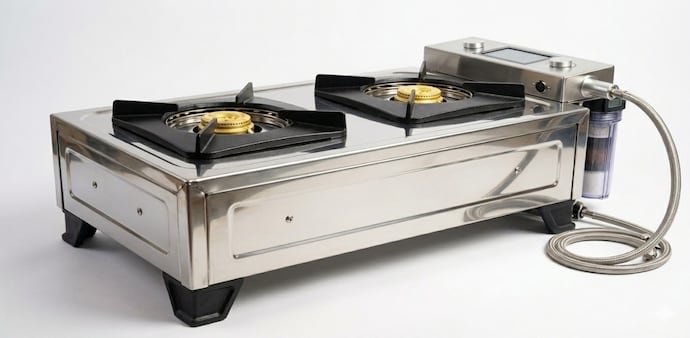
The stove is said to run entirely on green hydrogen and comes with two burners. Unlike conventional systems, it includes a small internal electrolyser unit that converts water into hydrogen gas, which is then used as fuel.
- Apr 14, 2026,
- Updated Apr 14, 2026 8:30 AM IST
As India looks for alternatives amid ongoing LPG concerns, a new innovation is drawing attention for rethinking how everyday cooking works. An Indian firm has introduced a hydrogen-powered cooking stove that runs without LPG, using water as its core fuel source.
According to a report by Times of India, the plug-and-play hydrogen stove, currently in its early stages, is priced at ₹1,50,000 per unit and is reported to operate on green hydrogen. Designed for both home and commercial use, the Made-in-India device is being seen as a possible solution as interest in alternative cooking methods grows across states facing LPG challenges.
What makes the hydrogen stove different
The stove is said to run entirely on green hydrogen and comes with two burners. Unlike conventional systems, it includes a small internal electrolyser unit that converts water into hydrogen gas, which is then used as fuel. Developed by a firm called GreenVize, the setup uses a Proton Exchange Membrane (PEM) electrolyser built into the stove, allowing hydrogen production directly at the point of use rather than relying on pipelines, According to a PV magazine report cited by Times of India.
Each unit reportedly needs just 100 ml of distilled water or RO water and consumes 1 kWh of electricity to run for up to six hours of cooking.
Efficiency compared to existing options
While both induction stoves and the GreenVize hydrogen system rely on electricity, their efficiency and usability differ.
Induction stoves generally use around 1.5 to 2 kW per burner, whereas the hydrogen stove operates at about 1 kW. Another advantage is flexibility, as it works with any pots, unlike induction systems that require specific cookware.
How the hydrogen stove works
According to experts, the stove uses a catalytic hydrogen burner. Hydrogen acts as the primary fuel, enabling controlled, low-flame or near-flameless cooking. Unlike LPG stoves, it does not depend on stored gas cylinders. Instead, it produces hydrogen on demand and uses it immediately for cooking.
Environmental impact
The stove is being highlighted as an eco-friendly option. It produces zero emissions, meaning no CO₂ or carbon monoxide, and does not release visible smoke. It also operates quietly without vibration, making it suitable for indoor environments where clean air is important. Reports note that only water vapour is released as a by-product.
Use beyond households
While the stove can be used in home kitchens, its current focus is broader. It is being tested for community kitchens, canteens, government clean-energy projects, and institutional and industrial kitchens.
Cost and practicality
At around ₹1,50,000 per unit, the hydrogen stove is not yet aimed at everyday household use. Instead, it is positioned as a pilot project for larger kitchens. While it may not replace LPG in homes immediately, it signals a shift toward new and cleaner cooking technologies.
As India looks for alternatives amid ongoing LPG concerns, a new innovation is drawing attention for rethinking how everyday cooking works. An Indian firm has introduced a hydrogen-powered cooking stove that runs without LPG, using water as its core fuel source.
According to a report by Times of India, the plug-and-play hydrogen stove, currently in its early stages, is priced at ₹1,50,000 per unit and is reported to operate on green hydrogen. Designed for both home and commercial use, the Made-in-India device is being seen as a possible solution as interest in alternative cooking methods grows across states facing LPG challenges.
What makes the hydrogen stove different
The stove is said to run entirely on green hydrogen and comes with two burners. Unlike conventional systems, it includes a small internal electrolyser unit that converts water into hydrogen gas, which is then used as fuel. Developed by a firm called GreenVize, the setup uses a Proton Exchange Membrane (PEM) electrolyser built into the stove, allowing hydrogen production directly at the point of use rather than relying on pipelines, According to a PV magazine report cited by Times of India.
Each unit reportedly needs just 100 ml of distilled water or RO water and consumes 1 kWh of electricity to run for up to six hours of cooking.
Efficiency compared to existing options
While both induction stoves and the GreenVize hydrogen system rely on electricity, their efficiency and usability differ.
Induction stoves generally use around 1.5 to 2 kW per burner, whereas the hydrogen stove operates at about 1 kW. Another advantage is flexibility, as it works with any pots, unlike induction systems that require specific cookware.
How the hydrogen stove works
According to experts, the stove uses a catalytic hydrogen burner. Hydrogen acts as the primary fuel, enabling controlled, low-flame or near-flameless cooking. Unlike LPG stoves, it does not depend on stored gas cylinders. Instead, it produces hydrogen on demand and uses it immediately for cooking.
Environmental impact
The stove is being highlighted as an eco-friendly option. It produces zero emissions, meaning no CO₂ or carbon monoxide, and does not release visible smoke. It also operates quietly without vibration, making it suitable for indoor environments where clean air is important. Reports note that only water vapour is released as a by-product.
Use beyond households
While the stove can be used in home kitchens, its current focus is broader. It is being tested for community kitchens, canteens, government clean-energy projects, and institutional and industrial kitchens.
Cost and practicality
At around ₹1,50,000 per unit, the hydrogen stove is not yet aimed at everyday household use. Instead, it is positioned as a pilot project for larger kitchens. While it may not replace LPG in homes immediately, it signals a shift toward new and cleaner cooking technologies.