
Amid LPG woes, can a mini gobar gas plant be the savior for Indians?
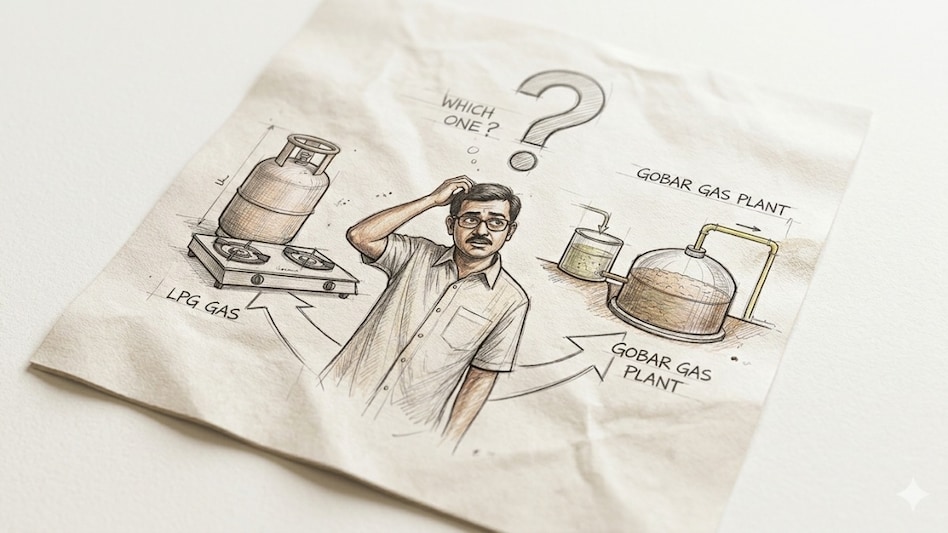
Once dismissed as a rural relic, these compact, odourless units are now viewed as high-tech tools for energy independence, allowing families to bypass the volatile LPG market by converting organic waste into clean fuel.
Mehak Agarwal
- Mar 19, 2026,
- Updated Mar 19, 2026 2:39 PM IST
Frustrated by rising costs and frequent supply shortages, many Indian households are turning to mini gobar gas plants as a reliable, self-sustaining alternative. Once dismissed as a rural relic, these compact, odourless units are now viewed as high-tech tools for energy independence, allowing families to bypass the volatile LPG market by converting organic waste into clean fuel.
Advertisement
How can it replace the traditional cylinder?
Unlike a 14.2kg LPG cylinder that stores compressed gas for a month, a biogas plant generates a continuous daily supply through anaerobic digestion.
- Energy Output: A standard LPG cylinder provides roughly 170,000 kcal per month. To match this daily, a 1-cubic-meter digester requires 2.5–3 kg of organic waste (kitchen scraps or dung slurry). This produces 2–3 hours of high-intensity cooking time, sufficient for a small family.
- Stove Compatibility: Biogas has a lower pressure and different calorific value than LPG. To use your existing stove, the "jet" (the small aperture) must be slightly enlarged to increase gas flow.
- Storage: Instead of a heavy steel tank, gas is stored in a flexible bag or floating drum. Feeding the unit in the morning inflates the bag, providing ready fuel for evening meals.
How does gobar gas lead to savings?
Advertisement
Switching to gobar gas eliminates dependence on distributors and global oil prices. After the initial setup, fuel costs are zero. Additionally, the byproduct is a nutrient-rich liquid fertiliser, allowing households to save further by replacing chemical fertilizers in their gardens.
Mini gobar gas plant prices
Portable biogas plant prices in India vary across platforms, offering options for different budgets. On Amazon, home biogas digesters are priced between ₹8,000 and ₹20,000 for small-capacity units, making them accessible for households.
On IndiaMART, prices range from around ₹21,000 to ₹60,000 depending on size and usage. These systems convert kitchen waste into cooking gas and organic fertilizer, making them an eco-friendly alternative to LPG and a growing choice for sustainable living in India.
Advertisement
How to set up a mini gobar gas plant?
- Choose a flat, sunny spot near your kitchen or a garden as microbes need temperatures around 30-40ºC to thrive.
- Drill holes for the inlet (pipe to feed waste) and outlet (overflow pipe) on the barrel.
- Connect the inlet pipe and outlet pipe to the drum. Seal all joints carefully with a waterproof adhesive to prevent leaks.
- Fix a valve at the top of the drum to manage the gas flow to your kitchen.
- Mix fresh cow dung and water into a 1:1 ratio to create a thin slurry. Fill the digester about 75-80 per cent full, leaving space for gas at the top.
- Allow the mix to sit for 7-15 days, allowing bacteria to activate. The gas produced at this time may not be flammable.
- After the initial period, feed the plant daily with 3kg of organic waste mixed with 7 litres of water.
- Attack a gas pipe to the outlet valve. A standard gas stove can be adjusted to burn biogas.
How to maintain a mini gobar gas plant?
Advertisement
- Use a simple water filler or iron fillings to remove moisture and hydrogen sulfide.
- The process will fail if oxygen enters the digester; ensure the unit remains sealed.
- Keep the plant in a well-ventilated area away from open flames.
Does government provide subsidies to set up a mini gobar gas plant?
The government encourages this shift through Central Finance Assistance (CFA). Subsidies range from ₹9,800 to over ₹70,000, depending on plant size. Higher amounts are available for the North East Region (NER), SC/ST categories, and gaushalas.
How to apply for the Gobar Gas Plant subsidy?
Applications can be submitted via the Biogas/CBG/Bio CNG portal on the National Portal of India. Most schemes require a 5-year guarantee from the construction agency. Furthermore, the Union Budget 2026-27 recently announced excise duty exemptions to further boost biogas adoption.
Frustrated by rising costs and frequent supply shortages, many Indian households are turning to mini gobar gas plants as a reliable, self-sustaining alternative. Once dismissed as a rural relic, these compact, odourless units are now viewed as high-tech tools for energy independence, allowing families to bypass the volatile LPG market by converting organic waste into clean fuel.
Advertisement
How can it replace the traditional cylinder?
Unlike a 14.2kg LPG cylinder that stores compressed gas for a month, a biogas plant generates a continuous daily supply through anaerobic digestion.
- Energy Output: A standard LPG cylinder provides roughly 170,000 kcal per month. To match this daily, a 1-cubic-meter digester requires 2.5–3 kg of organic waste (kitchen scraps or dung slurry). This produces 2–3 hours of high-intensity cooking time, sufficient for a small family.
- Stove Compatibility: Biogas has a lower pressure and different calorific value than LPG. To use your existing stove, the "jet" (the small aperture) must be slightly enlarged to increase gas flow.
- Storage: Instead of a heavy steel tank, gas is stored in a flexible bag or floating drum. Feeding the unit in the morning inflates the bag, providing ready fuel for evening meals.
How does gobar gas lead to savings?
Advertisement
Switching to gobar gas eliminates dependence on distributors and global oil prices. After the initial setup, fuel costs are zero. Additionally, the byproduct is a nutrient-rich liquid fertiliser, allowing households to save further by replacing chemical fertilizers in their gardens.
Mini gobar gas plant prices
Portable biogas plant prices in India vary across platforms, offering options for different budgets. On Amazon, home biogas digesters are priced between ₹8,000 and ₹20,000 for small-capacity units, making them accessible for households.
On IndiaMART, prices range from around ₹21,000 to ₹60,000 depending on size and usage. These systems convert kitchen waste into cooking gas and organic fertilizer, making them an eco-friendly alternative to LPG and a growing choice for sustainable living in India.
Advertisement
How to set up a mini gobar gas plant?
- Choose a flat, sunny spot near your kitchen or a garden as microbes need temperatures around 30-40ºC to thrive.
- Drill holes for the inlet (pipe to feed waste) and outlet (overflow pipe) on the barrel.
- Connect the inlet pipe and outlet pipe to the drum. Seal all joints carefully with a waterproof adhesive to prevent leaks.
- Fix a valve at the top of the drum to manage the gas flow to your kitchen.
- Mix fresh cow dung and water into a 1:1 ratio to create a thin slurry. Fill the digester about 75-80 per cent full, leaving space for gas at the top.
- Allow the mix to sit for 7-15 days, allowing bacteria to activate. The gas produced at this time may not be flammable.
- After the initial period, feed the plant daily with 3kg of organic waste mixed with 7 litres of water.
- Attack a gas pipe to the outlet valve. A standard gas stove can be adjusted to burn biogas.
How to maintain a mini gobar gas plant?
Advertisement
- Use a simple water filler or iron fillings to remove moisture and hydrogen sulfide.
- The process will fail if oxygen enters the digester; ensure the unit remains sealed.
- Keep the plant in a well-ventilated area away from open flames.
Does government provide subsidies to set up a mini gobar gas plant?
The government encourages this shift through Central Finance Assistance (CFA). Subsidies range from ₹9,800 to over ₹70,000, depending on plant size. Higher amounts are available for the North East Region (NER), SC/ST categories, and gaushalas.
How to apply for the Gobar Gas Plant subsidy?
Applications can be submitted via the Biogas/CBG/Bio CNG portal on the National Portal of India. Most schemes require a 5-year guarantee from the construction agency. Furthermore, the Union Budget 2026-27 recently announced excise duty exemptions to further boost biogas adoption.
Read more!