
'BSNL belongs to people of India, no plans for privatisation': Jyotiraditya Scindia in Lok Sabha
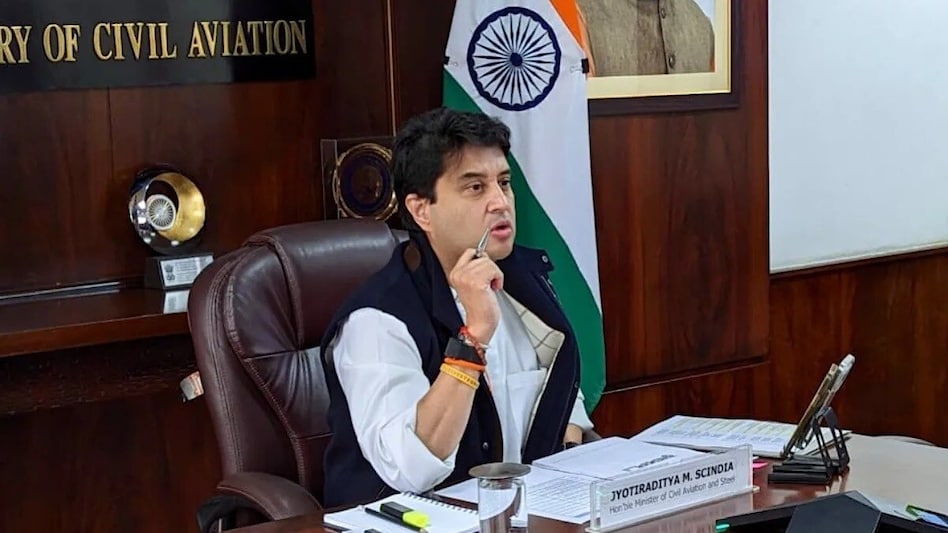
Speaking in the Lok Sabha, Scindia said the state-run telecom company will remain in public ownership.
- Mar 18, 2026,
- Updated Mar 18, 2026 4:29 PM IST
Union Communications Minister Jyotiraditya Scindia on Wednesday ruled out any move to privatise Bharat Sanchar Nigam Limited (BSNL), telling the Lok Sabha that the state-run telecom operator will remain in public ownership.
“There is no question at all of privatising BSNL. BSNL belongs to the people of India, and is for the people of India,” the Union Minister said.
Scindia said that under the leadership of Prime Minister Narendra Modi, the government is focused on strengthening BSNL and expanding its telecom capabilities.
“There is no issue of privatization under the Prime Minister's leadership, BSNL is fully committed to serving the people of the country,” he said.
Explaining the government’s approach to BSNL’s 4G rollout, Scindia said the company had two options: either procure telecom equipment from global manufacturers or develop indigenous capabilities.
“BSNL had two options ahead: like other companies, procure equipment from international giants in South Korea, Finland, Sweden, or China to build a 4G network,” he said.
“The Prime Minister took a bold decision and said we won't just provide services, we will manufacture the equipment too. For the first time in the world, only four countries make telecom equipment, and thanks to the Prime Minister, India's 4G digital stack has now entered the global stage as an equipment manufacturer,” Scindia added.
He also said the initiative was inaugurated by the Prime Minister in September 2025 and highlighted the growth in BSNL’s subscriber base.
“There were 8 crore 55 lakh customers; now it's 9 crore 27 lakh, and we're also advancing 4G technology to roll out 5G as soon as possible, but we must stabilize 4G first,” he said.
Earlier, Finance Minister Nirmala Sitharaman also spoke about BSNL’s revival in the Rajya Sabha.
“For BSNL, our government has provided three revival packages totalling ₹3.22 lakh crore,” Sitharaman said.
She said the government had taken steps to address broader economic pressures while supporting public sector undertakings.
“We have dealt with the burden of oil bonds, addressed the ‘Fragile Five’ economy, and undertaken bank restructuring and recapitalization. These were not small amounts but those of ₹3 lakh crore - ₹4 lakh crore, and now even fertiliser subsidies,” the minister noted.
“Wherever there were weaknesses in the economy, they were left unaddressed earlier, and we are now paying for all of it. Yet, we are being questioned about GDP growth and fiscal deficit. The reality is that we are clearing the liabilities left behind,” she added.
On spectrum allocation, Sitharaman said that after the current government came to power, spectrum in bands such as 700 MHz, 800 MHz, 1800 MHz, 2100 MHz, 2500 MHz and 3300 MHz had been provided to BSNL at auction determined prices for 4G and 5G services.
“On BSNL, I must respectfully say that every criticism made against it is incorrect. If anything, BSNL was pushed into a critical condition earlier. It was in the ICU, and we have revived it and brought it back on track. The Union Cabinet has approved revival packages for BSNL,” she said.
She noted that capital infusion between 2022 and 2023 stood at ₹2.26 lakh crore, covering spectrum allocation, capital expenditure on infrastructure, AGR dues and restructuring of the PSU.
She said the rollout of BSNL’s 4G network is progressing steadily. As of February 28, 2026, 97,906 sites had been installed with 4G equipment, of which 96,103 are already operational.
Sitharaman also said the BharatNet Programme would further strengthen BSNL’s connectivity footprint, noting that ₹1.39 lakh crore has been approved to extend optical fibre connectivity to all villages across the country.
.
Union Communications Minister Jyotiraditya Scindia on Wednesday ruled out any move to privatise Bharat Sanchar Nigam Limited (BSNL), telling the Lok Sabha that the state-run telecom operator will remain in public ownership.
“There is no question at all of privatising BSNL. BSNL belongs to the people of India, and is for the people of India,” the Union Minister said.
Scindia said that under the leadership of Prime Minister Narendra Modi, the government is focused on strengthening BSNL and expanding its telecom capabilities.
“There is no issue of privatization under the Prime Minister's leadership, BSNL is fully committed to serving the people of the country,” he said.
Explaining the government’s approach to BSNL’s 4G rollout, Scindia said the company had two options: either procure telecom equipment from global manufacturers or develop indigenous capabilities.
“BSNL had two options ahead: like other companies, procure equipment from international giants in South Korea, Finland, Sweden, or China to build a 4G network,” he said.
“The Prime Minister took a bold decision and said we won't just provide services, we will manufacture the equipment too. For the first time in the world, only four countries make telecom equipment, and thanks to the Prime Minister, India's 4G digital stack has now entered the global stage as an equipment manufacturer,” Scindia added.
He also said the initiative was inaugurated by the Prime Minister in September 2025 and highlighted the growth in BSNL’s subscriber base.
“There were 8 crore 55 lakh customers; now it's 9 crore 27 lakh, and we're also advancing 4G technology to roll out 5G as soon as possible, but we must stabilize 4G first,” he said.
Earlier, Finance Minister Nirmala Sitharaman also spoke about BSNL’s revival in the Rajya Sabha.
“For BSNL, our government has provided three revival packages totalling ₹3.22 lakh crore,” Sitharaman said.
She said the government had taken steps to address broader economic pressures while supporting public sector undertakings.
“We have dealt with the burden of oil bonds, addressed the ‘Fragile Five’ economy, and undertaken bank restructuring and recapitalization. These were not small amounts but those of ₹3 lakh crore - ₹4 lakh crore, and now even fertiliser subsidies,” the minister noted.
“Wherever there were weaknesses in the economy, they were left unaddressed earlier, and we are now paying for all of it. Yet, we are being questioned about GDP growth and fiscal deficit. The reality is that we are clearing the liabilities left behind,” she added.
On spectrum allocation, Sitharaman said that after the current government came to power, spectrum in bands such as 700 MHz, 800 MHz, 1800 MHz, 2100 MHz, 2500 MHz and 3300 MHz had been provided to BSNL at auction determined prices for 4G and 5G services.
“On BSNL, I must respectfully say that every criticism made against it is incorrect. If anything, BSNL was pushed into a critical condition earlier. It was in the ICU, and we have revived it and brought it back on track. The Union Cabinet has approved revival packages for BSNL,” she said.
She noted that capital infusion between 2022 and 2023 stood at ₹2.26 lakh crore, covering spectrum allocation, capital expenditure on infrastructure, AGR dues and restructuring of the PSU.
She said the rollout of BSNL’s 4G network is progressing steadily. As of February 28, 2026, 97,906 sites had been installed with 4G equipment, of which 96,103 are already operational.
Sitharaman also said the BharatNet Programme would further strengthen BSNL’s connectivity footprint, noting that ₹1.39 lakh crore has been approved to extend optical fibre connectivity to all villages across the country.
.