
BT Explainer: Delhi is seeing frequent sandstorms. Why the Aravalli barrier is failing
While the mountains are not exceptionally high, their geographical position makes them critical. The range forms a natural obstacle that slows down hot desert winds and prevents large quantities of sand and dust from the Thar Desert from moving eastward into densely populated regions.
- May 30, 2026,
- Updated May 30, 2026 11:09 PM IST
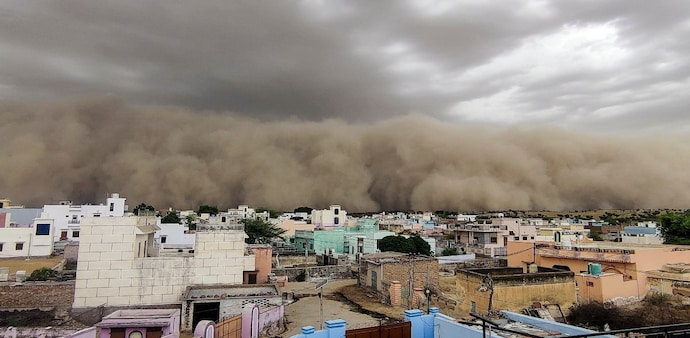
When a powerful dust storm swept across Delhi-NCR today afternoon, turning the sky yellow and reducing visibility within minutes, many residents blamed the weather. But environmental experts say the answer may lie much farther west — in the ancient Aravalli hills that have long stood between the National Capital Region and the advancing sands of the Thar Desert.
For centuries, the Aravalli Range has acted as a natural defence system, shielding northern India from desertification and dust-laden winds. Today, however, illegal mining, hill-cutting and unchecked urbanisation are weakening that barrier, raising concerns that sandstorms could become a more frequent feature of life in Delhi-NCR.
Why are the Aravallis important for Delhi-NCR?
The Aravalli Range, among the oldest mountain systems in the world, stretches from Gujarat through Rajasthan and Haryana before reaching the outskirts of Delhi.
DON'T MISS | ‘Apocalyptic’: Red dust storm plunges Rajasthan into night-like darkness in afternoon. Watch
While the mountains are not exceptionally high, their geographical position makes them critical. The range forms a natural obstacle that slows down hot desert winds and prevents large quantities of sand and dust from the Thar Desert from moving eastward into densely populated regions.
The Aravallis also perform several other environmental functions:
- Act as a barrier against desert expansion
- Reduce the movement of sand and dust into Delhi-NCR
- Recharge groundwater reserves
- Support biodiversity and wildlife habitats
- Help regulate local temperatures
- Improve air quality by trapping particulate matter
Environmentalists often describe the Aravallis as Delhi's "green lung" and its first line of defence against desertification.
How do the Aravallis stop sandstorms?
Sandstorms typically originate in the arid regions of Rajasthan, especially during the hot pre-monsoon months of April, May and June.
As strong winds travel eastward, the ridges, hillocks and forests of the Aravallis interrupt their movement. These natural formations act as windbreaks, slowing wind speeds and trapping sand particles before they can reach urban centres.
DON'T MISS | ‘Urgent national priority...’: Anand Mahindra sounds alarm on India's water security
Even relatively small hillocks play an important role. Experts note that the effectiveness of the Aravallis lies not just in a few large mountains but in the continuity of the entire landscape.
When sections of this barrier disappear, winds encounter fewer obstacles and can carry dust much farther.
What is illegal mining doing to the Aravallis?
Despite decades of environmental regulations and court interventions, illegal mining continues in several parts of the Aravalli belt.
Mining operations often involve blasting, excavation and removal of rock formations for construction materials such as stone, gravel and sand.
The consequences include:
- Destruction of hillocks: Many smaller hills and ridges have been flattened or severely damaged. Once these natural barriers disappear, they cannot be easily restored.
- Loss of vegetation: Mining strips away soil and vegetation that help stabilise the landscape and prevent erosion.
- Habitat fragmentation: Wildlife corridors connecting forests are disrupted, affecting species that depend on the Aravalli ecosystem.
- Groundwater depletion: Damaged hills and reduced vegetation affect the region's ability to absorb and store rainwater.
- Increased dust generation: Mining itself produces large amounts of dust, worsening local air pollution.
Environmental groups warn that the cumulative impact of these activities is slowly dismantling the region's natural defence against desert winds.
Why are sandstorms becoming more frequent in Delhi-NCR?
Several factors are contributing to the increase in dust and sandstorm events.
- Climate change: Rising temperatures are creating hotter and drier conditions across northwestern India. Dry soil is more easily lifted by strong winds.
- Extreme weather patterns: Heatwaves and changing atmospheric conditions can strengthen pre-monsoon winds, increasing the likelihood of dust storms.
- Land degradation: Deforestation, overgrasing and poor land management practices in arid regions make more soil available for wind erosion.
What happens if the Aravallis continue to degrade?
The most significant local factor is the degradation of the Aravalli ecosystem. As hills are mined and forests disappear, the natural shield protecting Delhi-NCR becomes less effective.
Experts believe that while climate change may be intensifying dust storms, the loss of the Aravallis is making it easier for those storms to reach the capital region.
Scientists warn that continued destruction of the range could have consequences far beyond occasional dust storms.
Potential impacts include: More frequent and severe sandstorms in Delhi-NCR, higher levels of air pollution, increased risk of desertification in parts of Haryana and Delhi, falling groundwater levels and greater vulnerability to heatwaves. For a region already grappling with chronic air-quality challenges, the weakening of the Aravallis could create an additional environmental crisis.
When a powerful dust storm swept across Delhi-NCR today afternoon, turning the sky yellow and reducing visibility within minutes, many residents blamed the weather. But environmental experts say the answer may lie much farther west — in the ancient Aravalli hills that have long stood between the National Capital Region and the advancing sands of the Thar Desert.
For centuries, the Aravalli Range has acted as a natural defence system, shielding northern India from desertification and dust-laden winds. Today, however, illegal mining, hill-cutting and unchecked urbanisation are weakening that barrier, raising concerns that sandstorms could become a more frequent feature of life in Delhi-NCR.
Why are the Aravallis important for Delhi-NCR?
The Aravalli Range, among the oldest mountain systems in the world, stretches from Gujarat through Rajasthan and Haryana before reaching the outskirts of Delhi.
DON'T MISS | ‘Apocalyptic’: Red dust storm plunges Rajasthan into night-like darkness in afternoon. Watch
While the mountains are not exceptionally high, their geographical position makes them critical. The range forms a natural obstacle that slows down hot desert winds and prevents large quantities of sand and dust from the Thar Desert from moving eastward into densely populated regions.
The Aravallis also perform several other environmental functions:
- Act as a barrier against desert expansion
- Reduce the movement of sand and dust into Delhi-NCR
- Recharge groundwater reserves
- Support biodiversity and wildlife habitats
- Help regulate local temperatures
- Improve air quality by trapping particulate matter
Environmentalists often describe the Aravallis as Delhi's "green lung" and its first line of defence against desertification.
How do the Aravallis stop sandstorms?
Sandstorms typically originate in the arid regions of Rajasthan, especially during the hot pre-monsoon months of April, May and June.
As strong winds travel eastward, the ridges, hillocks and forests of the Aravallis interrupt their movement. These natural formations act as windbreaks, slowing wind speeds and trapping sand particles before they can reach urban centres.
DON'T MISS | ‘Urgent national priority...’: Anand Mahindra sounds alarm on India's water security
Even relatively small hillocks play an important role. Experts note that the effectiveness of the Aravallis lies not just in a few large mountains but in the continuity of the entire landscape.
When sections of this barrier disappear, winds encounter fewer obstacles and can carry dust much farther.
What is illegal mining doing to the Aravallis?
Despite decades of environmental regulations and court interventions, illegal mining continues in several parts of the Aravalli belt.
Mining operations often involve blasting, excavation and removal of rock formations for construction materials such as stone, gravel and sand.
The consequences include:
- Destruction of hillocks: Many smaller hills and ridges have been flattened or severely damaged. Once these natural barriers disappear, they cannot be easily restored.
- Loss of vegetation: Mining strips away soil and vegetation that help stabilise the landscape and prevent erosion.
- Habitat fragmentation: Wildlife corridors connecting forests are disrupted, affecting species that depend on the Aravalli ecosystem.
- Groundwater depletion: Damaged hills and reduced vegetation affect the region's ability to absorb and store rainwater.
- Increased dust generation: Mining itself produces large amounts of dust, worsening local air pollution.
Environmental groups warn that the cumulative impact of these activities is slowly dismantling the region's natural defence against desert winds.
Why are sandstorms becoming more frequent in Delhi-NCR?
Several factors are contributing to the increase in dust and sandstorm events.
- Climate change: Rising temperatures are creating hotter and drier conditions across northwestern India. Dry soil is more easily lifted by strong winds.
- Extreme weather patterns: Heatwaves and changing atmospheric conditions can strengthen pre-monsoon winds, increasing the likelihood of dust storms.
- Land degradation: Deforestation, overgrasing and poor land management practices in arid regions make more soil available for wind erosion.
What happens if the Aravallis continue to degrade?
The most significant local factor is the degradation of the Aravalli ecosystem. As hills are mined and forests disappear, the natural shield protecting Delhi-NCR becomes less effective.
Experts believe that while climate change may be intensifying dust storms, the loss of the Aravallis is making it easier for those storms to reach the capital region.
Scientists warn that continued destruction of the range could have consequences far beyond occasional dust storms.
Potential impacts include: More frequent and severe sandstorms in Delhi-NCR, higher levels of air pollution, increased risk of desertification in parts of Haryana and Delhi, falling groundwater levels and greater vulnerability to heatwaves. For a region already grappling with chronic air-quality challenges, the weakening of the Aravallis could create an additional environmental crisis.