
Chandra Grahan 2026: When, where, how to watch the lunar eclipse - Date, time, other details here
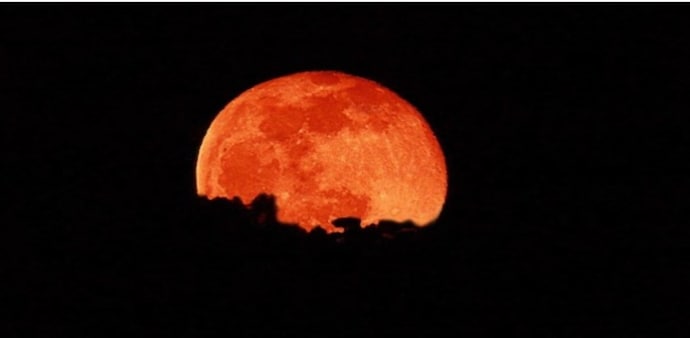
Astronomers say this will be a deep eclipse, meaning the Moon will travel fully into the Earth's darkest shadow, creating the characteristic reddish glow often referred to as a "Blood Moon"
- Mar 2, 2026,
- Updated Mar 2, 2026 3:19 PM IST
The India Meteorological Department (IMD) has confirmed that a total lunar eclipse known locally as Chandra Grahan will take place on Tuesday, March 3, 2026, and will be widely visible across India.
Astronomers say this will be a deep eclipse, meaning the Moon will travel fully into the Earth's darkest shadow, creating the characteristic reddish glow often referred to as a "Blood Moon."
In India, skywatchers in most states will be able to see at least the latter stages of the eclipse as the Moon rises in the evening sky. However, those in North-East India and the Andaman and Nicobar Islands are in a better position to witness more of the totality phase before it concludes.
Eclipse Timings in India (IST)
According to IMD projections, the celestial event will unfold as follows:
Eclipse begins: 3:20 PM Totality (full eclipse) starts: 4:34 PM Totality ends: 5:33 PM Eclipse ends: 6:48 PM
Because the Moon will be rising in many parts of the country during the eclipse's later phases, people may begin seeing it after moonrise in their local skies. For example, in western and central India, the Moon will be low on the horizon as the total phase ends, while parts of eastern India may catch slightly more.
Sutak and cultural observances
In many Indian traditions, a lunar eclipse is considered significant for ritual purposes. Sutak refers to a customary period observed before the eclipse, during which certain activities are traditionally avoided. While practices vary regionally, people observing sutak may begin it a few hours prior to the lunar eclipse's commencement. Interested observers can check local sunrise and moonrise times to estimate the sutak window before the event starts at 3:20 PM IST.
How to Watch
Unlike solar eclipses, lunar eclipses are safe to view with the naked eye, and no special glasses are required. Telescopes and binoculars can enhance the experience but are not necessary. As long as the skies are clear of clouds, viewers anywhere in India with a western/eastern horizon in sight should be able to catch at least part of the eclipse after moonrise.
The March 3 total lunar eclipse will be a rare astronomical spectacle, offering millions across India and beyond a chance to observe Earth’s shadow play out on the Moon in real time.
The India Meteorological Department (IMD) has confirmed that a total lunar eclipse known locally as Chandra Grahan will take place on Tuesday, March 3, 2026, and will be widely visible across India.
Astronomers say this will be a deep eclipse, meaning the Moon will travel fully into the Earth's darkest shadow, creating the characteristic reddish glow often referred to as a "Blood Moon."
In India, skywatchers in most states will be able to see at least the latter stages of the eclipse as the Moon rises in the evening sky. However, those in North-East India and the Andaman and Nicobar Islands are in a better position to witness more of the totality phase before it concludes.
Eclipse Timings in India (IST)
According to IMD projections, the celestial event will unfold as follows:
Eclipse begins: 3:20 PM Totality (full eclipse) starts: 4:34 PM Totality ends: 5:33 PM Eclipse ends: 6:48 PM
Because the Moon will be rising in many parts of the country during the eclipse's later phases, people may begin seeing it after moonrise in their local skies. For example, in western and central India, the Moon will be low on the horizon as the total phase ends, while parts of eastern India may catch slightly more.
Sutak and cultural observances
In many Indian traditions, a lunar eclipse is considered significant for ritual purposes. Sutak refers to a customary period observed before the eclipse, during which certain activities are traditionally avoided. While practices vary regionally, people observing sutak may begin it a few hours prior to the lunar eclipse's commencement. Interested observers can check local sunrise and moonrise times to estimate the sutak window before the event starts at 3:20 PM IST.
How to Watch
Unlike solar eclipses, lunar eclipses are safe to view with the naked eye, and no special glasses are required. Telescopes and binoculars can enhance the experience but are not necessary. As long as the skies are clear of clouds, viewers anywhere in India with a western/eastern horizon in sight should be able to catch at least part of the eclipse after moonrise.
The March 3 total lunar eclipse will be a rare astronomical spectacle, offering millions across India and beyond a chance to observe Earth’s shadow play out on the Moon in real time.