
'China and Pakistan manoeuvred this': Ex-Foreign Secy says India was right to not sign the SCO statement
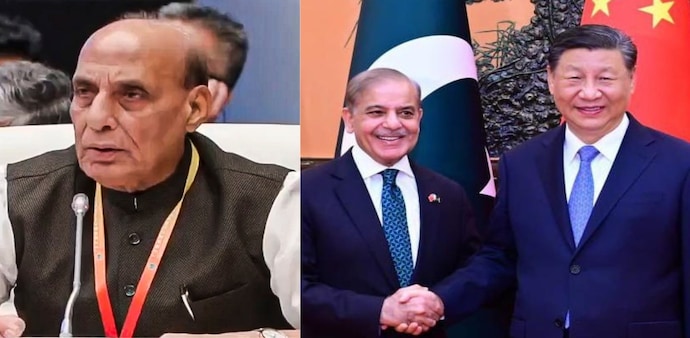
Singh did not sign the SCO joint statement since it skipped any mention of the Pahalgam terror attack that claimed the lives of 26 tourists, including one Nepali citizen.
- Jun 27, 2025,
- Updated Jun 27, 2025 12:24 PM IST
Former Foreign Secretary Kanwal Sibal on Friday said that Defence Minister Rajnath Singh did the right thing by not signing the Shanghai Cooperation Summit (SCO) joint statement on Thursday. Singh did not sign the SCO joint statement since it skipped any mention of the Pahalgam terror attack that claimed the lives of 26 tourists, including one Nepali citizen.
The statement, however, had a mention of incidents in Balochistan and tried to frame India for fomenting these incidents in the Pakistani province. Sibal, who served as the Foreign Secretary under Atal Bihari Vajpayee, alleged that China and its "all-weather friend" Pakistan manoeuvred the attempted diplomatic snub.
"Def Min Rajnath Singh was not right not to sign the SCO communiqué because Balochistan figured in it, but not Pahalgam. Normally, communiqués are drafted after delegation-level consultation so that consensus is achieved before the principals are asked to sign on. It would seem India's objection to an invidious text was disregarded, forcing India's rejection at the Def Min level. Clearly, China and Pakistan manoeuvred this," Sibal said in his post on X.
But why would the global loan shark China manoeuvre something like this with its all-weather friend? Sibal, who is currently the Chancellor of the Jawaharlal Nehru University (JNU), decodes: "China has been shielding Pakistan on terrorism. Because of Gwadar, it has great interest in highlighting Balochistan."
He decried other countries for not referencing the Pahalgam attack in the statement despite having condemned it. Sibal also said that the fact that other SCO member countries, including Russia, did not press for a balanced statement needs to be probed.
"Why Russian and other delegations did not press for a balanced communiqué aware of India’s long fight against terrorism and the recent perpetration of the heinous Pahalgam attack and chose to acknowledge Pakistan’s concerns about Balochistan, more so as Pakistan alleges Indian involvement, needs probing."
Furthermore, Sibal said that a statement was not issued at all to avoid isolating India was an indication that India's firm stance against terrorism has paid off. The former Indian ambassador to Russia also said that this is a signal to other SCO members that the summit communiqué could be impacted again if China and Pakistan acted funny.
"That other SCO members finally chose not to issue a text at all and avoided isolating India by inscribing a footnote that India had not approved that particular para/formulation, as is done in case of BRI, shows that India’s firmness paid. It is good we stood our position. It is a signal to others that the SCO summit communiqué could be jeopardised if China and Pakistan chose to play games again," Sibal signed off.
Former Foreign Secretary Kanwal Sibal on Friday said that Defence Minister Rajnath Singh did the right thing by not signing the Shanghai Cooperation Summit (SCO) joint statement on Thursday. Singh did not sign the SCO joint statement since it skipped any mention of the Pahalgam terror attack that claimed the lives of 26 tourists, including one Nepali citizen.
The statement, however, had a mention of incidents in Balochistan and tried to frame India for fomenting these incidents in the Pakistani province. Sibal, who served as the Foreign Secretary under Atal Bihari Vajpayee, alleged that China and its "all-weather friend" Pakistan manoeuvred the attempted diplomatic snub.
"Def Min Rajnath Singh was not right not to sign the SCO communiqué because Balochistan figured in it, but not Pahalgam. Normally, communiqués are drafted after delegation-level consultation so that consensus is achieved before the principals are asked to sign on. It would seem India's objection to an invidious text was disregarded, forcing India's rejection at the Def Min level. Clearly, China and Pakistan manoeuvred this," Sibal said in his post on X.
But why would the global loan shark China manoeuvre something like this with its all-weather friend? Sibal, who is currently the Chancellor of the Jawaharlal Nehru University (JNU), decodes: "China has been shielding Pakistan on terrorism. Because of Gwadar, it has great interest in highlighting Balochistan."
He decried other countries for not referencing the Pahalgam attack in the statement despite having condemned it. Sibal also said that the fact that other SCO member countries, including Russia, did not press for a balanced statement needs to be probed.
"Why Russian and other delegations did not press for a balanced communiqué aware of India’s long fight against terrorism and the recent perpetration of the heinous Pahalgam attack and chose to acknowledge Pakistan’s concerns about Balochistan, more so as Pakistan alleges Indian involvement, needs probing."
Furthermore, Sibal said that a statement was not issued at all to avoid isolating India was an indication that India's firm stance against terrorism has paid off. The former Indian ambassador to Russia also said that this is a signal to other SCO members that the summit communiqué could be impacted again if China and Pakistan acted funny.
"That other SCO members finally chose not to issue a text at all and avoided isolating India by inscribing a footnote that India had not approved that particular para/formulation, as is done in case of BRI, shows that India’s firmness paid. It is good we stood our position. It is a signal to others that the SCO summit communiqué could be jeopardised if China and Pakistan chose to play games again," Sibal signed off.