
Chinese debt, failed weapons? The real story of Pakistan's flip to US
Munir's goal in Washington is clear: "He wants weapons. He wants guarantees against India."
- Aug 14, 2025,
- Updated Aug 14, 2025 1:54 PM IST
Pakistan's flip to Washington is driven by military setbacks, a loss of faith in Chinese hardware, and the lure of American weapons, according to former Indian artillery chief Lt. Gen PR Shankar.
In a podcast conversation with Sandeep Unnithan's Chakra, Shankar said Pakistan Army chief Gen Asim Munir's recent nuclear threats to India from US soil should be seen in the context of Operation Sindoor on May 10, when Indian strikes allegedly crippled Pakistan's air defences and neutralised its nuclear delivery capability.
"He's doing it from US soil. That's worrying. And the fact that the US has tolerated this kind of talk from US soil is also troubling," Shankar said, calling the threats part of Pakistan's habitual "nuclear sabre-rattling" but also "a panic reaction."
According to him, May 10 was decisive: India's strikes left Pakistan unable to launch nuclear-armed aircraft or missiles. Bases such as Sargodha, Nur Khan, Jacobabad, and Rahim Yar Khan were hit or disabled, while air defence systems were exposed. "Pakistan could not retaliate with nuclear weapon systems, and they panicked - and that was the time when they ran to the US," he said.
Shankar alleged Chinese-supplied systems failed in combat, citing recovered PL-15 missiles with single-pulse motors of 80 km range rather than the dual-pulse 150 km versions Pakistan expected. When asked whether Pakistan has actually lost faith in its Chinese hardware, the former general said: "Yes, they have gone back to the US. They've done the U-turn."
Munir's goal in Washington, Shankar argued, is clear: "He wants weapons. He wants guarantees against India." He claimed the US seized the moment to reassert influence over Pakistan, offering diplomatic cover, possible removal from the FATF watchlist, and likely future access to F-16s-previously grounded under end-user agreements during Operation Sindoor.
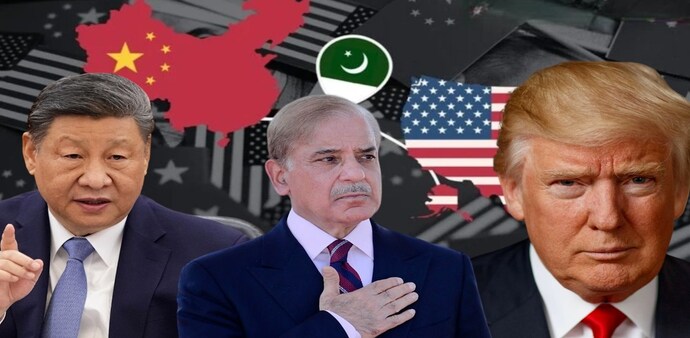
"The US coming back into Pakistan means it now has control over Iran, Afghanistan, China, and India. US stakes are high. Pakistan has flipped from China to that side," Shankar said, framing the shift as part of a broader geostrategic triangle involving the US, China, and Pakistan.
The lure of American aid is also financial. "With China, it (Pakistan) will only get loans - it will have to repay. Pakistan is not interested in repaying anyone. If it goes to the US, it doesn't have to pay anything. It gets everything free of cost, including the military hardware," Shankar said. Going with the US, he argued, allows Pakistan to press Beijing to scale back demands for debt repayment. Now, Pakistan will say to China: "I'll repay you, but you first get out."
Pakistan's flip to Washington is driven by military setbacks, a loss of faith in Chinese hardware, and the lure of American weapons, according to former Indian artillery chief Lt. Gen PR Shankar.
In a podcast conversation with Sandeep Unnithan's Chakra, Shankar said Pakistan Army chief Gen Asim Munir's recent nuclear threats to India from US soil should be seen in the context of Operation Sindoor on May 10, when Indian strikes allegedly crippled Pakistan's air defences and neutralised its nuclear delivery capability.
"He's doing it from US soil. That's worrying. And the fact that the US has tolerated this kind of talk from US soil is also troubling," Shankar said, calling the threats part of Pakistan's habitual "nuclear sabre-rattling" but also "a panic reaction."
According to him, May 10 was decisive: India's strikes left Pakistan unable to launch nuclear-armed aircraft or missiles. Bases such as Sargodha, Nur Khan, Jacobabad, and Rahim Yar Khan were hit or disabled, while air defence systems were exposed. "Pakistan could not retaliate with nuclear weapon systems, and they panicked - and that was the time when they ran to the US," he said.
Shankar alleged Chinese-supplied systems failed in combat, citing recovered PL-15 missiles with single-pulse motors of 80 km range rather than the dual-pulse 150 km versions Pakistan expected. When asked whether Pakistan has actually lost faith in its Chinese hardware, the former general said: "Yes, they have gone back to the US. They've done the U-turn."
Munir's goal in Washington, Shankar argued, is clear: "He wants weapons. He wants guarantees against India." He claimed the US seized the moment to reassert influence over Pakistan, offering diplomatic cover, possible removal from the FATF watchlist, and likely future access to F-16s-previously grounded under end-user agreements during Operation Sindoor.
"The US coming back into Pakistan means it now has control over Iran, Afghanistan, China, and India. US stakes are high. Pakistan has flipped from China to that side," Shankar said, framing the shift as part of a broader geostrategic triangle involving the US, China, and Pakistan.
The lure of American aid is also financial. "With China, it (Pakistan) will only get loans - it will have to repay. Pakistan is not interested in repaying anyone. If it goes to the US, it doesn't have to pay anything. It gets everything free of cost, including the military hardware," Shankar said. Going with the US, he argued, allows Pakistan to press Beijing to scale back demands for debt repayment. Now, Pakistan will say to China: "I'll repay you, but you first get out."