
Cyclone Arnab intensifies rapidly: How El Niño and global warming are changing storm risks
Cyclone Arnab intensifies rapidly: How El Niño and global warming are changing storm risks
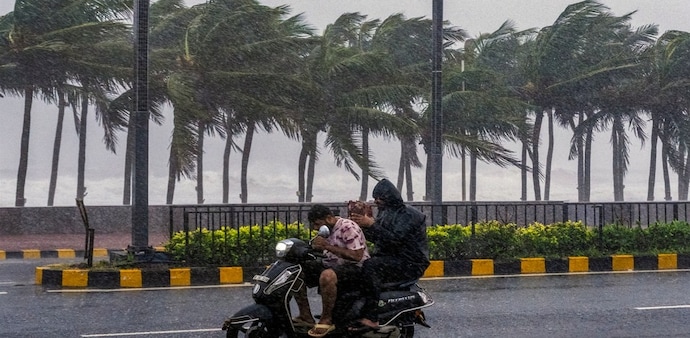
Meteorologists say warmer-than-normal sea surface temperatures and the possible influence of El Niño may have contributed to Arnab’s rapid intensification.
Business Today Desk
- Oct 29, 2026,
- Updated Oct 29, 2026 12:20 AM IST
Cyclone Arnab strengthened from a tropical depression into a cyclonic storm within 36 hours before intensifying into a very severe cyclonic storm, highlighting concerns over how warmer oceans and changing climate conditions can amplify extreme weather risks. The storm made landfall along the Andhra Pradesh and Yanam coasts in the early hours of October 28, with sustained wind speeds of 125-135 kmph and gusts reaching 150 kmph.
Advertisement
Meteorologists say warmer-than-normal sea surface temperatures and the possible influence of El Niño may have contributed to Arnab’s rapid intensification. The interaction between natural climate variability and long-term global warming is becoming increasingly important in understanding cyclone behaviour and associated rainfall risks.
How warmer oceans fuel cyclones
“Warmer-than-normal sea surface temperatures and potential influence of El Niño conditions may have contributed to its intensity,” said KJ Ramesh, former Director General of the India Meteorological Department (IMD).
He explained that while global warming does not cause El Niño, background warming adds to the heat available to extreme weather systems. Warm ocean waters supply the heat and moisture needed for cyclones to develop and intensify.
MUST READ: Cyclone Arnab hits Andhra Pradesh hardest: 3 killed, 31 houses damaged as heavy rain continues
Advertisement
The Bay of Bengal is particularly conducive to cyclone formation under favourable atmospheric and oceanic conditions. The post-monsoon period is an important cyclone season for Indian seas, with cyclone formation typically peaking in December. Sea surface temperatures of around 27 degrees Celsius are generally considered a threshold favourable for tropical cyclone development.
Akshay Deoras, research scientist at the National Centre for Atmospheric Science at the University of Reading, said conditions in the Bay of Bengal were extremely favourable for cyclogenesis.
“El Niño can play a significant role in amplifying the impacts of Cyclone Arnab,” he said, adding that warmer atmospheric conditions increase moisture availability and can enhance the capacity of clouds to produce extreme rainfall.
Why rapid intensification matters
Advertisement
The report highlights a growing concern about rapid intensification in the North Indian Ocean. Since 2000, around 38% of cyclones in the region have undergone rapid intensification, compared with 22% in the north-western Pacific, according to data cited in the report.
Warmer oceans can provide additional energy to developing storms. Scientists also point to the importance of the volume of warm water beneath the ocean surface, rather than sea surface temperature alone, in determining how much energy a cyclone can draw.
The consequences extend beyond strong winds and coastal damage. Research cited in the report suggests that rising sea surface temperatures can increase heavy rainfall and extend rainfall zones more than 300 km from a cyclone’s centre.
ALSO READ: Cyclone Arnab landfall: Satellite images show storm covering almost half of India
India’s preparedness challenge
Climate-related hazards are increasing, but experts say the challenge is no longer limited to reducing deaths during landfall. Cyclones can disrupt transport, electricity, agriculture and livelihoods well beyond coastal areas.
Kirishna S Vatsa of the National Disaster Management Authority said India had improved its ability to reduce cyclone-related mortality through preparedness and timely forecasts, but economic losses remained a concern.
Advertisement
Experts have called for stronger electricity grids, flood-resilient roads, resilient housing, crop insurance and better protection for small businesses and informal workers.
The challenge for India is to combine early warnings and evacuation planning with climate-resilient infrastructure and financial safeguards as extreme weather risks evolve.
Read more!