
Dalai Lama says no to China: My reincarnation isn’t theirs to pick, Gaden Phodrang decides
In a sharply worded statement posted online Wednesday, the 14th Dalai Lama dismissed any external interference in the recognition of his successor, saying, “No one else has any such authority to interfere in this matter.”
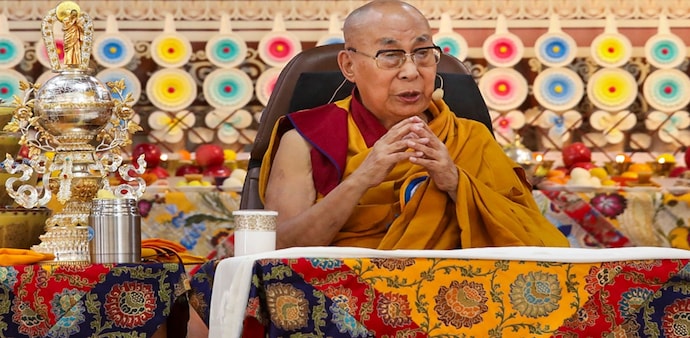
- Jul 2, 2025,
- Updated Jul 2, 2025 12:26 PM IST
Days before turning 90, the Dalai Lama reaffirmed that the institution bearing his title will continue—and declared that only the Gaden Phodrang Trust has the sole authority to recognize his reincarnation, directly countering China’s long-standing attempt to control the succession process.
In a sharply worded statement posted online Wednesday, the 14th Dalai Lama dismissed any external interference in the recognition of his successor, saying, “No one else has any such authority to interfere in this matter.”
The Tibetan spiritual leader said the process for identifying the next Dalai Lama is long established, and must be carried out exclusively by members of the Gaden Phodrang Trust—his official office—who will consult senior Tibetan Buddhist figures and “oath-bound Dharma Protectors.”
The declaration comes amid mounting anticipation ahead of his 90th birthday on July 6, with celebrations planned in Mcleodganj, Dharamshala, home to the Tibetan government-in-exile. Sikyong Penpa Tsering and Deputy Speaker Dolma Tsering have indicated the Dalai Lama may speak about his succession during these events.
The Dalai Lama stated that although he had not spoken publicly about the issue in 14 years, overwhelming appeals from Tibetans inside and outside Tibet, including Buddhist communities across Asia and Russia, had prompted him to affirm the continuation of the institution.
China, however, has consistently opposed this stance. Beijing regards the Dalai Lama as a political threat and the face of Tibetan separatism. It seeks to control the selection of his successor—likely through a government-approved candidate—to ensure loyalty to the Communist Party.
For China, the issue combines geopolitical control, religious legitimacy, and national security. Tibet’s strategic location and resources make it critical to Chinese interests, and any independent spiritual authority—especially one with global influence—challenges Beijing’s narrative and grip on the region.
By reiterating that only his trusted circle can choose his successor, the Dalai Lama has effectively drawn a line against Beijing’s ambitions to politicize one of Tibetan Buddhism’s most sacred traditions.
Days before turning 90, the Dalai Lama reaffirmed that the institution bearing his title will continue—and declared that only the Gaden Phodrang Trust has the sole authority to recognize his reincarnation, directly countering China’s long-standing attempt to control the succession process.
In a sharply worded statement posted online Wednesday, the 14th Dalai Lama dismissed any external interference in the recognition of his successor, saying, “No one else has any such authority to interfere in this matter.”
The Tibetan spiritual leader said the process for identifying the next Dalai Lama is long established, and must be carried out exclusively by members of the Gaden Phodrang Trust—his official office—who will consult senior Tibetan Buddhist figures and “oath-bound Dharma Protectors.”
The declaration comes amid mounting anticipation ahead of his 90th birthday on July 6, with celebrations planned in Mcleodganj, Dharamshala, home to the Tibetan government-in-exile. Sikyong Penpa Tsering and Deputy Speaker Dolma Tsering have indicated the Dalai Lama may speak about his succession during these events.
The Dalai Lama stated that although he had not spoken publicly about the issue in 14 years, overwhelming appeals from Tibetans inside and outside Tibet, including Buddhist communities across Asia and Russia, had prompted him to affirm the continuation of the institution.
China, however, has consistently opposed this stance. Beijing regards the Dalai Lama as a political threat and the face of Tibetan separatism. It seeks to control the selection of his successor—likely through a government-approved candidate—to ensure loyalty to the Communist Party.
For China, the issue combines geopolitical control, religious legitimacy, and national security. Tibet’s strategic location and resources make it critical to Chinese interests, and any independent spiritual authority—especially one with global influence—challenges Beijing’s narrative and grip on the region.
By reiterating that only his trusted circle can choose his successor, the Dalai Lama has effectively drawn a line against Beijing’s ambitions to politicize one of Tibetan Buddhism’s most sacred traditions.