
Delhi air pollution: Cold wave, dense fog worsen crisis; AQI nears severe+ levels
As the weather turned hostile, Delhi’s air quality worsened rapidly. The Air Quality Index (AQI), which stood at 400 at around 4 pm on January 17, surged sharply to 428 by 8 pm, officials said. The CAQM attributed the spike to a western disturbance.
- Jan 18, 2026,
- Updated Jan 18, 2026 1:55 PM IST
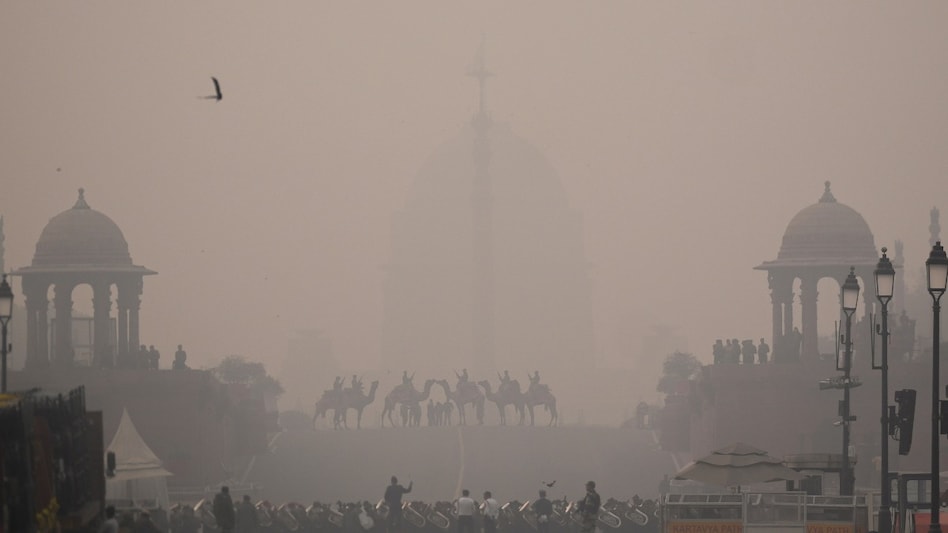
Residents of the national capital woke up to a grim January 18 morning as Delhi was engulfed by a thick blanket of toxic smog and dense fog, pushing air quality firmly into the ‘severe’ category and compounding the harshness of an intensifying winter. The sharp deterioration in air quality, coupled with plunging temperatures, prompted authorities to tighten pollution curbs and issue fresh weather warnings across the city.
According to the India Meteorological Department (IMD), Delhi experienced one of its coldest mornings of the season, with the primary weather station at Safdarjung recording a minimum temperature of 4.4 degrees Celsius. Ayanagar was marginally warmer at 4.9 degrees Celsius, while several other parts of the city saw temperatures dip below the 5-degree mark, signalling the onset of severe winter conditions.
The IMD has forecast a partly cloudy sky for the capital, with moderate fog expected at many places and dense fog at isolated locations during the morning hours. Maximum temperatures are likely to hover between 21 and 23 degrees Celsius, while minimum temperatures are expected to remain in the range of 4 to 6 degrees Celsius over the coming days. The combination of low temperatures, high humidity and calm winds has created unfavourable conditions for the dispersion of pollutants.
As the weather turned hostile, Delhi’s air quality worsened rapidly. The Air Quality Index (AQI), which stood at 400 at around 4 pm on January 17, surged sharply to 428 by 8 pm, officials said. The Commission for Air Quality Management (CAQM) attributed the spike to a western disturbance, adverse meteorological conditions and a lack of wind movement, which allowed pollutants to accumulate over the region.
“Keeping in view the prevailing trend of air quality and relevant factors, and in an effort to prevent further deterioration, the CAQM Sub-Committee on GRAP has unanimously decided to invoke all actions under Stage IV of the Graded Response Action Plan with immediate effect across the entire NCR,” a senior CAQM official said. Stage IV corresponds to ‘Severe+’ air quality conditions, typically associated with AQI levels above 450, and is enforced as a proactive measure during sharp pollution spikes.
The move comes just a day after authorities had implemented Stage III restrictions in Delhi-NCR, highlighting how quickly conditions have deteriorated. Under GRAP Stage IV, stringent measures are rolled out, including bans on construction activities, restrictions on polluting vehicles and enhanced checks on industrial emissions, aimed at curbing further pollution buildup.
The GRAP framework categorises air quality into four stages — ‘poor’ (AQI 201-300), ‘very poor’ (301-400), ‘severe’ (401-450) and ‘severe plus’ (above 450). Delhi’s current readings place it dangerously close to the worst bracket, raising concerns for public health, particularly for children, the elderly and those with respiratory ailments.With no immediate relief in sight from weather conditions, authorities have urged residents to limit outdoor exposure, use masks where possible and follow advisories issued by health and civic agencies.
Residents of the national capital woke up to a grim January 18 morning as Delhi was engulfed by a thick blanket of toxic smog and dense fog, pushing air quality firmly into the ‘severe’ category and compounding the harshness of an intensifying winter. The sharp deterioration in air quality, coupled with plunging temperatures, prompted authorities to tighten pollution curbs and issue fresh weather warnings across the city.
According to the India Meteorological Department (IMD), Delhi experienced one of its coldest mornings of the season, with the primary weather station at Safdarjung recording a minimum temperature of 4.4 degrees Celsius. Ayanagar was marginally warmer at 4.9 degrees Celsius, while several other parts of the city saw temperatures dip below the 5-degree mark, signalling the onset of severe winter conditions.
The IMD has forecast a partly cloudy sky for the capital, with moderate fog expected at many places and dense fog at isolated locations during the morning hours. Maximum temperatures are likely to hover between 21 and 23 degrees Celsius, while minimum temperatures are expected to remain in the range of 4 to 6 degrees Celsius over the coming days. The combination of low temperatures, high humidity and calm winds has created unfavourable conditions for the dispersion of pollutants.
As the weather turned hostile, Delhi’s air quality worsened rapidly. The Air Quality Index (AQI), which stood at 400 at around 4 pm on January 17, surged sharply to 428 by 8 pm, officials said. The Commission for Air Quality Management (CAQM) attributed the spike to a western disturbance, adverse meteorological conditions and a lack of wind movement, which allowed pollutants to accumulate over the region.
“Keeping in view the prevailing trend of air quality and relevant factors, and in an effort to prevent further deterioration, the CAQM Sub-Committee on GRAP has unanimously decided to invoke all actions under Stage IV of the Graded Response Action Plan with immediate effect across the entire NCR,” a senior CAQM official said. Stage IV corresponds to ‘Severe+’ air quality conditions, typically associated with AQI levels above 450, and is enforced as a proactive measure during sharp pollution spikes.
The move comes just a day after authorities had implemented Stage III restrictions in Delhi-NCR, highlighting how quickly conditions have deteriorated. Under GRAP Stage IV, stringent measures are rolled out, including bans on construction activities, restrictions on polluting vehicles and enhanced checks on industrial emissions, aimed at curbing further pollution buildup.
The GRAP framework categorises air quality into four stages — ‘poor’ (AQI 201-300), ‘very poor’ (301-400), ‘severe’ (401-450) and ‘severe plus’ (above 450). Delhi’s current readings place it dangerously close to the worst bracket, raising concerns for public health, particularly for children, the elderly and those with respiratory ailments.With no immediate relief in sight from weather conditions, authorities have urged residents to limit outdoor exposure, use masks where possible and follow advisories issued by health and civic agencies.