


 The Sub-Committee will continue to closely track air quality trends and review the situation periodically to decide on further action based on pollution levels and meteorological forecasts.
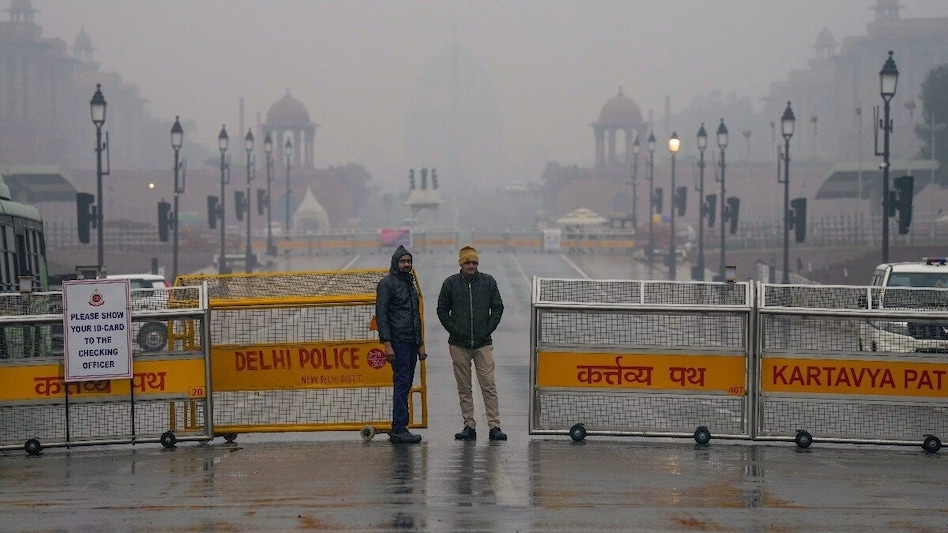
The Commission for Air Quality Management (CAQM) has invoked Stage-III (“Severe” category) of the Graded Response Action Plan (GRAP) across Delhi and the National Capital Region (NCR) following a steady deterioration in air quality and forecasts pointing to further worsening conditions.
In an order issued on January 16, 2026, the CAQM said Delhi’s Air Quality Index (AQI) showed a rising trend and was recorded at 354, with projections by the India Meteorological Department (IMD) and the Indian Institute of Tropical Meteorology (IITM) indicating that pollution levels could soon slip into the severe category due to unfavourable weather conditions, low wind speeds and poor dispersion.

 90% EVs exported out of India are from Maruti Suzuki: MD & CEO Hisashi Takeuchi
 India's $30 trillion goal needs 8-10% growth, $400 billion more annual investment: Jayant Sinha
 1.1 billion barrels gone: IMF warns that global oil market is running out of safety cushions
 From Devbhoomi to industrial destination: Uttarakhand’s manufacturing moment
 India’s deep-tech startups face a new test: Crossing the valley of death
 #IndiaAt100 : Adipen Bose Nandhiji On Conscious Capitalism- Can Profit & Purpose Coexist?
 #IndiaAt100 : Hisashi Takeuchi On Driving India’s Manufacturing Revolution
 #IndiaAt100 : Manufacturing For Viksit Bharat | Can Industry Power India’s $30-Trillion Dream?
 #IndiaAt100 : Tarun Garg On Hyundai & India’s Manufacturing Powerhouse Ambition
 #IndiaAt100 : CM Pushkar Singh Dhami On Uttarakhand’s Industrial Growth & India’s Next Leap
 Cupid, NTPC Green, NTPC, Raymond Realty, HAL shares: Key technical levels to watch
 Defence stock with Rs 2,654-crore order book hits record high; here's why
  GACM Technologies: FII holding jumps to 29%; penny stock in focus
 Puravankara shares rise 5% on fresh order win
  20 high-conviction ideas for up to 95% upside | stocks to buy
  90 million litres of glacier water every day: How Ladakh is reviving 1,000 acres of farmland#IndiaAt100 : Adipen Bose Nandhiji On Conscious Capitalism- Can Profit & Purpose Coexist?#IndiaAt100 : Hisashi Takeuchi On Driving India’s Manufacturing Revolution#IndiaAt100 : Manufacturing For Viksit Bharat | Can Industry Power India’s $30-Trillion Dream?#IndiaAt100 : Tarun Garg On Hyundai & India’s Manufacturing Powerhouse Ambition












