
Delhi air pollution crisis: AQI nears severe zone, IMD issues orange alert for dense fog
As per the CPCB’s Delhi-NCR air quality bulletin issued at 4 pm on December 28, PM2.5 remained the dominant pollutant in most locations, pushing air quality into health-threatening territory across several cities .
- Dec 28, 2025,
- Updated Dec 28, 2025 11:00 PM IST
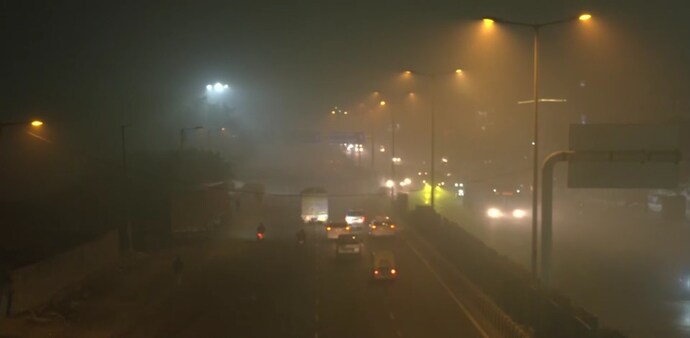
Delhi’s air quality deteriorated sharply today, slipping back into the ‘very poor’ category, with the city’s overall Air Quality Index (AQI) recorded at 390, according to the Central Pollution Control Board (CPCB). The renewed spike comes after a brief period of relief earlier in the week and reflects a broader pollution surge across the National Capital Region (NCR) amid dense fog and stagnant winter conditions.
As per the CPCB’s Delhi-NCR air quality bulletin issued at 4 pm on December 28, PM2.5 remained the dominant pollutant in most locations, pushing air quality into health-threatening territory across several cities. While Delhi remained in the ‘very poor’ category, multiple NCR cities recorded ‘severe’ AQI levels, significantly heightening health concerns for residents.
In Delhi, 19 of the 40 operational monitoring stations logged AQI readings in the ‘severe’ bracket. Anand Vihar emerged as the most polluted hotspot with an AQI of 457, while other areas continued to record ‘very poor’ air quality. The capital’s pollution levels have risen steadily since Friday, when the average AQI jumped to 332 — nearly 100 points higher than 234 recorded on December 25. On December 27, Delhi’s AQI stood at 385, before inching up further on December 28.
NCR chokes also
The pollution spike extended well beyond the capital. In Uttar Pradesh, Noida recorded a ‘severe’ AQI of 419, Greater Noida stood at 434, and Ghaziabad registered 414, placing all three cities firmly in the hazardous category . Several other UP cities, including Bulandshahr, Meerut, Muzaffarnagar and Hapur, reported ‘poor’ air quality, indicating widespread exposure risks across the region.
Haryana also witnessed deteriorating air conditions. Gurugram recorded an AQI of 353, Rewari’s Dharuhera touched 377, while Ballabgarh and Manesar logged AQI levels of 334 — each falling in the ‘very poor’ category . Bhiwadi in Rajasthan reported an AQI of 330, while cities such as Bharatpur and Alwar remained in the ‘moderate’ category, offering limited respite in an otherwise polluted NCR.
Fog alert
The worsening air quality has coincided with adverse weather conditions. The India Meteorological Department (IMD) issued an orange alert for dense to very dense fog amid cold conditions across large parts of north India. Dense fog is expected to persist during night and early morning hours over Himachal Pradesh, Punjab, Haryana-Chandigarh and West Uttar Pradesh until December 31, and over East Uttar Pradesh until January 1. Reduced visibility and low wind speeds are likely to further trap pollutants close to the ground.
In Uttar Pradesh, the prolonged cold wave and fog have prompted authorities to shut schools until January 1, 2026. Chief Minister Yogi Adityanath announced the decision citing health risks to children amid the prevailing weather conditions.
Drug firm executive quits
Beyond public health advisories and administrative responses, Delhi’s pollution crisis is now beginning to influence corporate decisions. In a rare development linking environmental health to executive leadership, Rajkumar Bafna, President-Finance of Akums Drugs and Pharmaceuticals Ltd, has resigned from his position, citing the persistently hazardous air quality in Delhi as the primary reason.
Bafna’s resignation, effective December 31, 2025, was confirmed by the company. In an internal email dated December 3, later shared with management, he flagged the serious health risks posed by Delhi’s deteriorating air quality and requested an expedited transition. While Akums’ regulatory filing to the National Stock Exchange and BSE cited “personal reasons” for the resignation, the company accepted his concerns internally, expressing regret at losing a seasoned finance leader.
Delhi’s air quality deteriorated sharply today, slipping back into the ‘very poor’ category, with the city’s overall Air Quality Index (AQI) recorded at 390, according to the Central Pollution Control Board (CPCB). The renewed spike comes after a brief period of relief earlier in the week and reflects a broader pollution surge across the National Capital Region (NCR) amid dense fog and stagnant winter conditions.
As per the CPCB’s Delhi-NCR air quality bulletin issued at 4 pm on December 28, PM2.5 remained the dominant pollutant in most locations, pushing air quality into health-threatening territory across several cities. While Delhi remained in the ‘very poor’ category, multiple NCR cities recorded ‘severe’ AQI levels, significantly heightening health concerns for residents.
In Delhi, 19 of the 40 operational monitoring stations logged AQI readings in the ‘severe’ bracket. Anand Vihar emerged as the most polluted hotspot with an AQI of 457, while other areas continued to record ‘very poor’ air quality. The capital’s pollution levels have risen steadily since Friday, when the average AQI jumped to 332 — nearly 100 points higher than 234 recorded on December 25. On December 27, Delhi’s AQI stood at 385, before inching up further on December 28.
NCR chokes also
The pollution spike extended well beyond the capital. In Uttar Pradesh, Noida recorded a ‘severe’ AQI of 419, Greater Noida stood at 434, and Ghaziabad registered 414, placing all three cities firmly in the hazardous category . Several other UP cities, including Bulandshahr, Meerut, Muzaffarnagar and Hapur, reported ‘poor’ air quality, indicating widespread exposure risks across the region.
Haryana also witnessed deteriorating air conditions. Gurugram recorded an AQI of 353, Rewari’s Dharuhera touched 377, while Ballabgarh and Manesar logged AQI levels of 334 — each falling in the ‘very poor’ category . Bhiwadi in Rajasthan reported an AQI of 330, while cities such as Bharatpur and Alwar remained in the ‘moderate’ category, offering limited respite in an otherwise polluted NCR.
Fog alert
The worsening air quality has coincided with adverse weather conditions. The India Meteorological Department (IMD) issued an orange alert for dense to very dense fog amid cold conditions across large parts of north India. Dense fog is expected to persist during night and early morning hours over Himachal Pradesh, Punjab, Haryana-Chandigarh and West Uttar Pradesh until December 31, and over East Uttar Pradesh until January 1. Reduced visibility and low wind speeds are likely to further trap pollutants close to the ground.
In Uttar Pradesh, the prolonged cold wave and fog have prompted authorities to shut schools until January 1, 2026. Chief Minister Yogi Adityanath announced the decision citing health risks to children amid the prevailing weather conditions.
Drug firm executive quits
Beyond public health advisories and administrative responses, Delhi’s pollution crisis is now beginning to influence corporate decisions. In a rare development linking environmental health to executive leadership, Rajkumar Bafna, President-Finance of Akums Drugs and Pharmaceuticals Ltd, has resigned from his position, citing the persistently hazardous air quality in Delhi as the primary reason.
Bafna’s resignation, effective December 31, 2025, was confirmed by the company. In an internal email dated December 3, later shared with management, he flagged the serious health risks posed by Delhi’s deteriorating air quality and requested an expedited transition. While Akums’ regulatory filing to the National Stock Exchange and BSE cited “personal reasons” for the resignation, the company accepted his concerns internally, expressing regret at losing a seasoned finance leader.