
AQI back to very poor: Delhi makes 2 curbs permanent under GRAP-4. Check what is banned
Delhi’s air quality has already begun to reflect the impact of unfavourable conditions. According to data from the Central Pollution Control Board (CPCB), the city’s Air Quality Index (AQI) stood at 390 at 6 pm on December 27, placing it firmly in the ‘Very Poor’ category.
- Dec 27, 2025,
- Updated Dec 28, 2025 10:26 PM IST
As Delhi’s air quality once again deteriorates, the city government has moved to harden its pollution-control framework by making two major restrictions under the Graded Response Action Plan (GRAP)-4 permanent. The decision comes amid renewed concerns over worsening weather conditions and rising pollution levels across the national capital.
Delhi Environment Minister Manjinder Singh Sirsa on Saturday announced that fuel stations across the city will no longer provide petrol to vehicles without a valid Pollution Under Control Certificate (PUCC). The measure, which was earlier implemented during severe pollution episodes, will now remain in force until further orders.
“From now on, it has been decided that out of the restrictions under GRAP-4, we have made two restrictions permanent. The first one is PUCC. You will not get petrol anywhere without a PUCC certificate,” Sirsa told reporters.
BS6 norms mandatory for Delhi entry
In another significant move, the minister said that vehicles entering Delhi from outside the city that do not comply with Bharat Stage VI (BS6) emission norms will face restrictions. The decision aims to curb emissions from older, more polluting vehicles that contribute heavily to deteriorating air quality during winter months.
“Vehicles from outside Delhi that are below Bharat Stage VI (BS6) will also face restrictions on entering Delhi,” Sirsa said, signalling a tougher stance on inter-state vehicular pollution.
Weather conditions under close watch
The government’s announcement comes as authorities brace for adverse meteorological conditions. Sirsa pointed to the likelihood of a Western Disturbance, which could worsen air quality by trapping pollutants closer to the ground.
“The possibility of bad weather is being indicated. Due to the Western Disturbance again, the weather may remain bad. Therefore, we are monitoring the situation,” he said.
Emphasising long-term relief rather than temporary fixes, Sirsa said the government’s priority is to prevent residents from facing repeated pollution-related hardships. “Our effort is that the people of Delhi do not have to face such challenges again,” he added.
AQI slips back to ‘very poor’
Delhi’s air quality has already begun to reflect the impact of unfavourable conditions. According to data from the Central Pollution Control Board (CPCB), the city’s Air Quality Index (AQI) stood at 390 at 6 pm on December 27, placing it firmly in the ‘Very Poor’ category.
Such air quality levels pose health risks, particularly for vulnerable groups including children, the elderly and those with respiratory illnesses. Experts advise limiting prolonged outdoor exposure and using masks during high-pollution periods.
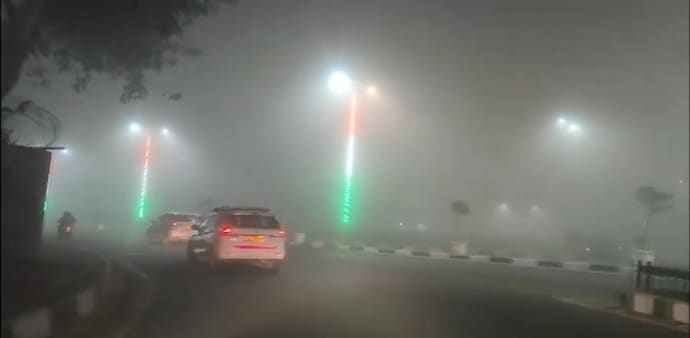
Thick smog and fog have further compounded the problem, reducing visibility and disrupting daily life across several parts of the city. Authorities said enforcement teams are ensuring compliance with measures such as the ‘No PUC, No Fuel’ rule to address the situation.
Stage III measures invoked
Meanwhile, the Commission for Air Quality Management (CAQM) has invoked Stage III measures under GRAP, which include restrictions on construction activities and certain industrial operations that contribute to particulate pollution.
The latest steps build on a broader policy push by the Delhi government to strengthen environmental governance. Earlier, the Delhi Cabinet, led by Chief Minister Rekha Gupta, approved an allocation of Rs 100 crore for the rejuvenation of water bodies across the capital. Of the nearly 1,000 water bodies in Delhi, around 160 fall under the direct jurisdiction of the Delhi government.
Officials say the combined measures are aimed at tackling pollution at its source while improving the city’s long-term environmental resilience, as Delhi continues to battle recurring winter smog episodes.
(With inputs from ANI)
As Delhi’s air quality once again deteriorates, the city government has moved to harden its pollution-control framework by making two major restrictions under the Graded Response Action Plan (GRAP)-4 permanent. The decision comes amid renewed concerns over worsening weather conditions and rising pollution levels across the national capital.
Delhi Environment Minister Manjinder Singh Sirsa on Saturday announced that fuel stations across the city will no longer provide petrol to vehicles without a valid Pollution Under Control Certificate (PUCC). The measure, which was earlier implemented during severe pollution episodes, will now remain in force until further orders.
“From now on, it has been decided that out of the restrictions under GRAP-4, we have made two restrictions permanent. The first one is PUCC. You will not get petrol anywhere without a PUCC certificate,” Sirsa told reporters.
BS6 norms mandatory for Delhi entry
In another significant move, the minister said that vehicles entering Delhi from outside the city that do not comply with Bharat Stage VI (BS6) emission norms will face restrictions. The decision aims to curb emissions from older, more polluting vehicles that contribute heavily to deteriorating air quality during winter months.
“Vehicles from outside Delhi that are below Bharat Stage VI (BS6) will also face restrictions on entering Delhi,” Sirsa said, signalling a tougher stance on inter-state vehicular pollution.
Weather conditions under close watch
The government’s announcement comes as authorities brace for adverse meteorological conditions. Sirsa pointed to the likelihood of a Western Disturbance, which could worsen air quality by trapping pollutants closer to the ground.
“The possibility of bad weather is being indicated. Due to the Western Disturbance again, the weather may remain bad. Therefore, we are monitoring the situation,” he said.
Emphasising long-term relief rather than temporary fixes, Sirsa said the government’s priority is to prevent residents from facing repeated pollution-related hardships. “Our effort is that the people of Delhi do not have to face such challenges again,” he added.
AQI slips back to ‘very poor’
Delhi’s air quality has already begun to reflect the impact of unfavourable conditions. According to data from the Central Pollution Control Board (CPCB), the city’s Air Quality Index (AQI) stood at 390 at 6 pm on December 27, placing it firmly in the ‘Very Poor’ category.
Such air quality levels pose health risks, particularly for vulnerable groups including children, the elderly and those with respiratory illnesses. Experts advise limiting prolonged outdoor exposure and using masks during high-pollution periods.
Thick smog and fog have further compounded the problem, reducing visibility and disrupting daily life across several parts of the city. Authorities said enforcement teams are ensuring compliance with measures such as the ‘No PUC, No Fuel’ rule to address the situation.
Stage III measures invoked
Meanwhile, the Commission for Air Quality Management (CAQM) has invoked Stage III measures under GRAP, which include restrictions on construction activities and certain industrial operations that contribute to particulate pollution.
The latest steps build on a broader policy push by the Delhi government to strengthen environmental governance. Earlier, the Delhi Cabinet, led by Chief Minister Rekha Gupta, approved an allocation of Rs 100 crore for the rejuvenation of water bodies across the capital. Of the nearly 1,000 water bodies in Delhi, around 160 fall under the direct jurisdiction of the Delhi government.
Officials say the combined measures are aimed at tackling pollution at its source while improving the city’s long-term environmental resilience, as Delhi continues to battle recurring winter smog episodes.
(With inputs from ANI)