
Delhi air pollution worsens: AQI dips to 352 as cloud seeding hits roadblock
Delhi air pollution: According to the Central Pollution Control Board, most stations showed a reading over 350. Even the ones that showed below 350 did not fare much better.
- Oct 30, 2025,
- Updated Oct 30, 2025 11:22 AM IST
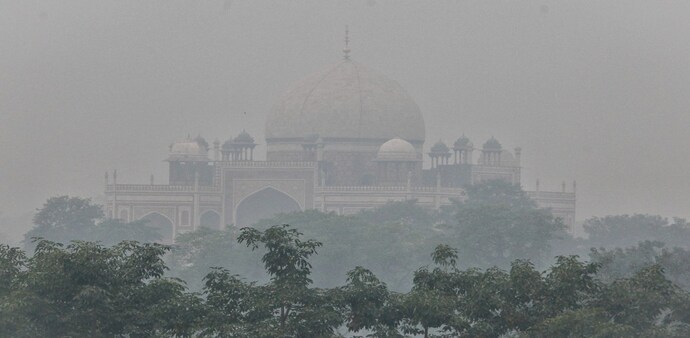
A thick blanket of smog engulfed Delhi on Thursday morning, bringing to a head days of deteriorating air quality. Delhi’s air quality index plunged overnight into the ‘very poor’ category with some stations marking AQI at over 400. Most stations showed readings upwards of 350 at 10 am on Thursday.
There was an 80 point spike in the AQI of Delhi, which stood at 352 on Thursday. The air quality of Gurgaon, Ghaziabad and Noida also dipped alarmingly.
DELHI’S POOR AIR QUALITY
According to the Central Pollution Control Board, most stations showed a reading over 350. Even the ones that showed below 350 did not fare much better. Here’s a lowdown of reading from some of the stations:
- Anand Vihar – 408
- CRRI Mathura Road – 348
- Dwarka Sector 8 – 376
- IGI Airport – 330
- ITO – 379
- Jahangirpuri – 398
- Jawaharlal Nehru Stadium – 371
- Lodhi Road – 342
- Mundka – 372
- Najafgarh – 344
- Narela – 380
- North Campus, DU – 366
- Okhla Phase 2 – 370
- Patparganj – 394
- Punjabi Bagh – 377
- Pusa – 363
- RK Puram – 382
- Rohini – 396
- Sirifort – 388
- Vivek Vihar – 418
CLOUD SEEDING A FAILURE?
IIT-Kanpur Director Manindra Agrawal admitted that the cloud seeding trials in the national capital did not succeed in inducing rainfall but said the activity provided key insights. He noted that the limited moisture in the clouds reduced the chances of rainfall during the trials.
Environment Minister Manjinder Singh Sirsa, however, described the cloud seeding trials conducted on Tuesday as successful. He said nine to ten trials will be conducted to determine the moisture content required to induce rain. Once IIT-Kanpur has concrete data, artificial rain can be created in Delhi when needed.
IIT-Kanpur, which carried out the trials, stated that the exercise cost Rs 60 lakh. The institute reported a measurable reduction of 6 to 10 per cent in PM2.5 and PM10 levels on Tuesday, suggesting that cloud seeding can help improve air quality even with limited moisture.
Director Agrawal also pointed out that the cost of cloud seeding is relatively low compared to other pollution control measures in the city. The trials, while not producing rain, offered valuable information for future efforts.
BAD AIR IMPACT
At a World Stroke Day forum, experts highlighted that Delhi's residents face greater vulnerability to strokes, especially with exposure to particulate matter levels far above World Health Organization limits.
Padma Shri awardee Dr MV Padma Srivastava, former Head of Neurology at AIIMS, New Delhi, noted that long-term exposure to fine particulate matter (PM2.5), sometimes 10 to 15 times above safe levels, can damage blood vessels and increase stroke risk, especially among those with diabetes or heart disease.
A thick blanket of smog engulfed Delhi on Thursday morning, bringing to a head days of deteriorating air quality. Delhi’s air quality index plunged overnight into the ‘very poor’ category with some stations marking AQI at over 400. Most stations showed readings upwards of 350 at 10 am on Thursday.
There was an 80 point spike in the AQI of Delhi, which stood at 352 on Thursday. The air quality of Gurgaon, Ghaziabad and Noida also dipped alarmingly.
DELHI’S POOR AIR QUALITY
According to the Central Pollution Control Board, most stations showed a reading over 350. Even the ones that showed below 350 did not fare much better. Here’s a lowdown of reading from some of the stations:
- Anand Vihar – 408
- CRRI Mathura Road – 348
- Dwarka Sector 8 – 376
- IGI Airport – 330
- ITO – 379
- Jahangirpuri – 398
- Jawaharlal Nehru Stadium – 371
- Lodhi Road – 342
- Mundka – 372
- Najafgarh – 344
- Narela – 380
- North Campus, DU – 366
- Okhla Phase 2 – 370
- Patparganj – 394
- Punjabi Bagh – 377
- Pusa – 363
- RK Puram – 382
- Rohini – 396
- Sirifort – 388
- Vivek Vihar – 418
CLOUD SEEDING A FAILURE?
IIT-Kanpur Director Manindra Agrawal admitted that the cloud seeding trials in the national capital did not succeed in inducing rainfall but said the activity provided key insights. He noted that the limited moisture in the clouds reduced the chances of rainfall during the trials.
Environment Minister Manjinder Singh Sirsa, however, described the cloud seeding trials conducted on Tuesday as successful. He said nine to ten trials will be conducted to determine the moisture content required to induce rain. Once IIT-Kanpur has concrete data, artificial rain can be created in Delhi when needed.
IIT-Kanpur, which carried out the trials, stated that the exercise cost Rs 60 lakh. The institute reported a measurable reduction of 6 to 10 per cent in PM2.5 and PM10 levels on Tuesday, suggesting that cloud seeding can help improve air quality even with limited moisture.
Director Agrawal also pointed out that the cost of cloud seeding is relatively low compared to other pollution control measures in the city. The trials, while not producing rain, offered valuable information for future efforts.
BAD AIR IMPACT
At a World Stroke Day forum, experts highlighted that Delhi's residents face greater vulnerability to strokes, especially with exposure to particulate matter levels far above World Health Organization limits.
Padma Shri awardee Dr MV Padma Srivastava, former Head of Neurology at AIIMS, New Delhi, noted that long-term exposure to fine particulate matter (PM2.5), sometimes 10 to 15 times above safe levels, can damage blood vessels and increase stroke risk, especially among those with diabetes or heart disease.