
Delhi pollution: AQI rose only 11 points after Diwali, says minister Manjinder Sirsa
Data from the CPCB indicated that out of 38 monitoring stations across the capital, 35 recorded air quality in the 'red zone,' with 31 stations classified as 'very poor' and four as 'severe'.
- Oct 21, 2025,
- Updated Oct 21, 2025 4:02 PM IST
Delhi pollution: Delhi environment minister Manjinder Singh Sirsa said that the increased AQI, result of higher pollution in the capital city, is not due to Diwali celebrations. During a press conference, Sirsa said that the air quality index only rose 11 points after Diwali celebrations on Monday evening.
Sirsa said the air quality index before Diwali was 341, and after the celebrations rose to 356, which was just 11 points up. He attributed the rise in pollution to stubble burning in AAP-ruled Punjab.
He said, "In 2020, the firecrackers in Diwali were going on. At that time, PM 2.5 was 414 before Diwali and 435 after Diwali. There was an increase of 21 points in the firecrackers. In 2021, there was an increase of 80 points. In 2024, when the firecrackers were banned, the AQI was 328 before Diwali and 360 after Diwali — 32 points increased when the firecrackers were banned.
On the order of the Supreme Court and on the request of the Delhi government, we got permission for green firecrackers... Before Diwali, the AQI was 345, and after Diwali, the AQI was 356, according to the CPCB's Sameer App... Only 11 points increased when the firecrackers were allowed. Will you hold Diwali responsible for this? Will you hold the faith of all the Sanatanas and Hindus in Delhi accountable?"
“Punjab farmers are being forced, threatened to burn parali (stubble)," said Sirsa.
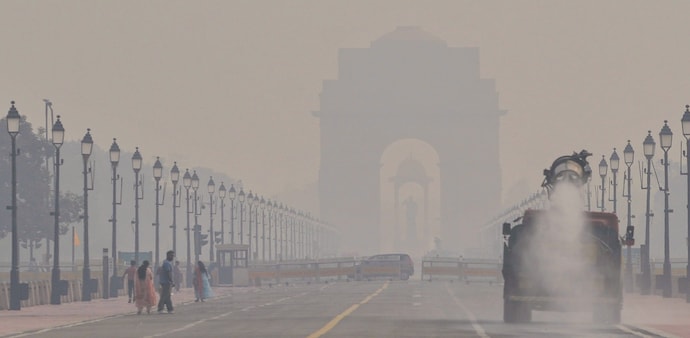
A dense grey haze and significantly reduced visibility plagued Delhi residents on Tuesday. The Central Pollution Control Board (CPCB) reported that Delhi's Air Quality Index (AQI) reached 359 at 11 am, categorising it as 'very poor’. Throughout the morning, the AQI readings consistently remained above 345, indicating sustained hazardous levels.
Data from the CPCB indicated that out of 38 monitoring stations across the capital, 35 recorded air quality in the 'red zone,' with 31 stations classified as 'very poor' and four as 'severe'. Specific areas such as Jahangirpuri, Wazirpur, Bawana, and Burari reported AQI values above 400, placing them in the 'severe' category. The SAMEER app, which provides real-time AQI data, reflected a city-wide deterioration in air quality.
The Supreme Court had specified that only green firecrackers could be used in Delhi-NCR, and only between 8 pm and 10 pm on Diwali. Despite this order issued on October 15, celebrations and the use of firecrackers continued well beyond the allotted window on Monday night, with 36 of the city's 38 monitoring stations had already registered pollution levels in the 'red zone.'
Delhi's 24-hour average AQI for Monday was reported at 345, falling into the 'very poor' category. Authorities expect the air quality to decline further, with more areas likely to move into the 'severe' category over the next two days.
Delhi pollution: Delhi environment minister Manjinder Singh Sirsa said that the increased AQI, result of higher pollution in the capital city, is not due to Diwali celebrations. During a press conference, Sirsa said that the air quality index only rose 11 points after Diwali celebrations on Monday evening.
Sirsa said the air quality index before Diwali was 341, and after the celebrations rose to 356, which was just 11 points up. He attributed the rise in pollution to stubble burning in AAP-ruled Punjab.
He said, "In 2020, the firecrackers in Diwali were going on. At that time, PM 2.5 was 414 before Diwali and 435 after Diwali. There was an increase of 21 points in the firecrackers. In 2021, there was an increase of 80 points. In 2024, when the firecrackers were banned, the AQI was 328 before Diwali and 360 after Diwali — 32 points increased when the firecrackers were banned.
On the order of the Supreme Court and on the request of the Delhi government, we got permission for green firecrackers... Before Diwali, the AQI was 345, and after Diwali, the AQI was 356, according to the CPCB's Sameer App... Only 11 points increased when the firecrackers were allowed. Will you hold Diwali responsible for this? Will you hold the faith of all the Sanatanas and Hindus in Delhi accountable?"
“Punjab farmers are being forced, threatened to burn parali (stubble)," said Sirsa.
A dense grey haze and significantly reduced visibility plagued Delhi residents on Tuesday. The Central Pollution Control Board (CPCB) reported that Delhi's Air Quality Index (AQI) reached 359 at 11 am, categorising it as 'very poor’. Throughout the morning, the AQI readings consistently remained above 345, indicating sustained hazardous levels.
Data from the CPCB indicated that out of 38 monitoring stations across the capital, 35 recorded air quality in the 'red zone,' with 31 stations classified as 'very poor' and four as 'severe'. Specific areas such as Jahangirpuri, Wazirpur, Bawana, and Burari reported AQI values above 400, placing them in the 'severe' category. The SAMEER app, which provides real-time AQI data, reflected a city-wide deterioration in air quality.
The Supreme Court had specified that only green firecrackers could be used in Delhi-NCR, and only between 8 pm and 10 pm on Diwali. Despite this order issued on October 15, celebrations and the use of firecrackers continued well beyond the allotted window on Monday night, with 36 of the city's 38 monitoring stations had already registered pollution levels in the 'red zone.'
Delhi's 24-hour average AQI for Monday was reported at 345, falling into the 'very poor' category. Authorities expect the air quality to decline further, with more areas likely to move into the 'severe' category over the next two days.