
Delhi Master Plan 2047: 40 lakh homes, 100-storey towers and air taxis in capital’s future
The plan promotes Transit-Oriented Development (TOD), encouraging higher-density residential and commercial development around Metro, railway and RRTS corridors
- Aug 24, 2026,
- Updated Aug 24, 2026 3:21 PM IST
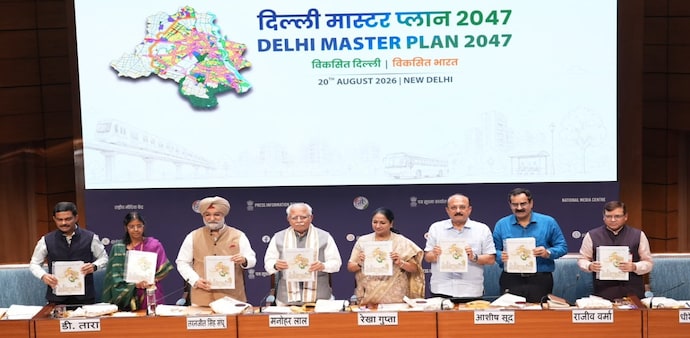
Delhi is set for a major transformation under the Master Plan for Delhi 2047 (MPD-2047), which lays out a roadmap for housing, transport, high-rise development, environmental restoration and a 24x7 economy.
The Delhi Development Authority (DDA) plan is designed to accommodate a projected population of nearly 3.2 crore by 2047, while making the capital more connected, sustainable and economically vibrant.
40 lakh new homes
Housing is among the biggest priorities in the blueprint. Delhi could require 30-40 lakh additional dwelling units by 2047 to meet population growth and housing demand.
The plan promotes Transit-Oriented Development (TOD), encouraging higher-density residential and commercial development around Metro, railway and RRTS corridors. Development within around 500 metres of mass-transit stations is expected to support more compact urban growth.
100-storey towers in Delhi
One of the most eye-catching proposals is the possibility of landmark buildings exceeding 100 floors in areas where infrastructure can support them.
The plan shifts Delhi towards vertical development, particularly around major transport corridors and commercial hubs. However, restrictions will continue in sensitive areas including the Lutyens' Bungalow Zone, Civil Lines, Connaught Place, the Ridge, Yamuna floodplain and protected heritage zones.
Metro network to reach 695 km
Delhi's public transport network is also set for a major expansion. The plan targets a 695-km Metro network by 2047, compared with roughly 416 km currently.
It also proposes six new RRTS corridors, seven high-speed rail corridors and improved regional connectivity. Major multimodal transport hubs are proposed at Anand Vihar, Sarai Kale Khan and Kashmere Gate.
Air taxis and futuristic mobility
MPD-2047 looks beyond Metro and buses, with future mobility options such as air taxis and air pods included in its vision.
The plan also envisages better connectivity between Delhi's IGI Airport and Noida International Airport at Jewar, alongside integrated ticketing, intelligent transport systems and technology-driven traffic management.
Yamuna restoration
The Yamuna features prominently in the environmental vision. The 22-km Wazirabad-Okhla stretch has been identified for ecological restoration, with 13 major projects covering around 1,700 hectares of floodplain.
The plan proposes treatment of all 22 drains flowing into the Yamuna and keeping the active floodplain free from construction, except for permitted recreational activities.
ALSO READ: Can Delhi’s canals become power plants? What Master Plan 2047 says on solar, hydro energy generation
Delhi's 24x7 economy
The blueprint also seeks to create a more vibrant night-time economy. 24-hour city nodes, precincts and circuits are proposed around tourism, culture, public spaces and commercial activity. Restaurants, retail, sports and cultural facilities could operate for longer hours, while walking and cycling networks are planned to improve public spaces.
MPD-2047 ultimately aims to reshape Delhi into a denser, better-connected and technology-driven capital, combining vertical development and futuristic transport with environmental protection and a stronger 24x7 economy.
Delhi is set for a major transformation under the Master Plan for Delhi 2047 (MPD-2047), which lays out a roadmap for housing, transport, high-rise development, environmental restoration and a 24x7 economy.
The Delhi Development Authority (DDA) plan is designed to accommodate a projected population of nearly 3.2 crore by 2047, while making the capital more connected, sustainable and economically vibrant.
40 lakh new homes
Housing is among the biggest priorities in the blueprint. Delhi could require 30-40 lakh additional dwelling units by 2047 to meet population growth and housing demand.
The plan promotes Transit-Oriented Development (TOD), encouraging higher-density residential and commercial development around Metro, railway and RRTS corridors. Development within around 500 metres of mass-transit stations is expected to support more compact urban growth.
100-storey towers in Delhi
One of the most eye-catching proposals is the possibility of landmark buildings exceeding 100 floors in areas where infrastructure can support them.
The plan shifts Delhi towards vertical development, particularly around major transport corridors and commercial hubs. However, restrictions will continue in sensitive areas including the Lutyens' Bungalow Zone, Civil Lines, Connaught Place, the Ridge, Yamuna floodplain and protected heritage zones.
Metro network to reach 695 km
Delhi's public transport network is also set for a major expansion. The plan targets a 695-km Metro network by 2047, compared with roughly 416 km currently.
It also proposes six new RRTS corridors, seven high-speed rail corridors and improved regional connectivity. Major multimodal transport hubs are proposed at Anand Vihar, Sarai Kale Khan and Kashmere Gate.
Air taxis and futuristic mobility
MPD-2047 looks beyond Metro and buses, with future mobility options such as air taxis and air pods included in its vision.
The plan also envisages better connectivity between Delhi's IGI Airport and Noida International Airport at Jewar, alongside integrated ticketing, intelligent transport systems and technology-driven traffic management.
Yamuna restoration
The Yamuna features prominently in the environmental vision. The 22-km Wazirabad-Okhla stretch has been identified for ecological restoration, with 13 major projects covering around 1,700 hectares of floodplain.
The plan proposes treatment of all 22 drains flowing into the Yamuna and keeping the active floodplain free from construction, except for permitted recreational activities.
ALSO READ: Can Delhi’s canals become power plants? What Master Plan 2047 says on solar, hydro energy generation
Delhi's 24x7 economy
The blueprint also seeks to create a more vibrant night-time economy. 24-hour city nodes, precincts and circuits are proposed around tourism, culture, public spaces and commercial activity. Restaurants, retail, sports and cultural facilities could operate for longer hours, while walking and cycling networks are planned to improve public spaces.
MPD-2047 ultimately aims to reshape Delhi into a denser, better-connected and technology-driven capital, combining vertical development and futuristic transport with environmental protection and a stronger 24x7 economy.