
Delhi Metro to London Underground: Here are the world’s top 18 metro systems. Check the full list
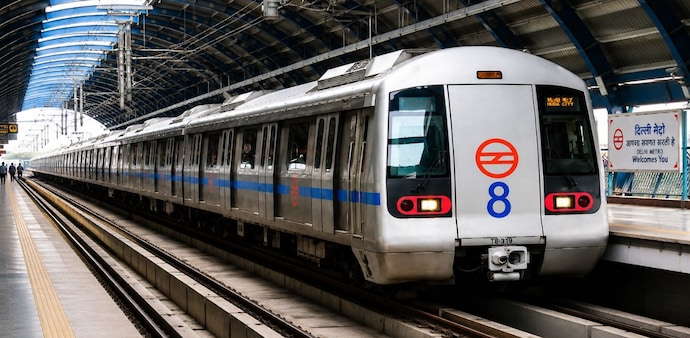
Delhi opened its first Metro line in 2002, becoming the second city in India after Kolkata to gain a metro.
- Oct 19, 2026,
- Updated Oct 19, 2026 2:00 AM IST
From London’s historic Underground to Tokyo’s vast and complex network, the world’s biggest cities rely on metro systems to keep millions of people moving every day. Among the 18 metro systems featured on the list, Delhi Metro stands out as India’s largest and busiest, with more than 2.3 billion trips recorded in 2025, 13 high-capacity lines, 303 stations and 258 miles of route, CNN reported on Saturday
Delhi Metro
Delhi opened its first Metro line in 2002, becoming the second city in India after Kolkata to gain a metro. The network expanded rapidly as the capital faced severe congestion and air pollution after its population doubled between 1981 and 1998.
Delhi Metro now serves Delhi and nearby cities including Faridabad, Gurgaon, Noiza and Ghadiabad. Its trains have reportedly helped reduce private car use and traffic accidents and drastically cut pollution. India’s Central Road Research Institute estimates that using the Metro saves commuters an estimated 66 minutes per day compared with driving.
Don't Miss: 'New Noida to become UP's next manufacturing hub': Land acquisition begins in 37 villages
London, Beijing and Copenhagen
London Underground, the world’s first subterranean railway, opened in January 1863. It now has 272 stations across a 250-mile (400-kilometer) network with 11 lines and is used by more than four million people daily. Despite its name, 55% of the system is above ground.
Beijing Metro, opened in 1971, has 27 lines, including one Maglev route, 490 stations and 564 miles of network. It recorded 3.6 billion trips in 2025, with close to 10 million trips per day. Six lines are fully automated.
Copenhagen Metro operates 24 hours a day, seven days a week, with four lines and 39 stations. More than 370,000 people use it daily, with trains running every two minutes for most of the day.
Paris, Tokyo, Seoul and New York
Paris Métro has 308 stations on 16 lines and has operated since 1900. Tokyo’s two subway systems, Tokyo Metro and Toei Subway, have 13 lines and 286 stations. Seoul Metro’s nine core lines cover about 203 miles, while its wider network extends to 809 miles and carries almost seven million passengers daily.
New York City Subway stretches 665 miles across 25 lines and 472 stations. It carries roughly four million passengers a day and operates 24 hours a day, 365 days a year.
Must Read: 'I hope Rishikesh holds on to its soul': Anand Mahindra reacts to spiritual town's makeover
More major metro networks
Mexico City STC Metro has 12 lines, 195 stations and more than 140 miles of tracks. Singapore’s fully automatic MRT has six lines covering 153 miles.
Berlin U-Bahn has nine lines and 175 stations and carries more than 1.5 million passengers daily. Moscow Metro has 309 stations, 337 miles of tracks and more than 8 million passengers a day.
Glasgow Subway opened in 1896 and was the world’s third underground railway after London and Budapest. Shanghai Mass Rapid Transit has 21 lines, 508 stations and more than 510 miles of network, carrying over 10 million passengers daily.
Kyiv Metro has three lines covering 42 miles. Since February 2022, 47 of its 52 stations have been designated as public bomb shelters.
Chicago’s “L” has eight lines, 145 stations and 103 miles of route. More than 138 million trips were made on it in 2025.
Hong Kong’s MTR operates more than 150 miles of route and 99 stations and regularly achieves a 99.9% “on-time” rate.
Budapest’s Line M1, completed in 1896, was the world’s first electrified underground subway system. The wider network has four lines.
From London’s historic Underground to Tokyo’s vast and complex network, the world’s biggest cities rely on metro systems to keep millions of people moving every day. Among the 18 metro systems featured on the list, Delhi Metro stands out as India’s largest and busiest, with more than 2.3 billion trips recorded in 2025, 13 high-capacity lines, 303 stations and 258 miles of route, CNN reported on Saturday
Delhi Metro
Delhi opened its first Metro line in 2002, becoming the second city in India after Kolkata to gain a metro. The network expanded rapidly as the capital faced severe congestion and air pollution after its population doubled between 1981 and 1998.
Delhi Metro now serves Delhi and nearby cities including Faridabad, Gurgaon, Noiza and Ghadiabad. Its trains have reportedly helped reduce private car use and traffic accidents and drastically cut pollution. India’s Central Road Research Institute estimates that using the Metro saves commuters an estimated 66 minutes per day compared with driving.
Don't Miss: 'New Noida to become UP's next manufacturing hub': Land acquisition begins in 37 villages
London, Beijing and Copenhagen
London Underground, the world’s first subterranean railway, opened in January 1863. It now has 272 stations across a 250-mile (400-kilometer) network with 11 lines and is used by more than four million people daily. Despite its name, 55% of the system is above ground.
Beijing Metro, opened in 1971, has 27 lines, including one Maglev route, 490 stations and 564 miles of network. It recorded 3.6 billion trips in 2025, with close to 10 million trips per day. Six lines are fully automated.
Copenhagen Metro operates 24 hours a day, seven days a week, with four lines and 39 stations. More than 370,000 people use it daily, with trains running every two minutes for most of the day.
Paris, Tokyo, Seoul and New York
Paris Métro has 308 stations on 16 lines and has operated since 1900. Tokyo’s two subway systems, Tokyo Metro and Toei Subway, have 13 lines and 286 stations. Seoul Metro’s nine core lines cover about 203 miles, while its wider network extends to 809 miles and carries almost seven million passengers daily.
New York City Subway stretches 665 miles across 25 lines and 472 stations. It carries roughly four million passengers a day and operates 24 hours a day, 365 days a year.
Must Read: 'I hope Rishikesh holds on to its soul': Anand Mahindra reacts to spiritual town's makeover
More major metro networks
Mexico City STC Metro has 12 lines, 195 stations and more than 140 miles of tracks. Singapore’s fully automatic MRT has six lines covering 153 miles.
Berlin U-Bahn has nine lines and 175 stations and carries more than 1.5 million passengers daily. Moscow Metro has 309 stations, 337 miles of tracks and more than 8 million passengers a day.
Glasgow Subway opened in 1896 and was the world’s third underground railway after London and Budapest. Shanghai Mass Rapid Transit has 21 lines, 508 stations and more than 510 miles of network, carrying over 10 million passengers daily.
Kyiv Metro has three lines covering 42 miles. Since February 2022, 47 of its 52 stations have been designated as public bomb shelters.
Chicago’s “L” has eight lines, 145 stations and 103 miles of route. More than 138 million trips were made on it in 2025.
Hong Kong’s MTR operates more than 150 miles of route and 99 stations and regularly achieves a 99.9% “on-time” rate.
Budapest’s Line M1, completed in 1896, was the world’s first electrified underground subway system. The wider network has four lines.