
Delhi’s air quality turns hazardous post-Diwali as PM2.5 levels hit three-year high
By 11 PM on Diwali night, the city’s Air Quality Index (AQI) stood at 347 (“very poor”), climbing further to 359 by Tuesday morning. The CPCB’s five-year dataset (2021–2025) analysed by Climate Trends confirms that Diwali 2025 produced one of the steepest single-night pollution surges recorded in recent years.
- Oct 21, 2025,
- Updated Oct 21, 2025 3:49 PM IST
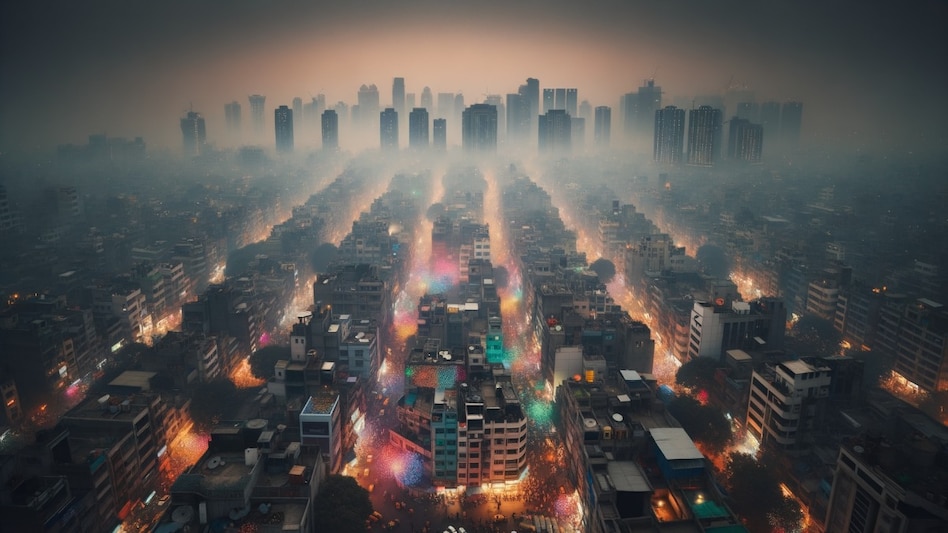
Delhi woke up choking under a dense layer of toxic smog on Tuesday, October 21, after a night of heavy firecracker use sent air pollution soaring to its highest level in three years. According to the Central Pollution Control Board (CPCB) and Delhi Pollution Control Committee (DPCC) data, PM₂.₅ concentrations averaged 488 µg/m³ in the hours following Diwali — nearly 20 times above the safe limit.
Despite the Supreme Court’s restrictions on firecrackers, Delhi’s air quality deteriorated sharply overnight. Real-time data from monitoring stations showed Particulate Matter (PM) 2.5 and PM10 levels spiking across the capital, with several locations — including Anand Vihar, Dwarka Sector 8, Patparganj, and Jahangirpuri — registering readings between 1,400 and 1,800 µg/m³.
By 11 PM on Diwali night, the city’s Air Quality Index (AQI) stood at 347 (“very poor”), climbing further to 359 by Tuesday morning. The CPCB’s five-year dataset (2021–2025) analysed by Climate Trends confirms that Diwali 2025 produced one of the steepest single-night pollution surges recorded in recent years.
Diwali 2025 worst in five years
The CPCB analysis revealed that Delhi’s post-Diwali PM₂.₅ levels averaged 488 µg/m³, marking a 212% rise from pre-Diwali conditions. Peak concentrations touched 675 µg/m³ late on October 20, driven by stagnant air and low wind speeds below 1 m/s, which prevented the dispersion of pollutants. The sudden drop in temperature — from 27°C to 19°C overnight — further created an inversion layer, trapping toxic particles close to the surface.
In contrast, Diwali AQI levels in previous years were significantly lower — 328 in 2024, 218 in 2023, and 312 in 2022 — highlighting 2025 as the most polluted festive period since the pandemic.
Stubble burning falls
Interestingly, the spike in pollution occurred despite a 77% drop in stubble burning incidents across Punjab and Haryana compared to 2024, largely due to floods that disrupted crop residue burning. Between October 1 and 12, 2025, Punjab recorded just 105 fire incidents and Haryana 70, a combined total of 175, compared to 779 fires in the same period last year.
This significant reduction coincided with a 15.5% improvement in Delhi’s average PM₂.₅ levels earlier in the month. However, the post-Diwali spike proved that local emissions — especially firecrackers and vehicular pollution — continue to dominate Delhi’s winter smog.
Impact of Stubble Burning on Delhi’s PM2.5
Date | Count_Punjab | Count_Haryana | Delhi_PM2.5 (µg/m³) -------------|---------------|---------------|--------------------- 01-10-2024 | 32 | 10 | 68.38 02-10-2024 | 19 | 24 | 71.19 03-10-2024 | 10 | 8 | 58.39 04-10-2024 | 3 | 7 | 62.22 05-10-2024 | 7 | 19 | 45.14 06-10-2024 | 4 | 40 | 46.24 07-10-2024 | 41 | 36 | 52.75 08-10-2024 | 17 | 29 | 73.32 09-10-2024 | 30 | 14 | 68.33 10-10-2024 | 57 | 39 | 51.62 11-10-2024 | 51 | 44 | 60.74 12-10-2024 | 121 | 111 | 74.79 --------------------------------------------------------------- 01-10-2025 | 5 | 5 | 45.91 02-10-2025 | 5 | 2 | 47.29 03-10-2025 | 7 | 2 | 36.79 04-10-2025 | 24 | 10 | 66.78 05-10-2025 | 7 | 10 | 66.84 06-10-2025 | NaN | NaN | 32.49 07-10-2025 | NaN | 8 | 22.80 08-10-2025 | 1 | 7 | 36.61 09-10-2025 | 4 | 6 | 40.75 10-10-2025 | 26 | 9 | 63.79 11-10-2025 | 14 | 6 | 74.02 12-10-2025 | 16 | 5 | 63.66
“The 2025 floods unintentionally achieved what policy enforcement often struggles to do — reducing farm fires drastically. But even with that relief, Delhi’s base pollution load kept PM₂.₅ above 50 µg/m³, underscoring the persistent impact of urban and industrial sources,” said Climate Trends after an analysis of Central Pollution Control Board (CPCB) data from 2021–2025.
Air quality
Experts believe that while agricultural fires amplify pollution, long-term air quality improvement will depend on curbing vehicular emissions, industrial output, and construction dust. Meteorological conditions are expected to worsen over the next few weeks as wind speeds drop and humidity rises — conditions ripe for smog formation.
For now, Delhi’s air remains in the “severe” zone, with hospitals reporting a surge in respiratory complaints. The data reaffirms a stark reality: even with reduced stubble burning, firecracker emissions alone can push Delhi’s air to life-threatening levels — a recurring public health emergency demanding urgent policy action.
Delhi woke up choking under a dense layer of toxic smog on Tuesday, October 21, after a night of heavy firecracker use sent air pollution soaring to its highest level in three years. According to the Central Pollution Control Board (CPCB) and Delhi Pollution Control Committee (DPCC) data, PM₂.₅ concentrations averaged 488 µg/m³ in the hours following Diwali — nearly 20 times above the safe limit.
Despite the Supreme Court’s restrictions on firecrackers, Delhi’s air quality deteriorated sharply overnight. Real-time data from monitoring stations showed Particulate Matter (PM) 2.5 and PM10 levels spiking across the capital, with several locations — including Anand Vihar, Dwarka Sector 8, Patparganj, and Jahangirpuri — registering readings between 1,400 and 1,800 µg/m³.
By 11 PM on Diwali night, the city’s Air Quality Index (AQI) stood at 347 (“very poor”), climbing further to 359 by Tuesday morning. The CPCB’s five-year dataset (2021–2025) analysed by Climate Trends confirms that Diwali 2025 produced one of the steepest single-night pollution surges recorded in recent years.
Diwali 2025 worst in five years
The CPCB analysis revealed that Delhi’s post-Diwali PM₂.₅ levels averaged 488 µg/m³, marking a 212% rise from pre-Diwali conditions. Peak concentrations touched 675 µg/m³ late on October 20, driven by stagnant air and low wind speeds below 1 m/s, which prevented the dispersion of pollutants. The sudden drop in temperature — from 27°C to 19°C overnight — further created an inversion layer, trapping toxic particles close to the surface.
In contrast, Diwali AQI levels in previous years were significantly lower — 328 in 2024, 218 in 2023, and 312 in 2022 — highlighting 2025 as the most polluted festive period since the pandemic.
Stubble burning falls
Interestingly, the spike in pollution occurred despite a 77% drop in stubble burning incidents across Punjab and Haryana compared to 2024, largely due to floods that disrupted crop residue burning. Between October 1 and 12, 2025, Punjab recorded just 105 fire incidents and Haryana 70, a combined total of 175, compared to 779 fires in the same period last year.
This significant reduction coincided with a 15.5% improvement in Delhi’s average PM₂.₅ levels earlier in the month. However, the post-Diwali spike proved that local emissions — especially firecrackers and vehicular pollution — continue to dominate Delhi’s winter smog.
Impact of Stubble Burning on Delhi’s PM2.5
Date | Count_Punjab | Count_Haryana | Delhi_PM2.5 (µg/m³) -------------|---------------|---------------|--------------------- 01-10-2024 | 32 | 10 | 68.38 02-10-2024 | 19 | 24 | 71.19 03-10-2024 | 10 | 8 | 58.39 04-10-2024 | 3 | 7 | 62.22 05-10-2024 | 7 | 19 | 45.14 06-10-2024 | 4 | 40 | 46.24 07-10-2024 | 41 | 36 | 52.75 08-10-2024 | 17 | 29 | 73.32 09-10-2024 | 30 | 14 | 68.33 10-10-2024 | 57 | 39 | 51.62 11-10-2024 | 51 | 44 | 60.74 12-10-2024 | 121 | 111 | 74.79 --------------------------------------------------------------- 01-10-2025 | 5 | 5 | 45.91 02-10-2025 | 5 | 2 | 47.29 03-10-2025 | 7 | 2 | 36.79 04-10-2025 | 24 | 10 | 66.78 05-10-2025 | 7 | 10 | 66.84 06-10-2025 | NaN | NaN | 32.49 07-10-2025 | NaN | 8 | 22.80 08-10-2025 | 1 | 7 | 36.61 09-10-2025 | 4 | 6 | 40.75 10-10-2025 | 26 | 9 | 63.79 11-10-2025 | 14 | 6 | 74.02 12-10-2025 | 16 | 5 | 63.66
“The 2025 floods unintentionally achieved what policy enforcement often struggles to do — reducing farm fires drastically. But even with that relief, Delhi’s base pollution load kept PM₂.₅ above 50 µg/m³, underscoring the persistent impact of urban and industrial sources,” said Climate Trends after an analysis of Central Pollution Control Board (CPCB) data from 2021–2025.
Air quality
Experts believe that while agricultural fires amplify pollution, long-term air quality improvement will depend on curbing vehicular emissions, industrial output, and construction dust. Meteorological conditions are expected to worsen over the next few weeks as wind speeds drop and humidity rises — conditions ripe for smog formation.
For now, Delhi’s air remains in the “severe” zone, with hospitals reporting a surge in respiratory complaints. The data reaffirms a stark reality: even with reduced stubble burning, firecracker emissions alone can push Delhi’s air to life-threatening levels — a recurring public health emergency demanding urgent policy action.