
Delhi’s air turns deadly: AQI crosses 400 in several areas, govt staggers office timings
The Air Quality Early Warning System for Delhi has forecast that air quality will remain in the ‘very poor’ category over the next few days. Since Diwali, Delhi’s air quality has consistently fluctuated between ‘poor’ and ‘very poor’, occasionally slipping into the ‘severe’ zone.
- Nov 8, 2025,
- Updated Nov 8, 2025 8:31 PM IST
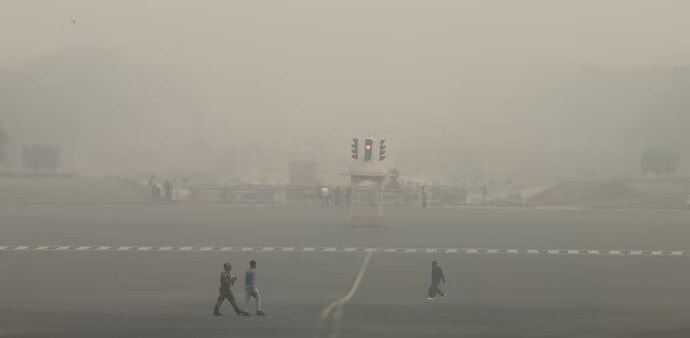
Delhi residents suffered yet another day of suffocating smog on Saturday as air pollution levels surged past the 400 mark in several parts of the city, putting the national capital firmly among the most polluted cities in India.
According to data from the Central Pollution Control Board (CPCB), Delhi’s 24-hour average Air Quality Index (AQI) stood at 361 at 4 pm — a level classified as “very poor” — making it the second most polluted city in the country.
Many residents have shared clips of AQI readings from their places, several of such readings showing very high AQI readings.
Toxic pockets across the capital
Multiple monitoring stations across Delhi reported AQI readings in the “severe” range.
- Alipur: 404
- ITO: 402
- Nehru Nagar: 406
- Vivek Vihar: 411
- Wazirpur: 420
- Burari: 418
The CPCB’s Sameer app data from 38 stations across the city showed that PM2.5 and PM10 remain the key pollutants driving the pollution crisis.
In the NCR region, air quality also remained hazardous, with Noida (354), Greater Noida (336), and Ghaziabad (339) all recording “very poor” air quality. On November 7, Delhi’s AQI was 322 — already the highest among Indian cities.
The Decision Support System (DSS) for air quality forecasting estimated that stubble burning contributed around 30% to Delhi’s pollution, while transport emissions accounted for 15.2% on Sunday.
Satellite data recorded 100 stubble-burning incidents in Punjab, 18 in Haryana, and 164 in Uttar Pradesh on Friday, underlining the persistent role of agricultural residue burning in worsening Delhi’s smog each winter.
‘Very Poor’ air to persist
The Air Quality Early Warning System for Delhi has forecast that air quality will remain in the ‘very poor’ category over the next few days. Since Diwali, Delhi’s air quality has consistently fluctuated between ‘poor’ and ‘very poor’, occasionally slipping into the ‘severe’ zone.
As per the CPCB classification, AQI levels between:
- 0-50 are good,
- 51-100 satisfactory,
- 101-200 moderate,
- 201-300 poor,
- 301-400 very poor, and
- 401-500 severe.
Delhi govt introduces staggered timings
Amid the worsening air crisis, Delhi Chief Minister Rekha Gupta on November 7 announced staggered working hours for Delhi government and Municipal Corporation of Delhi (MCD) offices to help reduce vehicular congestion during peak hours.
Currently, Delhi government employees work from 9:30 am to 6:00 pm, while MCD staff follow 9:00 am to 5:30 pm schedules — creating heavy traffic overlap during rush hours.
Under the new timings proposed for the winter season (November 15, 2025 – February 15, 2026):
- Delhi Government offices: 10:00 am to 6:30 pm
- MCD offices: 8:30 am to 5:00 pm
Officials hope that staggering start and end times will distribute traffic more evenly, cutting down peak-hour emissions and easing air quality stress during the most polluted months.
Delhi residents suffered yet another day of suffocating smog on Saturday as air pollution levels surged past the 400 mark in several parts of the city, putting the national capital firmly among the most polluted cities in India.
According to data from the Central Pollution Control Board (CPCB), Delhi’s 24-hour average Air Quality Index (AQI) stood at 361 at 4 pm — a level classified as “very poor” — making it the second most polluted city in the country.
Many residents have shared clips of AQI readings from their places, several of such readings showing very high AQI readings.
Toxic pockets across the capital
Multiple monitoring stations across Delhi reported AQI readings in the “severe” range.
- Alipur: 404
- ITO: 402
- Nehru Nagar: 406
- Vivek Vihar: 411
- Wazirpur: 420
- Burari: 418
The CPCB’s Sameer app data from 38 stations across the city showed that PM2.5 and PM10 remain the key pollutants driving the pollution crisis.
In the NCR region, air quality also remained hazardous, with Noida (354), Greater Noida (336), and Ghaziabad (339) all recording “very poor” air quality. On November 7, Delhi’s AQI was 322 — already the highest among Indian cities.
The Decision Support System (DSS) for air quality forecasting estimated that stubble burning contributed around 30% to Delhi’s pollution, while transport emissions accounted for 15.2% on Sunday.
Satellite data recorded 100 stubble-burning incidents in Punjab, 18 in Haryana, and 164 in Uttar Pradesh on Friday, underlining the persistent role of agricultural residue burning in worsening Delhi’s smog each winter.
‘Very Poor’ air to persist
The Air Quality Early Warning System for Delhi has forecast that air quality will remain in the ‘very poor’ category over the next few days. Since Diwali, Delhi’s air quality has consistently fluctuated between ‘poor’ and ‘very poor’, occasionally slipping into the ‘severe’ zone.
As per the CPCB classification, AQI levels between:
- 0-50 are good,
- 51-100 satisfactory,
- 101-200 moderate,
- 201-300 poor,
- 301-400 very poor, and
- 401-500 severe.
Delhi govt introduces staggered timings
Amid the worsening air crisis, Delhi Chief Minister Rekha Gupta on November 7 announced staggered working hours for Delhi government and Municipal Corporation of Delhi (MCD) offices to help reduce vehicular congestion during peak hours.
Currently, Delhi government employees work from 9:30 am to 6:00 pm, while MCD staff follow 9:00 am to 5:30 pm schedules — creating heavy traffic overlap during rush hours.
Under the new timings proposed for the winter season (November 15, 2025 – February 15, 2026):
- Delhi Government offices: 10:00 am to 6:30 pm
- MCD offices: 8:30 am to 5:00 pm
Officials hope that staggering start and end times will distribute traffic more evenly, cutting down peak-hour emissions and easing air quality stress during the most polluted months.