
Delhi's monsoon is here but the rain isn't: When will the capital get proper showers?
Despite intermittent showers over the past few days, muggy conditions and soaring "feels-like" temperatures have continued to dominate, leaving people wondering why the monsoon has not yet settled into its usual rhythm
- Jul 6, 2026,
- Updated Jul 6, 2026 11:27 AM IST
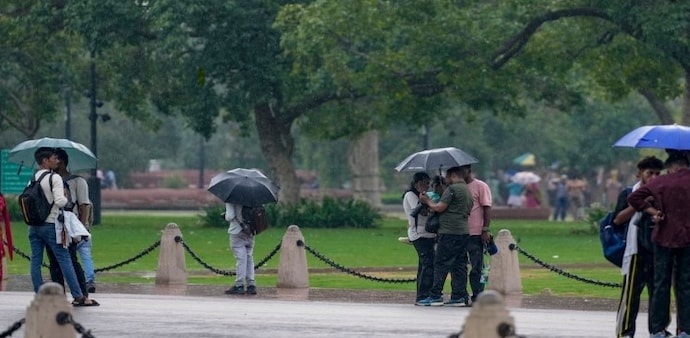
The southwest monsoon arrived in Delhi on July 2, officially, at least. But for many residents, the season has so far brought more humidity than relief. Despite intermittent showers over the past few days, muggy conditions and soaring "feels-like" temperatures have persisted, leaving people wondering why the monsoon has not yet settled into its usual rhythm.
The explanation, according to weather experts, lies elsewhere in the country. "Cyclonic circulations over Madhya Pradesh and a low-pressure area over Odisha had drawn the monsoon trough towards central India, leading to reduced rainfall over Delhi. The trough is now expected to gradually shift back towards Delhi and the Indo-Gangetic plains, increasing the likelihood of more widespread and seasonally consistent monsoon rainfall," said Mahesh Pehlawat, Vice President of Skymet Weather, according to Hindustan Times.
The India Meteorological Department (IMD) has echoed that outlook and issued an orange alert for Monday, forecasting a generally cloudy sky with moderate rainfall across the national capital.
DO CHECKOUT: Rain batters Mumbai: Landslide near ‘Missing Link’ exit, traffic suspended on Pune-Mumbai Expressway, old highway
What Delhi's weather actually looks like right now
Delhi woke up to hot and humid conditions on Monday despite the rain forecast. The IMD expects the maximum and minimum temperatures to hover around 32 degrees Celsius and 27 degrees Celsius, respectively, with generally cloudy skies and moderate rainfall through the day.
The alert comes after Delhi recorded its hottest July day in two years on Sunday. The maximum temperature climbed to 38.6 degrees Celsius, two degrees above the seasonal average and the highest July reading since July 11, 2024, when it touched 38.8 degrees Celsius. The minimum settled at 29.2 degrees Celsius, 1.3 degrees above normal and the highest July minimum since July 2, 2024.
Moderate showers brought brief relief in parts of Delhi-NCR on Sunday afternoon. Chhatarpur recorded the highest rainfall at 49 mm, followed by Gurugram (35 mm), Mehrauli (18 mm), Greater Noida (17 mm), Najafgarh (8 mm) and Janakpuri (7 mm). However, the rain also triggered waterlogging in several areas, disrupting traffic. Relative humidity reached 92% by 5:30 pm, keeping conditions uncomfortably muggy.
The deficit in numbers
The rainfall shortfall continues to underline Delhi's uneven monsoon. Between June 1 and June 30, the city received 32.91 mm of rain against a normal of 74.1 mm, leaving it with a 55.6% rainfall deficit for the month.
With the monsoon trough expected to move back towards north India over the next few days, weather experts say Delhi could finally see the widespread and sustained rainfall typical of the season, helping narrow the rainfall deficit while bringing more lasting relief from the persistent heat and humidity.
The southwest monsoon arrived in Delhi on July 2, officially, at least. But for many residents, the season has so far brought more humidity than relief. Despite intermittent showers over the past few days, muggy conditions and soaring "feels-like" temperatures have persisted, leaving people wondering why the monsoon has not yet settled into its usual rhythm.
The explanation, according to weather experts, lies elsewhere in the country. "Cyclonic circulations over Madhya Pradesh and a low-pressure area over Odisha had drawn the monsoon trough towards central India, leading to reduced rainfall over Delhi. The trough is now expected to gradually shift back towards Delhi and the Indo-Gangetic plains, increasing the likelihood of more widespread and seasonally consistent monsoon rainfall," said Mahesh Pehlawat, Vice President of Skymet Weather, according to Hindustan Times.
The India Meteorological Department (IMD) has echoed that outlook and issued an orange alert for Monday, forecasting a generally cloudy sky with moderate rainfall across the national capital.
DO CHECKOUT: Rain batters Mumbai: Landslide near ‘Missing Link’ exit, traffic suspended on Pune-Mumbai Expressway, old highway
What Delhi's weather actually looks like right now
Delhi woke up to hot and humid conditions on Monday despite the rain forecast. The IMD expects the maximum and minimum temperatures to hover around 32 degrees Celsius and 27 degrees Celsius, respectively, with generally cloudy skies and moderate rainfall through the day.
The alert comes after Delhi recorded its hottest July day in two years on Sunday. The maximum temperature climbed to 38.6 degrees Celsius, two degrees above the seasonal average and the highest July reading since July 11, 2024, when it touched 38.8 degrees Celsius. The minimum settled at 29.2 degrees Celsius, 1.3 degrees above normal and the highest July minimum since July 2, 2024.
Moderate showers brought brief relief in parts of Delhi-NCR on Sunday afternoon. Chhatarpur recorded the highest rainfall at 49 mm, followed by Gurugram (35 mm), Mehrauli (18 mm), Greater Noida (17 mm), Najafgarh (8 mm) and Janakpuri (7 mm). However, the rain also triggered waterlogging in several areas, disrupting traffic. Relative humidity reached 92% by 5:30 pm, keeping conditions uncomfortably muggy.
The deficit in numbers
The rainfall shortfall continues to underline Delhi's uneven monsoon. Between June 1 and June 30, the city received 32.91 mm of rain against a normal of 74.1 mm, leaving it with a 55.6% rainfall deficit for the month.
With the monsoon trough expected to move back towards north India over the next few days, weather experts say Delhi could finally see the widespread and sustained rainfall typical of the season, helping narrow the rainfall deficit while bringing more lasting relief from the persistent heat and humidity.