
'Don’t burn ties with strong ally like India': Nikki Haley hits back at Trump on tariff escalation
In a post on social media platform X, Haley said, “India should not be buying oil from Russia. But China, an adversary and the number one buyer of Russian and Iranian oil, got a 90-day tariff pause.”
- Aug 5, 2025,
- Updated Aug 5, 2025 8:55 PM IST
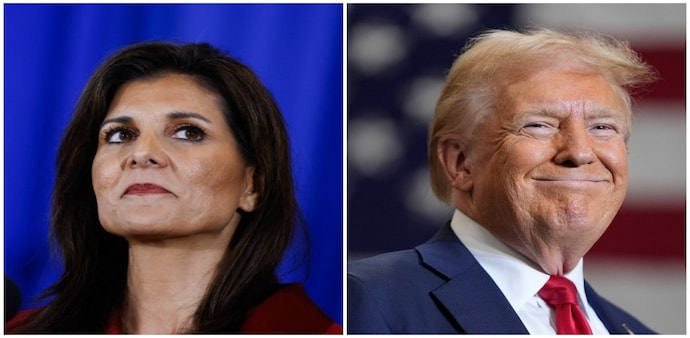
Republican leader and former US Ambassador to the United Nations Nikki Haley has criticised US President Donald Trump’s threat to impose steep new tariffs on Indian exports, cautioning that such a move could damage the US-India strategic partnership at a critical time.
In a post on social media platform X, Haley said, “India should not be buying oil from Russia. But China, an adversary and the number one buyer of Russian and Iranian oil, got a 90-day tariff pause.”
She added, “Don’t give China a pass and burn a relationship with a strong ally like India.”
Haley, a prominent Republican voice on foreign policy and a long-time supporter of stronger U.S.-India ties, has regularly called out Beijing’s global influence while advocating closer coordination with democratic partners in the Indo-Pacific, especially India.
Her comments came in response to Donald Trump’s interview with CNBC, in which the US President said he plans to sharply increase tariffs on Indian goods within 24 hours. Trump linked the move directly to India’s continued purchases of Russian oil, suggesting that New Delhi was “fuelling the war machine.”
“India has the highest tariffs of any country,” Trump said during the interview. “They do a lot of business with us. We don’t do much with them. We agreed on 25% tariffs, but I’m going to raise that very substantially now because of their Russian oil trade.”
Trump acknowledged that India had offered to lower tariffs on US goods to zero under a new deal, but dismissed it as insufficient given India's geopolitical stance. “Zero tariffs aren’t enough when they’re helping fund a war we oppose,” he said.
India’s foreign ministry has previously rejected the notion that it is being treated fairly, noting that the US and EU continue their own energy and trade relations with Russia despite public criticism. India, one of the largest buyers of Russian crude, has defended its right to make energy decisions based on national interests.
Meanwhile, the economic fallout of Trump’s proposed tariff escalation is beginning to show. Ratings agency ICRA on Monday revised India’s GDP growth forecast for FY26 down to 6.0% from 6.2%, citing U.S. trade actions and policy uncertainty as contributing factors.
ICRA warned that India’s export competitiveness could suffer, especially in sectors like textiles, auto components, chemicals, and gems and jewellery — all of which depend heavily on access to the U.S. market. The trade surplus with the U.S., which had climbed to $41 billion in FY25, could narrow significantly, it noted.
However, the impact may not be uniform. Pharmaceuticals, petroleum products, and telecom instruments — three sectors with strong US exposure — are expected to remain relatively stable for now. Notably, Indian pharma exports to the US comprise over 37% of total outbound shipments and have so far been spared from tariff hikes.
Republican leader and former US Ambassador to the United Nations Nikki Haley has criticised US President Donald Trump’s threat to impose steep new tariffs on Indian exports, cautioning that such a move could damage the US-India strategic partnership at a critical time.
In a post on social media platform X, Haley said, “India should not be buying oil from Russia. But China, an adversary and the number one buyer of Russian and Iranian oil, got a 90-day tariff pause.”
She added, “Don’t give China a pass and burn a relationship with a strong ally like India.”
Haley, a prominent Republican voice on foreign policy and a long-time supporter of stronger U.S.-India ties, has regularly called out Beijing’s global influence while advocating closer coordination with democratic partners in the Indo-Pacific, especially India.
Her comments came in response to Donald Trump’s interview with CNBC, in which the US President said he plans to sharply increase tariffs on Indian goods within 24 hours. Trump linked the move directly to India’s continued purchases of Russian oil, suggesting that New Delhi was “fuelling the war machine.”
“India has the highest tariffs of any country,” Trump said during the interview. “They do a lot of business with us. We don’t do much with them. We agreed on 25% tariffs, but I’m going to raise that very substantially now because of their Russian oil trade.”
Trump acknowledged that India had offered to lower tariffs on US goods to zero under a new deal, but dismissed it as insufficient given India's geopolitical stance. “Zero tariffs aren’t enough when they’re helping fund a war we oppose,” he said.
India’s foreign ministry has previously rejected the notion that it is being treated fairly, noting that the US and EU continue their own energy and trade relations with Russia despite public criticism. India, one of the largest buyers of Russian crude, has defended its right to make energy decisions based on national interests.
Meanwhile, the economic fallout of Trump’s proposed tariff escalation is beginning to show. Ratings agency ICRA on Monday revised India’s GDP growth forecast for FY26 down to 6.0% from 6.2%, citing U.S. trade actions and policy uncertainty as contributing factors.
ICRA warned that India’s export competitiveness could suffer, especially in sectors like textiles, auto components, chemicals, and gems and jewellery — all of which depend heavily on access to the U.S. market. The trade surplus with the U.S., which had climbed to $41 billion in FY25, could narrow significantly, it noted.
However, the impact may not be uniform. Pharmaceuticals, petroleum products, and telecom instruments — three sectors with strong US exposure — are expected to remain relatively stable for now. Notably, Indian pharma exports to the US comprise over 37% of total outbound shipments and have so far been spared from tariff hikes.