
'Economy on the brink of a major crisis': Top agri economist wants fertiliser subsidy scrapped
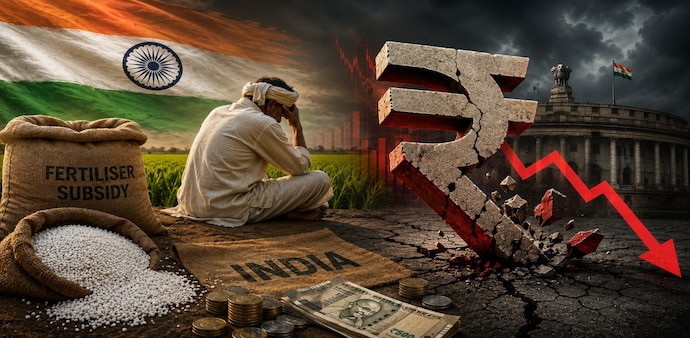
The economy seems to be on the brink of a major crisis. The only rational way to avoid this is to carry out major reforms, similar to those in 1991, say economists
- May 25, 2026,
- Updated May 25, 2026 3:39 PM IST
India must undertake major structural reforms, including an overhaul of fertiliser and food subsidies, if it wants to avoid a deeper economic crisis, agricultural economist Ashok Gulati and senior fellow Ritika Juneja have argued in an opinion piece in The Indian Express.
The two economists warned that the Indian rupee could slide to Rs 100 against the US dollar if pressures persist and the Reserve Bank of India is forced to spend heavily to defend the currency.
"The Indian rupee continues to weaken against the US dollar. If the RBI does not intervene decisively, the exchange rate could well slide to Rs 100 per US dollar," they wrote.
Don't Miss: Here’s how the West Asia conflict will impact India’s economy in FY27
According to the authors, the crisis in West Asia has raised India's energy and fertiliser costs, while foreign investors are pulling money out of the country, and domestic investment sentiment remains weak.
They estimated that India would be "lucky to clock 6 per cent GDP growth and contain Consumer Price Index (CPI) inflation below 6 per cent" in FY27 under current conditions.
The situation could worsen if the Strait of Hormuz remains closed for an extended period, they said.
"If the Strait of Hormuz remains closed for another three months, GDP growth will fall below 6 per cent, and CPI inflation will shoot above 6 per cent," the authors wrote, adding that the RBI may then have little option but to raise interest rates.
Don't Miss: What's behind rupee's recent gain after hitting record low?
Against this backdrop, Gulati and Juneja argued that India needs reforms comparable to those undertaken in 1991. "The economy seems to be on the brink of a major crisis. The only rational way to avoid this is to carry out major reforms, similar to those in 1991," they wrote.
A key focus of their criticism was the fertiliser subsidy regime.
The authors noted that India imports 20-25 per cent of its urea requirements and that the latest import tender indicated a landed cost of about $935 per tonne. Yet urea is sold to farmers at less than $70 per tonne because of subsidies.
"The root cause is the enormous subsidy on urea, which today covers nearly 90 per cent of its cost," they wrote.
According to the economists, the pricing gap has created incentives for diversion and smuggling.
Citing Bihar as an example, they said government data showed a significant mismatch between fertiliser supplied and fertiliser actually used on farms.
"Anyone familiar with Bihar's ground realities knows that the state has long been an easy route for fertiliser diversion into Nepal. Reports from border districts also indicate that subsidised fertilisers are routinely smuggled into Bangladesh," they wrote.
The fertiliser subsidy bill, budgeted at Rs 1.71 lakh crore for FY27, is likely to exceed Rs 2.25 lakh crore and could touch Rs 2.50 lakh crore, the authors said.
As a solution, they proposed replacing the current subsidy mechanism with a direct benefit transfer system linked to land holdings and integrated with the PM-Kisan programme.
"The ultimate solution - the real brahmastra - lies in reforming the entire chemical fertiliser subsidy regime by moving towards a direct benefit transfer system on a per-acre basis," they said.
Such a shift, they argued, would reduce leakages, curb smuggling and save the government Rs 40,000-50,000 crore annually.
The economists also questioned the scale of India's food subsidy programme. While government estimates suggest poverty levels have fallen sharply, free foodgrain continues to be distributed to more than 800 million people.
"Why should free foodgrain continue to be distributed to more than 800 million people?" they asked.
Rationalising beneficiaries or increasing issue prices for those above the poverty line could save another Rs 50,000 crore a year, they argued.
Gulati and Juneja warned that delaying politically difficult reforms would only deepen India's economic challenges. "Failing to undertake these reforms would reflect not caution, but policy timidity," they said.
India must undertake major structural reforms, including an overhaul of fertiliser and food subsidies, if it wants to avoid a deeper economic crisis, agricultural economist Ashok Gulati and senior fellow Ritika Juneja have argued in an opinion piece in The Indian Express.
The two economists warned that the Indian rupee could slide to Rs 100 against the US dollar if pressures persist and the Reserve Bank of India is forced to spend heavily to defend the currency.
"The Indian rupee continues to weaken against the US dollar. If the RBI does not intervene decisively, the exchange rate could well slide to Rs 100 per US dollar," they wrote.
Don't Miss: Here’s how the West Asia conflict will impact India’s economy in FY27
According to the authors, the crisis in West Asia has raised India's energy and fertiliser costs, while foreign investors are pulling money out of the country, and domestic investment sentiment remains weak.
They estimated that India would be "lucky to clock 6 per cent GDP growth and contain Consumer Price Index (CPI) inflation below 6 per cent" in FY27 under current conditions.
The situation could worsen if the Strait of Hormuz remains closed for an extended period, they said.
"If the Strait of Hormuz remains closed for another three months, GDP growth will fall below 6 per cent, and CPI inflation will shoot above 6 per cent," the authors wrote, adding that the RBI may then have little option but to raise interest rates.
Don't Miss: What's behind rupee's recent gain after hitting record low?
Against this backdrop, Gulati and Juneja argued that India needs reforms comparable to those undertaken in 1991. "The economy seems to be on the brink of a major crisis. The only rational way to avoid this is to carry out major reforms, similar to those in 1991," they wrote.
A key focus of their criticism was the fertiliser subsidy regime.
The authors noted that India imports 20-25 per cent of its urea requirements and that the latest import tender indicated a landed cost of about $935 per tonne. Yet urea is sold to farmers at less than $70 per tonne because of subsidies.
"The root cause is the enormous subsidy on urea, which today covers nearly 90 per cent of its cost," they wrote.
According to the economists, the pricing gap has created incentives for diversion and smuggling.
Citing Bihar as an example, they said government data showed a significant mismatch between fertiliser supplied and fertiliser actually used on farms.
"Anyone familiar with Bihar's ground realities knows that the state has long been an easy route for fertiliser diversion into Nepal. Reports from border districts also indicate that subsidised fertilisers are routinely smuggled into Bangladesh," they wrote.
The fertiliser subsidy bill, budgeted at Rs 1.71 lakh crore for FY27, is likely to exceed Rs 2.25 lakh crore and could touch Rs 2.50 lakh crore, the authors said.
As a solution, they proposed replacing the current subsidy mechanism with a direct benefit transfer system linked to land holdings and integrated with the PM-Kisan programme.
"The ultimate solution - the real brahmastra - lies in reforming the entire chemical fertiliser subsidy regime by moving towards a direct benefit transfer system on a per-acre basis," they said.
Such a shift, they argued, would reduce leakages, curb smuggling and save the government Rs 40,000-50,000 crore annually.
The economists also questioned the scale of India's food subsidy programme. While government estimates suggest poverty levels have fallen sharply, free foodgrain continues to be distributed to more than 800 million people.
"Why should free foodgrain continue to be distributed to more than 800 million people?" they asked.
Rationalising beneficiaries or increasing issue prices for those above the poverty line could save another Rs 50,000 crore a year, they argued.
Gulati and Juneja warned that delaying politically difficult reforms would only deepen India's economic challenges. "Failing to undertake these reforms would reflect not caution, but policy timidity," they said.