
Fed up with Noida Expressway traffic? This new 29-km expressway could change your commute
Yamuna-Harnandi Doab to Get a 29 km Four-Lane Expressway to Ease Noida-Greater Noida Traffic.
- Jul 7, 2026,
- Updated Jul 7, 2026 2:44 PM IST
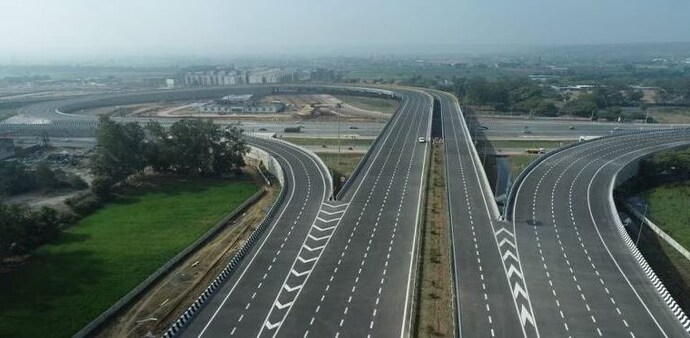
If your daily commute on the Noida–Greater Noida Expressway feels like a slog, help may be coming. The Noida Authority has cleared a plan to build a 29‑km four‑lane road along the Yamuna‑Harnandi doab, promising quicker journeys, fewer traffic headaches and easier access for residents of nearby sectors, societies and villages.
New corridor benefits
The new connectivity along the Yamuna riverbank will directly benefit nearly half a million people living in 75 group housing societies, 25 sectors, and 20 villages in Greater Noida, the official was quoted as saying by Dainik Jagran. The upgraded route is also expected to relieve congestion for commuters on the existing Noida-Greater Noida expressway and shorten travel times.
“Noida Authority will invest close to ₹500 crore for the project," the Noida Authority CEO Krishna Karunesh told reporters. “The expressway will give significant relief to commuters and support planned growth along the riverfront."
Areas set to benefit
The expressway will directly benefit residents of multiple sectors, villages, and societies along the Yamuna-Harnandi corridor. Sectors expected to gain include sectors 94, 124, 125, 126, 127, 128, 131, 132, 133, 134, 129, 135, 130, 168, 163, 164, 158, 159, 155, 154, 153, 152, 151, and 150. Villages such as Raipur, Bakhtavarpur, Asgarpur Jahagir, Sultanpur, Shahpur Govardhanpur, Shahpur Garhi, Nangla Nangli, Rohillapur, Nangla Wazidpur, Chhaprauli, Mangrauli, Mohiyapur, Badoli, Jhatta, Dallupura, Gujran Derin, Kambakshpur, Yakutpur, Gulawali, and Momanathal will also receive direct benefits from the new connectivity.
Existing embankment works
An existing 11,200 km, four-lane expressway on the Yamuna embankment has already been constructed and is currently being renovated at an estimated cost of ₹34 crore. The Noida authority has released ₹11 crore towards this renovation, officials said.
Expansion plan
Under the new plan, the Yamuna doab will be widened by 1 km to four lanes, while the Harnandi doab will be developed as a 17 km four-lane corridor. The alignment will be extended up to Sector 150, where it will connect with the 75-meter-wide road coming from the Kondli-Bangar side.
Land acquisition unlikely
Authorities say the Uttar Pradesh irrigation department holds a 22-28-meter-wide strip within the doab area, which should allow the construction of the four-lane expressway without requiring farmers’ land. “This reduces the need for extensive land acquisition,” a senior official said.
Immediate action plan ordered
CEO Krishna Karunesh has instructed executive engineers Raj Kumar Varn of the UP irrigation division, Ghaziabad, and Binod Kumar Singh of Delhi Okhla to submit an immediate action plan for implementation. He also said there may be locations where, with the farmer's consent, the embankment could be raised further.
“Where farmers agree, we can take the embankment outwards with their permission. The authority is prepared to pay compensation for any land acquisition," Mr. Karunesh added.
Relief needed as traffic load rises
The Noida-Greater Noida expressway currently handles about 1 million vehicles, creating acute congestion at peak hours. The new riverfront connectivity, along with several other upcoming projects that have already received theoretical clearance from the CEO, aims to ease this load.
Long-term benefits
The Yamuna-Harnandi doab is fast developing with the Sports City and JP Wish Town colonies, and residential growth is expected to continue. The expressway is expected to support future development while preventing further traffic gridlock.
“The embankment expansion will not only solve traffic problems but will also catalyze regional development,” Karunesh said. “Local residents will get better mobility, and the area’s economic activity will receive a boost.”
If your daily commute on the Noida–Greater Noida Expressway feels like a slog, help may be coming. The Noida Authority has cleared a plan to build a 29‑km four‑lane road along the Yamuna‑Harnandi doab, promising quicker journeys, fewer traffic headaches and easier access for residents of nearby sectors, societies and villages.
New corridor benefits
The new connectivity along the Yamuna riverbank will directly benefit nearly half a million people living in 75 group housing societies, 25 sectors, and 20 villages in Greater Noida, the official was quoted as saying by Dainik Jagran. The upgraded route is also expected to relieve congestion for commuters on the existing Noida-Greater Noida expressway and shorten travel times.
“Noida Authority will invest close to ₹500 crore for the project," the Noida Authority CEO Krishna Karunesh told reporters. “The expressway will give significant relief to commuters and support planned growth along the riverfront."
Areas set to benefit
The expressway will directly benefit residents of multiple sectors, villages, and societies along the Yamuna-Harnandi corridor. Sectors expected to gain include sectors 94, 124, 125, 126, 127, 128, 131, 132, 133, 134, 129, 135, 130, 168, 163, 164, 158, 159, 155, 154, 153, 152, 151, and 150. Villages such as Raipur, Bakhtavarpur, Asgarpur Jahagir, Sultanpur, Shahpur Govardhanpur, Shahpur Garhi, Nangla Nangli, Rohillapur, Nangla Wazidpur, Chhaprauli, Mangrauli, Mohiyapur, Badoli, Jhatta, Dallupura, Gujran Derin, Kambakshpur, Yakutpur, Gulawali, and Momanathal will also receive direct benefits from the new connectivity.
Existing embankment works
An existing 11,200 km, four-lane expressway on the Yamuna embankment has already been constructed and is currently being renovated at an estimated cost of ₹34 crore. The Noida authority has released ₹11 crore towards this renovation, officials said.
Expansion plan
Under the new plan, the Yamuna doab will be widened by 1 km to four lanes, while the Harnandi doab will be developed as a 17 km four-lane corridor. The alignment will be extended up to Sector 150, where it will connect with the 75-meter-wide road coming from the Kondli-Bangar side.
Land acquisition unlikely
Authorities say the Uttar Pradesh irrigation department holds a 22-28-meter-wide strip within the doab area, which should allow the construction of the four-lane expressway without requiring farmers’ land. “This reduces the need for extensive land acquisition,” a senior official said.
Immediate action plan ordered
CEO Krishna Karunesh has instructed executive engineers Raj Kumar Varn of the UP irrigation division, Ghaziabad, and Binod Kumar Singh of Delhi Okhla to submit an immediate action plan for implementation. He also said there may be locations where, with the farmer's consent, the embankment could be raised further.
“Where farmers agree, we can take the embankment outwards with their permission. The authority is prepared to pay compensation for any land acquisition," Mr. Karunesh added.
Relief needed as traffic load rises
The Noida-Greater Noida expressway currently handles about 1 million vehicles, creating acute congestion at peak hours. The new riverfront connectivity, along with several other upcoming projects that have already received theoretical clearance from the CEO, aims to ease this load.
Long-term benefits
The Yamuna-Harnandi doab is fast developing with the Sports City and JP Wish Town colonies, and residential growth is expected to continue. The expressway is expected to support future development while preventing further traffic gridlock.
“The embankment expansion will not only solve traffic problems but will also catalyze regional development,” Karunesh said. “Local residents will get better mobility, and the area’s economic activity will receive a boost.”