
From near oblivion to the next kingmaker: How Chirag Paswan became the knight in Bihar’s power map
From winning just one seat in 2020 to leading in 22 of 28 seats in the 2025 Assembly polls, Chirag’s rise represents one of the most remarkable comebacks in recent Indian political history.
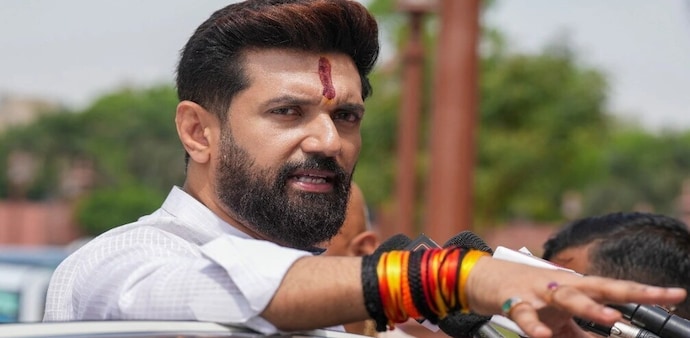
- Nov 14, 2025,
- Updated Nov 14, 2025 5:54 PM IST
When the political script of Bihar seemed predictably set — dominated by seasoned players, familiar alliances, and decade-old equations — a young leader stepped out of the shadows to rewrite his own destiny. At 43, Chirag Paswan, once dismissed as a lightweight inheritor of a political legacy, has now emerged as the unexpected knight on Bihar’s chessboard, altering moves, dictating terms, and signalling a generational shift in state politics.
From winning just one seat in 2020 to leading in 22 of 28 seats in the 2025 Assembly polls, Chirag’s rise represents one of the most remarkable comebacks in recent Indian political history. And it did not happen by accident — it was forged through internal battles, alliance tensions, and an unmistakable hunger to step out of the late Ram Vilas Paswan’s towering shadow.
From legacy to loss to leadership
The Lok Janshakti Party — founded by Ram Vilas Paswan in 2000 — had long oscillated between alliances, from NDA to UPA and back. Ram Vilas, a powerful Dalit voice and serial survivor of India’s coalition politics, helmed ministries in multiple governments. But after his passing in 2020, the LJP was thrown into disarray.
A bitter split followed. Chirag Paswan, cornered by his uncle Pashupati Kumar Paras, was left with a faction, a symbol, and little organisational strength. The NDA kept its distance. Allies doubted his political mettle. Rivals dismissed him as a novice without his father’s gravitas.
For a moment, Chirag teetered on the edge of oblivion. But he refused to fold.
Calculated rebuild and the 2020 gamble
The first major break came with the 2020 Assembly elections, where Chirag went solo on 137 seats. The gamble yielded just one seat, but the numbers hid a significant detail: the LJP disrupted the JD(U)’s fortunes in nearly 29 constituencies, fuelling tension within the NDA and establishing Chirag as a potential disrupter.
In the 2024 Lok Sabha elections, his faction — by then christened the Lok Janshakti Party (Ram Vilas) — tested its newfound muscle, winning all five seats it contested. The strike rate made even sceptics in the BJP sit up.
Chirag Paswan was no longer a fringe player — he was now an asset whose votes mattered.
Not a pawn, but a player
Ahead of the 2025 Assembly polls, Chirag pushed for a larger seat share. The BJP and JD(U), wary of inflating his influence, reportedly offered him just around 20 seats. But Chirag refused to be boxed in. The result: 29 seats — a significant jump and a signal that Chirag had learned the art of political negotiation.
Even then, he took a conciliatory yet assertive tone, calling Nitish Kumar a “necessity for Bihar” and “a lesson in political endurance,” framing himself as both respectful of elders and confident of his own role.
The 'Yuva Bihari' pitch
In the campaign, Chirag rebranded himself as the ‘Yuva Bihari’ — a modern, articulate, social-media-savvy leader who could appeal to the youth while staying rooted in Dalit politics.
He merged emotional outreach with aspirational messaging.
He retained the LJP’s traditional ground workers while expanding the party’s narrative towards development, dignity, and representation.
This dual-track strategy worked.
Breakout performance in 2025
From Sugauli and Govindganj to Mahua, Nathnagar, Parbatta and Fatuha, the LJP (RV) made gains across north, central, and south Bihar — a geographic spread that its critics had long dismissed as impossible.
If the trends hold, this will be the party’s best Assembly performance since 2005, but what makes this achievement truly notable is the scale relative to the opportunity:
- In 2005, the united LJP won 29 seats contesting 178.
- In 2025, Chirag’s faction is leading in more than 20 seats while contesting just 29.
Strike rate, not just seat count, has changed the game.
From Vote-cutter to kingmaker?
Chirag has made no secret of his ambitions. Ahead of the election, he hinted at seeking the deputy chief minister post, even though party cadres wanted him to aim higher. Yet he balanced ambition with loyalty — reaffirming unwavering support for Prime Minister Narendra Modi and rejecting any speculation of a post-poll alliance shift.
His inclusion among the NDA’s top five campaigners, alongside Modi, Shah, Yogi Adityanath and Nitish Kumar, was itself symbolic: Chirag had arrived.
With his party now outperforming poll projections, the possibility of him becoming a kingmaker—or at least a central pillar — within the NDA appears stronger than ever.
New chapter in Bihar politics
Chirag Paswan’s rise is not just a story of electoral success; it is a study in political reinvention. He has:
- survived a family split,
- rebuilt a party from scratch,
- re-earned space in a national alliance,
- and scripted a breakout performance few had predicted.
In a state where political dominance has traditionally belonged to stalwarts like Lalu Prasad Yadav and Nitish Kumar, Chirag now stands as the youngest major force shaping Bihar’s future.
From oblivion to opportunity. From heir to strategist. From a dismissed “vote-cutter” to a potential kingmaker.
The knight has entered the board — and Bihar’s politics will not be the same again.
When the political script of Bihar seemed predictably set — dominated by seasoned players, familiar alliances, and decade-old equations — a young leader stepped out of the shadows to rewrite his own destiny. At 43, Chirag Paswan, once dismissed as a lightweight inheritor of a political legacy, has now emerged as the unexpected knight on Bihar’s chessboard, altering moves, dictating terms, and signalling a generational shift in state politics.
From winning just one seat in 2020 to leading in 22 of 28 seats in the 2025 Assembly polls, Chirag’s rise represents one of the most remarkable comebacks in recent Indian political history. And it did not happen by accident — it was forged through internal battles, alliance tensions, and an unmistakable hunger to step out of the late Ram Vilas Paswan’s towering shadow.
From legacy to loss to leadership
The Lok Janshakti Party — founded by Ram Vilas Paswan in 2000 — had long oscillated between alliances, from NDA to UPA and back. Ram Vilas, a powerful Dalit voice and serial survivor of India’s coalition politics, helmed ministries in multiple governments. But after his passing in 2020, the LJP was thrown into disarray.
A bitter split followed. Chirag Paswan, cornered by his uncle Pashupati Kumar Paras, was left with a faction, a symbol, and little organisational strength. The NDA kept its distance. Allies doubted his political mettle. Rivals dismissed him as a novice without his father’s gravitas.
For a moment, Chirag teetered on the edge of oblivion. But he refused to fold.
Calculated rebuild and the 2020 gamble
The first major break came with the 2020 Assembly elections, where Chirag went solo on 137 seats. The gamble yielded just one seat, but the numbers hid a significant detail: the LJP disrupted the JD(U)’s fortunes in nearly 29 constituencies, fuelling tension within the NDA and establishing Chirag as a potential disrupter.
In the 2024 Lok Sabha elections, his faction — by then christened the Lok Janshakti Party (Ram Vilas) — tested its newfound muscle, winning all five seats it contested. The strike rate made even sceptics in the BJP sit up.
Chirag Paswan was no longer a fringe player — he was now an asset whose votes mattered.
Not a pawn, but a player
Ahead of the 2025 Assembly polls, Chirag pushed for a larger seat share. The BJP and JD(U), wary of inflating his influence, reportedly offered him just around 20 seats. But Chirag refused to be boxed in. The result: 29 seats — a significant jump and a signal that Chirag had learned the art of political negotiation.
Even then, he took a conciliatory yet assertive tone, calling Nitish Kumar a “necessity for Bihar” and “a lesson in political endurance,” framing himself as both respectful of elders and confident of his own role.
The 'Yuva Bihari' pitch
In the campaign, Chirag rebranded himself as the ‘Yuva Bihari’ — a modern, articulate, social-media-savvy leader who could appeal to the youth while staying rooted in Dalit politics.
He merged emotional outreach with aspirational messaging.
He retained the LJP’s traditional ground workers while expanding the party’s narrative towards development, dignity, and representation.
This dual-track strategy worked.
Breakout performance in 2025
From Sugauli and Govindganj to Mahua, Nathnagar, Parbatta and Fatuha, the LJP (RV) made gains across north, central, and south Bihar — a geographic spread that its critics had long dismissed as impossible.
If the trends hold, this will be the party’s best Assembly performance since 2005, but what makes this achievement truly notable is the scale relative to the opportunity:
- In 2005, the united LJP won 29 seats contesting 178.
- In 2025, Chirag’s faction is leading in more than 20 seats while contesting just 29.
Strike rate, not just seat count, has changed the game.
From Vote-cutter to kingmaker?
Chirag has made no secret of his ambitions. Ahead of the election, he hinted at seeking the deputy chief minister post, even though party cadres wanted him to aim higher. Yet he balanced ambition with loyalty — reaffirming unwavering support for Prime Minister Narendra Modi and rejecting any speculation of a post-poll alliance shift.
His inclusion among the NDA’s top five campaigners, alongside Modi, Shah, Yogi Adityanath and Nitish Kumar, was itself symbolic: Chirag had arrived.
With his party now outperforming poll projections, the possibility of him becoming a kingmaker—or at least a central pillar — within the NDA appears stronger than ever.
New chapter in Bihar politics
Chirag Paswan’s rise is not just a story of electoral success; it is a study in political reinvention. He has:
- survived a family split,
- rebuilt a party from scratch,
- re-earned space in a national alliance,
- and scripted a breakout performance few had predicted.
In a state where political dominance has traditionally belonged to stalwarts like Lalu Prasad Yadav and Nitish Kumar, Chirag now stands as the youngest major force shaping Bihar’s future.
From oblivion to opportunity. From heir to strategist. From a dismissed “vote-cutter” to a potential kingmaker.
The knight has entered the board — and Bihar’s politics will not be the same again.