
Gadkari Warns Industry: Improve Quality or Shut Shop, No Future for Petrol-Diesel
According to Gadkari, India currently manufactures around 70,000 buses annually, with the segment generating a turnover of about ₹35,000 crore. He added that the requirement for electric buses alone could touch 1.5 lakh units over the next three years, indicating a significant growth opportunity for the sector.
- Apr 28, 2026,
- Updated Apr 28, 2026 2:59 PM IST
Union Minister for Road Transport and Highways Nitin Gadkari made a strong pitch for accelerating India’s shift away from fossil-fuel-powered mobility, saying there is “no future” for diesel and petrol engines while urging the automobile industry to prioritise quality over cost.
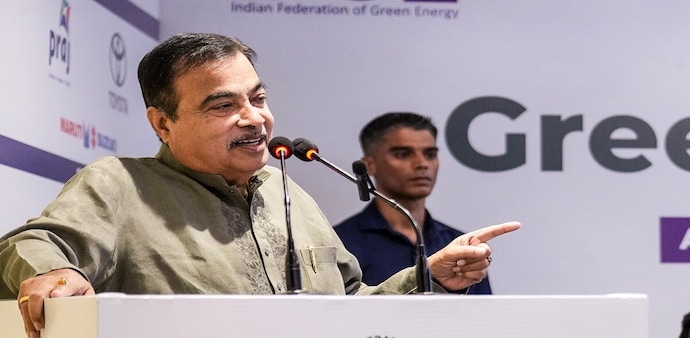
Speaking at an industry event, Gadkari said rising fuel imports and pollution concerns make the transition to alternative energy inevitable, underlining that India’s dependence on fossil fuel imports poses both economic and environmental challenges.
Don't Miss: BT Explainer: How does the Pay Commission work?
“One thing which is very clear… there is no future for diesel and petrol engines,” Gadkari said, urging manufacturers to adopt alternatives such as biofuels and cleaner technologies.
The minister said the transport sector must focus on cost-effective, pollution-free and indigenous solutions as India modernises mobility and expands public transport infrastructure.
Alongside cleaner fuels, Gadkari delivered a strong message to bus manufacturers on quality standards, saying the industry should be “quality-centric, not cost-centric,” while asserting that safety and quality cannot be compromised.
He said manufacturers need to improve standards and warned the industry against cutting corners in pursuit of lower costs, arguing that consumer preferences increasingly favour better products over cheaper ones.
Drawing an analogy, Gadkari said customers do not choose inferior products merely because they cost less, underscoring that comfort, reliability and safety are becoming central to mobility expectations.
He also stressed that bus manufacturing in India needs to match international benchmarks, noting the country currently has only two buses per 1,000 people compared with a global benchmark of eight buses per 1,000 people.
According to Gadkari, India currently manufactures around 70,000 buses annually, with the segment generating a turnover of about ₹35,000 crore. He added that the requirement for electric buses alone could touch 1.5 lakh units over the next three years, indicating a significant growth opportunity for the sector.
At the same time, he flagged concerns over the quality of buses currently being supplied, suggesting some manufacturers continue to win orders despite products not being up to expected standards due to strong demand.
Union Minister for Road Transport and Highways Nitin Gadkari made a strong pitch for accelerating India’s shift away from fossil-fuel-powered mobility, saying there is “no future” for diesel and petrol engines while urging the automobile industry to prioritise quality over cost.
Speaking at an industry event, Gadkari said rising fuel imports and pollution concerns make the transition to alternative energy inevitable, underlining that India’s dependence on fossil fuel imports poses both economic and environmental challenges.
Don't Miss: BT Explainer: How does the Pay Commission work?
“One thing which is very clear… there is no future for diesel and petrol engines,” Gadkari said, urging manufacturers to adopt alternatives such as biofuels and cleaner technologies.
The minister said the transport sector must focus on cost-effective, pollution-free and indigenous solutions as India modernises mobility and expands public transport infrastructure.
Alongside cleaner fuels, Gadkari delivered a strong message to bus manufacturers on quality standards, saying the industry should be “quality-centric, not cost-centric,” while asserting that safety and quality cannot be compromised.
He said manufacturers need to improve standards and warned the industry against cutting corners in pursuit of lower costs, arguing that consumer preferences increasingly favour better products over cheaper ones.
Drawing an analogy, Gadkari said customers do not choose inferior products merely because they cost less, underscoring that comfort, reliability and safety are becoming central to mobility expectations.
He also stressed that bus manufacturing in India needs to match international benchmarks, noting the country currently has only two buses per 1,000 people compared with a global benchmark of eight buses per 1,000 people.
According to Gadkari, India currently manufactures around 70,000 buses annually, with the segment generating a turnover of about ₹35,000 crore. He added that the requirement for electric buses alone could touch 1.5 lakh units over the next three years, indicating a significant growth opportunity for the sector.
At the same time, he flagged concerns over the quality of buses currently being supplied, suggesting some manufacturers continue to win orders despite products not being up to expected standards due to strong demand.