
Govt may reconsider higher ethanol mandate; what it means for consumers
Ethanol mandates are on hold. Flex-fuel and multiple blend options are the new plan — and trials are already underway
- Jun 11, 2026,
- Updated Jun 11, 2026 12:01 PM IST
The Centre may not immediately make higher ethanol blending mandatory and is considering leaving the ball in the buyers' court. The government may give buyers the option to decide on flex fuel vehicles amid concerns that going from E20 to E25 could adversely impact the engines of existing vehicles.
The Centre is also preparing standards for E22, E25, E27 and E30, allowing for up to 30% ethanol in petrol. It is starting trials for E25 vehicles, which will take time.
Why should you care?
Most cars and two-wheelers manufactured from 2012 to March 2023 were designed or certified to be E10-compliant. Those produced from April 2023 onwards are E-20-compliant, i.e., designed for petrol blended with up to 20% ethanol. Only vehicles sold from April 2025 onwards are fully E20-compliant.
Since a large number of petrol vehicles on Indian roads were built before April 2025, mandatory higher blending could affect several users. Moving beyond E20 could lead to lower fuel efficiency, reduced mileage, higher maintenance costs, and greater wear and tear on older vehicles.
MUST READ: BT EXPLAINER | What is Ethanol, how it's made and why is India betting big on it?
According to NITI Aayog's 2021 report on the E20 roadmap, the fuel efficiency of vehicles designed for E10 and calibrated for E20 may be reduced despite claims that the actual drop in mileage is higher. Thus, vehicles manufactured before March 2023 may experience more mileage loss if higher ethanol blending becomes a mandate.
If you own a petrol vehicle bought before April 2025, a mandatory shift above E20 can affect your mileage and maintenance costs.
Should you replace your vehicle immediately?
There is NO need to replace your current vehicles immediately since the government is seemingly reluctant to mandate E25 in the near term. If India eventually moves towards higher ethanol blends, consumers buying new vehicles may get more flex-fuel options.
What will change at petrol pumps?
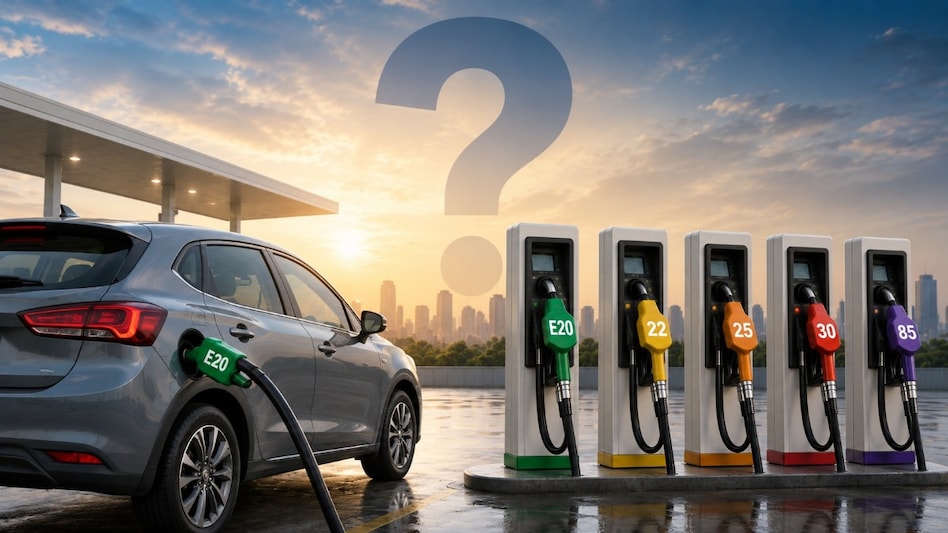
Instead of replacing E20 entirely, fuel stations in India could go the Brazil route. Petrol pumps could offer multiple dispensers such as E20 for conventional vehicles, E25 or E30 for compatible vehicles, and E85 for flex-fuel vehicles.
In Brazil, motorists choose fuel based on their vehicle's compatibility.
DO CHECKOUT | E20, E30 fuel concerns may keep 43% of buyers away from new vehicles: Survey
Why are flex-fuel vehicles seen as the solution?
These vehicles are powered by specially designed engines and fuel systems that can automatically adapt to different ethanol-petrol blends. Unlike conventional petrol vehicles, they can run on regular petrol, E20 (20% ethanol), E25, E30, E85 (85% ethanol), and any blend in between.
The vehicle's sensors can detect the ethanol concentration and adjust fuel injection, ignition timing and engine calibration accordingly. Maruti Suzuki and Hero MotoCorp have already begun introducing such vehicles.
Why can't existing vehicles simply switch to higher blends?
Compared to petrol, ethanol absorbs moisture more easily and is more corrosive to certain rubber and metal components. It also contains less energy per litre than petrol, and higher ethanol concentrations require different engine tuning.
The Centre may not immediately make higher ethanol blending mandatory and is considering leaving the ball in the buyers' court. The government may give buyers the option to decide on flex fuel vehicles amid concerns that going from E20 to E25 could adversely impact the engines of existing vehicles.
The Centre is also preparing standards for E22, E25, E27 and E30, allowing for up to 30% ethanol in petrol. It is starting trials for E25 vehicles, which will take time.
Why should you care?
Most cars and two-wheelers manufactured from 2012 to March 2023 were designed or certified to be E10-compliant. Those produced from April 2023 onwards are E-20-compliant, i.e., designed for petrol blended with up to 20% ethanol. Only vehicles sold from April 2025 onwards are fully E20-compliant.
Since a large number of petrol vehicles on Indian roads were built before April 2025, mandatory higher blending could affect several users. Moving beyond E20 could lead to lower fuel efficiency, reduced mileage, higher maintenance costs, and greater wear and tear on older vehicles.
MUST READ: BT EXPLAINER | What is Ethanol, how it's made and why is India betting big on it?
According to NITI Aayog's 2021 report on the E20 roadmap, the fuel efficiency of vehicles designed for E10 and calibrated for E20 may be reduced despite claims that the actual drop in mileage is higher. Thus, vehicles manufactured before March 2023 may experience more mileage loss if higher ethanol blending becomes a mandate.
If you own a petrol vehicle bought before April 2025, a mandatory shift above E20 can affect your mileage and maintenance costs.
Should you replace your vehicle immediately?
There is NO need to replace your current vehicles immediately since the government is seemingly reluctant to mandate E25 in the near term. If India eventually moves towards higher ethanol blends, consumers buying new vehicles may get more flex-fuel options.
What will change at petrol pumps?
Instead of replacing E20 entirely, fuel stations in India could go the Brazil route. Petrol pumps could offer multiple dispensers such as E20 for conventional vehicles, E25 or E30 for compatible vehicles, and E85 for flex-fuel vehicles.
In Brazil, motorists choose fuel based on their vehicle's compatibility.
DO CHECKOUT | E20, E30 fuel concerns may keep 43% of buyers away from new vehicles: Survey
Why are flex-fuel vehicles seen as the solution?
These vehicles are powered by specially designed engines and fuel systems that can automatically adapt to different ethanol-petrol blends. Unlike conventional petrol vehicles, they can run on regular petrol, E20 (20% ethanol), E25, E30, E85 (85% ethanol), and any blend in between.
The vehicle's sensors can detect the ethanol concentration and adjust fuel injection, ignition timing and engine calibration accordingly. Maruti Suzuki and Hero MotoCorp have already begun introducing such vehicles.
Why can't existing vehicles simply switch to higher blends?
Compared to petrol, ethanol absorbs moisture more easily and is more corrosive to certain rubber and metal components. It also contains less energy per litre than petrol, and higher ethanol concentrations require different engine tuning.