
'Govt wasn't in any way...': Ex-Army chief Naravane breaks silence on 'do what you think is right' remark
Naravane declined to comment on the contents of the unpublished book, which remains under review by the Ministry of Defence
- Apr 23, 2026,
- Updated Apr 23, 2026 7:45 PM IST
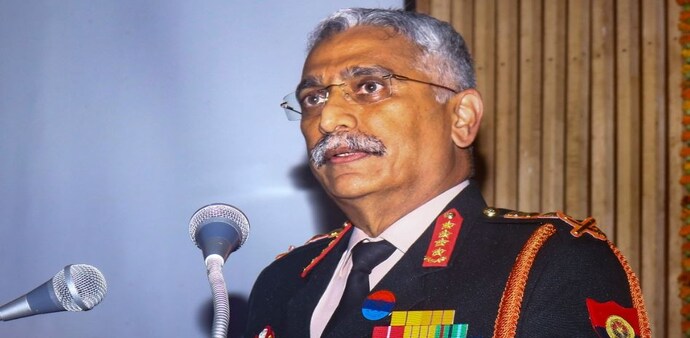
Former Army chief General MM Naravane has rejected suggestions that the government left him to take decisions alone during the 2020 India-China border crisis, saying it reflected "full faith" in military leadership rather than a lack of direction.
"It should not be misinterpreted in that manner," Naravane said when asked whether he was not given a clear instruction as Defence Minister Rajnath Singh conveyed Prime Minister Narendra Modi's message to the military, "do what you deem fit".
"It shows the great confidence that the government had in the Army and its hierarchy and in the service chief that they knew that whatever decision would be taken would be taken keeping all factors in mind," he said while speaking to India Today TV. "And at the end of the day, it is a military operation. It is a military strategy that has to be applied within the overall framework of the national strategy and policy."
"It is the correct way of having done things. That you have given the complete operational freedom to the person who is best suited to exercise that freedom. So, unfortunately, I think people are misinterpreting that it was sort of an abrogation (or responsibility). It is not abrogation at all."
"And I reiterate, it only shows that the government has full confidence in its armed forces. It had full confidence earlier. It has full confidence now. And I'm sure it will have it in the future, also," the former army chief said.
In February this year, a political controversy over his yet-to-be-cleared memoir Four Stars of Destiny, after Rahul Gandhi cited some excerpts from the book in Parliament. Gandhi had quoted excerpts alleging that Naravane was left without clear instructions during a critical phase of the Ladakh standoff, including the Galwan crisis.
Naravane declined to comment on the contents of the unpublished book, which remains under review by the Ministry of Defence. "As I said, this is an unpublished work. So how can you rely on that?" he said. "The book is under review by the MOD. I should not be commenting on it because that in itself would not be proper."
The former army chief said the episode had unnecessarily drawn the armed forces into political debate. "It was totally unfair to drag me and to drag the armed forces. We keep saying that you should not politicise the armed forces. The Indian armed forces have a very strong reputation of being totally apolitical," he said.
Addressing the controversy over a physical copy of the book being displayed outside Parliament despite the publisher denying its release, Naravane, in a different interview, suggested the possibility of unauthorised access.
"This is the era of cyber crimes, and everything is available in the electronic medium. Anybody can hack into any account and extract a copy if he or she wishes to do so. And having hacked into that and obtained an illegal version of the copy. You can even make amendments to the contents. So, therefore, how can you comment on something which is not published?"
He added that neither he nor the publisher, Penguin, had any role in the circulation of such material. "As far as I'm concerned and as far as the publisher Penguin is concerned, we had no hand whatsoever to play in what was happening," he said.
On the question of civil-military functioning, he said the armed forces operate within defined mandates but retain autonomy in execution. "You have the broad guidelines under which you have to operate. But within those broad guidelines, how to do it is absolutely up to you...the how (part) is ours,” he said.
He confirmed that his manuscript remains with the publisher and the defence ministry for clearance, adding, "That's where it stands. We should let the matter rest there."
Former Army chief General MM Naravane has rejected suggestions that the government left him to take decisions alone during the 2020 India-China border crisis, saying it reflected "full faith" in military leadership rather than a lack of direction.
"It should not be misinterpreted in that manner," Naravane said when asked whether he was not given a clear instruction as Defence Minister Rajnath Singh conveyed Prime Minister Narendra Modi's message to the military, "do what you deem fit".
"It shows the great confidence that the government had in the Army and its hierarchy and in the service chief that they knew that whatever decision would be taken would be taken keeping all factors in mind," he said while speaking to India Today TV. "And at the end of the day, it is a military operation. It is a military strategy that has to be applied within the overall framework of the national strategy and policy."
"It is the correct way of having done things. That you have given the complete operational freedom to the person who is best suited to exercise that freedom. So, unfortunately, I think people are misinterpreting that it was sort of an abrogation (or responsibility). It is not abrogation at all."
"And I reiterate, it only shows that the government has full confidence in its armed forces. It had full confidence earlier. It has full confidence now. And I'm sure it will have it in the future, also," the former army chief said.
In February this year, a political controversy over his yet-to-be-cleared memoir Four Stars of Destiny, after Rahul Gandhi cited some excerpts from the book in Parliament. Gandhi had quoted excerpts alleging that Naravane was left without clear instructions during a critical phase of the Ladakh standoff, including the Galwan crisis.
Naravane declined to comment on the contents of the unpublished book, which remains under review by the Ministry of Defence. "As I said, this is an unpublished work. So how can you rely on that?" he said. "The book is under review by the MOD. I should not be commenting on it because that in itself would not be proper."
The former army chief said the episode had unnecessarily drawn the armed forces into political debate. "It was totally unfair to drag me and to drag the armed forces. We keep saying that you should not politicise the armed forces. The Indian armed forces have a very strong reputation of being totally apolitical," he said.
Addressing the controversy over a physical copy of the book being displayed outside Parliament despite the publisher denying its release, Naravane, in a different interview, suggested the possibility of unauthorised access.
"This is the era of cyber crimes, and everything is available in the electronic medium. Anybody can hack into any account and extract a copy if he or she wishes to do so. And having hacked into that and obtained an illegal version of the copy. You can even make amendments to the contents. So, therefore, how can you comment on something which is not published?"
He added that neither he nor the publisher, Penguin, had any role in the circulation of such material. "As far as I'm concerned and as far as the publisher Penguin is concerned, we had no hand whatsoever to play in what was happening," he said.
On the question of civil-military functioning, he said the armed forces operate within defined mandates but retain autonomy in execution. "You have the broad guidelines under which you have to operate. But within those broad guidelines, how to do it is absolutely up to you...the how (part) is ours,” he said.
He confirmed that his manuscript remains with the publisher and the defence ministry for clearance, adding, "That's where it stands. We should let the matter rest there."