
Gulf wars & India’s oil security: How 4 govts built the strategic oil reserves. A timeline
The proposal for a national oil reserve system began taking concrete shape under the government of Atal Bihari Vajpayee in the late 1990s and early 2000s.
- Apr 9, 2026,
- Updated Apr 10, 2026 7:42 PM IST
India’s Strategic Petroleum Reserve (SPR) programme is the result of lessons learned over decades of geopolitical shocks in the West Asia region — beginning with the Gulf War and reinforced during the Iraq War.
The idea of storing emergency crude oil reserves did not emerge overnight. It evolved across multiple governments in New Delhi as policymakers grappled with the country’s growing dependence on imported oil.
The 1991 wake-up call
When Iraq invaded Kuwait in 1990, triggering the Gulf War, India faced a severe economic shock. Oil prices surged and tanker traffic through the Gulf became uncertain.
At the time, India had almost no strategic oil stockpile, leaving the country exposed to supply disruptions.
The crisis coincided with India’s balance-of-payments emergency during the government of P V Narasimha Rao. While the immediate priority was economic reform and stabilising the economy, the conflict began shaping long-term thinking in the petroleum ministry about building emergency crude reserves.
Vajpayee govt formalises the idea
The proposal for a national oil reserve system began taking concrete shape under the government of Atal Bihari Vajpayee in the late 1990s and early 2000s.
India’s oil demand was rising rapidly and import dependence was climbing toward 70 percent. Strategic planners began studying reserve systems used by the International Energy Agency member countries.
In 1998-2000, expert committees recommended building underground crude storage facilities as part of a long-term energy security strategy.
The Vajpayee government approved the concept of Strategic Petroleum Reserves and began planning storage sites along India’s coastline.
UPA govt begins construction
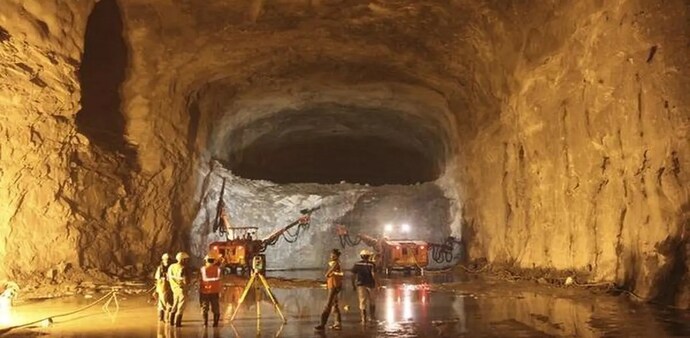
The project moved from planning to execution under the government of Manmohan Singh. In 2004-2006, the government formally approved Phase-I of the Strategic Petroleum Reserve programme and created the implementing agency, Indian Strategic Petroleum Reserves Limited.
Construction began on massive underground rock caverns in three coastal locations:
- Visakhapatnam
- Mangaluru
- Padur
These facilities together can store about 5.3 million tonnes of crude oil, equivalent to roughly 9-10 days of India’s consumption.
Modi govt expands the programme
The government led by Narendra Modi expanded the strategic reserve programme and accelerated the filling of existing caverns.
During the 2020 oil price crash, India purchased large volumes of crude at discounted prices to fill its reserves.
The government also approved Phase-II expansion, which includes new storage projects at:
- Chandikhol
- Expansion of the cavern at Padur
These projects aim to significantly increase India’s emergency stockpile capacity in the coming years.
Why strategic reserves remain critical
India now imports more than 85 percent of its crude oil requirements, making it one of the most import-dependent major economies. A significant portion of this oil travels through the narrow shipping corridor of the Strait of Hormuz, one of the world’s most sensitive geopolitical choke points.
More than three decades after the first Gulf War reshaped global energy thinking, the lesson still resonates in New Delhi: energy security is inseparable from geopolitical stability. Conflicts such as the Gulf War and the Iraq War demonstrated how quickly global oil supply chains can be disrupted.
India’s Strategic Petroleum Reserve (SPR) programme is the result of lessons learned over decades of geopolitical shocks in the West Asia region — beginning with the Gulf War and reinforced during the Iraq War.
The idea of storing emergency crude oil reserves did not emerge overnight. It evolved across multiple governments in New Delhi as policymakers grappled with the country’s growing dependence on imported oil.
The 1991 wake-up call
When Iraq invaded Kuwait in 1990, triggering the Gulf War, India faced a severe economic shock. Oil prices surged and tanker traffic through the Gulf became uncertain.
At the time, India had almost no strategic oil stockpile, leaving the country exposed to supply disruptions.
The crisis coincided with India’s balance-of-payments emergency during the government of P V Narasimha Rao. While the immediate priority was economic reform and stabilising the economy, the conflict began shaping long-term thinking in the petroleum ministry about building emergency crude reserves.
Vajpayee govt formalises the idea
The proposal for a national oil reserve system began taking concrete shape under the government of Atal Bihari Vajpayee in the late 1990s and early 2000s.
India’s oil demand was rising rapidly and import dependence was climbing toward 70 percent. Strategic planners began studying reserve systems used by the International Energy Agency member countries.
In 1998-2000, expert committees recommended building underground crude storage facilities as part of a long-term energy security strategy.
The Vajpayee government approved the concept of Strategic Petroleum Reserves and began planning storage sites along India’s coastline.
UPA govt begins construction
The project moved from planning to execution under the government of Manmohan Singh. In 2004-2006, the government formally approved Phase-I of the Strategic Petroleum Reserve programme and created the implementing agency, Indian Strategic Petroleum Reserves Limited.
Construction began on massive underground rock caverns in three coastal locations:
- Visakhapatnam
- Mangaluru
- Padur
These facilities together can store about 5.3 million tonnes of crude oil, equivalent to roughly 9-10 days of India’s consumption.
Modi govt expands the programme
The government led by Narendra Modi expanded the strategic reserve programme and accelerated the filling of existing caverns.
During the 2020 oil price crash, India purchased large volumes of crude at discounted prices to fill its reserves.
The government also approved Phase-II expansion, which includes new storage projects at:
- Chandikhol
- Expansion of the cavern at Padur
These projects aim to significantly increase India’s emergency stockpile capacity in the coming years.
Why strategic reserves remain critical
India now imports more than 85 percent of its crude oil requirements, making it one of the most import-dependent major economies. A significant portion of this oil travels through the narrow shipping corridor of the Strait of Hormuz, one of the world’s most sensitive geopolitical choke points.
More than three decades after the first Gulf War reshaped global energy thinking, the lesson still resonates in New Delhi: energy security is inseparable from geopolitical stability. Conflicts such as the Gulf War and the Iraq War demonstrated how quickly global oil supply chains can be disrupted.