
HDFC Bank ex-chair Atanu Chakraborty flags 'incongruence', says exit not driven by one event: Report
Without divulging confidential boardroom discussions, Chakraborty pointed to a specific episode already in the public domain — issues flagged in the bank’s Dubai operations, dating back to 2018, involving customer onboarding and conduct lapses that drew regulatory scrutiny both domestically and overseas.
- Mar 30, 2026,
- Updated Mar 30, 2026 5:06 PM IST
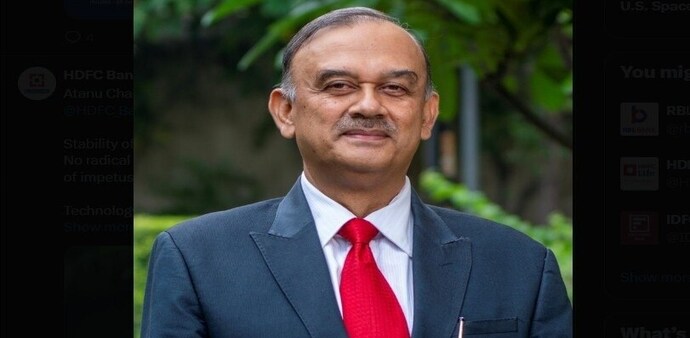
Former part-time chairman at HDFC Bank, Atanu Chakraborty, said his decision to step down on March 18 was not triggered by a single event, but stemmed from a growing sense of "incongruence" over the past two years, in an interview with CNBC-TV18.
A former bureaucrat who joined the bank’s board nearly five years ago as a non-executive, independent chairman, Chakraborty had a front-row seat to one of the most transformative phases in the lender’s history — including its landmark merger with HDFC Ltd, the monetisation of Credila, and the IPO of HDB Financial Services.
These moves, he noted, strengthened the balance sheet and aligned the bank with regulatory expectations.
"My resignation letter is self-explanatory," the former bureaucrat said in an interview on March 30, describing an "incongruence" between his value framework and the bank’s approach. When such a "dilemma' arises,it becomes a personal decision, he told CNBC-TV18.
Without divulging confidential boardroom discussions, Chakraborty pointed to a specific episode already in the public domain — issues flagged in the bank’s Dubai operations, dating back to 2018, involving customer onboarding and conduct lapses that drew regulatory scrutiny both domestically and overseas. While the bank’s management, led by CEO Sashidhar Jagdishan, described these as “technical” lapses in documentation or interpretation, Chakraborty viewed them differently.
In September 2025, HDFC Bank was barred from onboarding new clients in Dubai after the local regulator flagged lapses, a move that eventually led to the exit of around a dozen executives, including its former compliance officer and chief internal auditor.
He also pointed to delays in accountability, noting that penalties against officials involved in the mis-selling of AT1 bonds in Dubai came several years after the lapses occurred, raising questions over the timeliness of corrective action.
Even as the institution executed big-ticket strategic actions, Chakraborty suggested deeper discomfort was building beneath the surface. At the heart of his resignation, he reiterated, was a mismatch — not of facts, but of frameworks — an “incongruence” between his understanding of values, ethics and governance, and how these were interpreted or prioritised within the bank.
For an independent director, he argued, the mandate goes beyond oversight of performance metrics to safeguarding probity, ensuring transparency, and aligning business conduct with the long-term interests of depositors and shareholders. In banking, he stressed, these are operational imperatives rooted in public trust.
The bank’s shares have fallen sharply since Chakraborty’s March 18 resignation, even as questions persist over what triggered the move and whether it signals deeper governance concerns.
On the merger with HDFC Ltd, Chakraborty pushed back against concerns of structural stress, maintaining that the integration did not distort the balance sheet and was broadly aligned with regulatory expectations while strengthening the institution’s positioning.
He also clarified that the question of CEO Sashidhar Jagdishan’s reappointment was never discussed during his tenure, seeking to dispel speculation around leadership continuity.
Addressing chatter around internal dynamics, Chakraborty told CNBC-TV18 that personality differences had been overstated and were not a determining factor in his decision. The issues, he indicated, ran deeper than individual equations.
At the core, he said, governance structures — including incentive frameworks, oversight of management and board-level decision-making — must remain firmly anchored to the interests of depositors, a principle he underscored as critical in a sector built on trust.
Shares of HDFC Bank ended the day at Rs 735.00 down by 2.8% from its previous closing.
Former part-time chairman at HDFC Bank, Atanu Chakraborty, said his decision to step down on March 18 was not triggered by a single event, but stemmed from a growing sense of "incongruence" over the past two years, in an interview with CNBC-TV18.
A former bureaucrat who joined the bank’s board nearly five years ago as a non-executive, independent chairman, Chakraborty had a front-row seat to one of the most transformative phases in the lender’s history — including its landmark merger with HDFC Ltd, the monetisation of Credila, and the IPO of HDB Financial Services.
These moves, he noted, strengthened the balance sheet and aligned the bank with regulatory expectations.
"My resignation letter is self-explanatory," the former bureaucrat said in an interview on March 30, describing an "incongruence" between his value framework and the bank’s approach. When such a "dilemma' arises,it becomes a personal decision, he told CNBC-TV18.
Without divulging confidential boardroom discussions, Chakraborty pointed to a specific episode already in the public domain — issues flagged in the bank’s Dubai operations, dating back to 2018, involving customer onboarding and conduct lapses that drew regulatory scrutiny both domestically and overseas. While the bank’s management, led by CEO Sashidhar Jagdishan, described these as “technical” lapses in documentation or interpretation, Chakraborty viewed them differently.
In September 2025, HDFC Bank was barred from onboarding new clients in Dubai after the local regulator flagged lapses, a move that eventually led to the exit of around a dozen executives, including its former compliance officer and chief internal auditor.
He also pointed to delays in accountability, noting that penalties against officials involved in the mis-selling of AT1 bonds in Dubai came several years after the lapses occurred, raising questions over the timeliness of corrective action.
Even as the institution executed big-ticket strategic actions, Chakraborty suggested deeper discomfort was building beneath the surface. At the heart of his resignation, he reiterated, was a mismatch — not of facts, but of frameworks — an “incongruence” between his understanding of values, ethics and governance, and how these were interpreted or prioritised within the bank.
For an independent director, he argued, the mandate goes beyond oversight of performance metrics to safeguarding probity, ensuring transparency, and aligning business conduct with the long-term interests of depositors and shareholders. In banking, he stressed, these are operational imperatives rooted in public trust.
The bank’s shares have fallen sharply since Chakraborty’s March 18 resignation, even as questions persist over what triggered the move and whether it signals deeper governance concerns.
On the merger with HDFC Ltd, Chakraborty pushed back against concerns of structural stress, maintaining that the integration did not distort the balance sheet and was broadly aligned with regulatory expectations while strengthening the institution’s positioning.
He also clarified that the question of CEO Sashidhar Jagdishan’s reappointment was never discussed during his tenure, seeking to dispel speculation around leadership continuity.
Addressing chatter around internal dynamics, Chakraborty told CNBC-TV18 that personality differences had been overstated and were not a determining factor in his decision. The issues, he indicated, ran deeper than individual equations.
At the core, he said, governance structures — including incentive frameworks, oversight of management and board-level decision-making — must remain firmly anchored to the interests of depositors, a principle he underscored as critical in a sector built on trust.
Shares of HDFC Bank ended the day at Rs 735.00 down by 2.8% from its previous closing.