
How India-EU FTA brings down tariffs on European cars
The deal divides car imports from the European Union into three price slabs, each having a separate quota and a phased reduction in tariff.
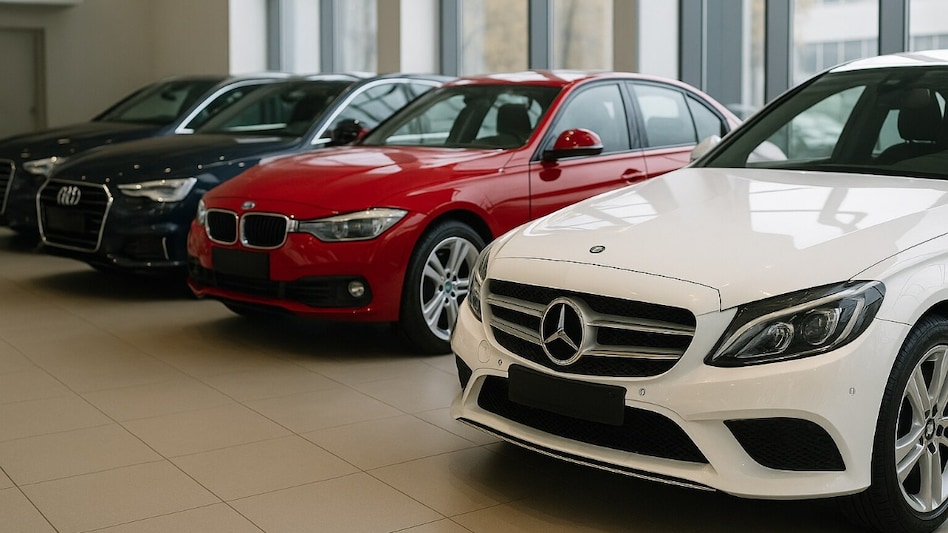
- Jan 29, 2026,
- Updated Jan 29, 2026 9:25 PM IST
The historic India-EU free trade agreement slashes the tariffs on cars imported from European nations gradually from 110% to 10% with a quota of 250,000 vehicles a year.
The deal divides car imports from the European Union into three price slabs, each having a separate quota and a phased reduction in tariff, according to sources.
Electric vehicles continue to attract existing duties for the first five years. Tariff cut on electric vehicles will start from the sixth year of the deal. The FTA benefits will be available only to traditional European manufacturers and not to newly set up plants of carmakers from other countries.
Up to a total annual quota of 1.6 lakh ICE cars and 90 thousand EVs have been provided at a reduced tariff – graded structure for both quota and out-of-quota tariffs.
Internal-combustion engine (ICE) cars with cost, insurance, and freight value of €15,000 to €35,000 will have a quota of 34,000 vehicles in the first year. The tariff on these vehicles will go down to 35% from 110% in the first year.
In the first year, import duties on ICE vehicles priced between €35,000 and €50,000, as well as those costing over €50,000, will be reduced to 30%. A quota of 33,000 units will apply to ICE cars in the €35,000–€50,000 bracket, while vehicles priced above €50,000 will be subject to a separate quota of 34,000 units during the first year.
Overall, the quota for ICE vehicles will stand at 1,00,000 units in the first year after the FTA comes into force and will gradually increase to 1,60,000 units by the tenth year. Import duties will be reduced to 10% by the fifth year.
For completely knocked down (CKD) kits, 75,000 ICE vehicles will be eligible for duty reduction from 16.5% to 8.25%. In the 10th year, the quota on CKD for ICE vehicles will be reduced to 50,000. Liberalising CKD imports is expected to encourage EU’s OEMs to set up more local assembly lines.
Liberalizing the auto sector and CKD imports benefits consumers by lowering vehicle prices through reduced import duties and expanding choice with faster access to global models, sources said. It also ensures higher safety and tech standards while lowering maintenance costs due to better local availability of spare parts.
Sources said the quota is mostly for large engine size ICE vehicles and high price range EVs while simultaneously protecting sensitive segments of India’s automotive industry (small size engine capacity ICE vehicles and mid- and low-price range EVs).
The FTA gives European car manufacturers an opportunity to launch newer models faster in India, the world’s third largest car market by volume.
Competitive intensity at the top end is set to rise, said Poonam Upadhyay, Director, Crisil Ratings. “Greater pricing flexibility may support upper-end variants, faster refresh cycles and stronger feature offerings from European brands, lifting benchmarks on technology, safety and overall brand experience. In the milieu, domestic players operating in premium SUVs may need quicker product upgrades and sharper value positioning to defend share,” she explained. “While competitive intensity may rise marginally toward the upper end of the Rs 15-20 lakh band, any impact is expected to be limited and concentrated, especially in the early phase, before duties potentially decline further over time.”
The historic India-EU free trade agreement slashes the tariffs on cars imported from European nations gradually from 110% to 10% with a quota of 250,000 vehicles a year.
The deal divides car imports from the European Union into three price slabs, each having a separate quota and a phased reduction in tariff, according to sources.
Electric vehicles continue to attract existing duties for the first five years. Tariff cut on electric vehicles will start from the sixth year of the deal. The FTA benefits will be available only to traditional European manufacturers and not to newly set up plants of carmakers from other countries.
Up to a total annual quota of 1.6 lakh ICE cars and 90 thousand EVs have been provided at a reduced tariff – graded structure for both quota and out-of-quota tariffs.
Internal-combustion engine (ICE) cars with cost, insurance, and freight value of €15,000 to €35,000 will have a quota of 34,000 vehicles in the first year. The tariff on these vehicles will go down to 35% from 110% in the first year.
In the first year, import duties on ICE vehicles priced between €35,000 and €50,000, as well as those costing over €50,000, will be reduced to 30%. A quota of 33,000 units will apply to ICE cars in the €35,000–€50,000 bracket, while vehicles priced above €50,000 will be subject to a separate quota of 34,000 units during the first year.
Overall, the quota for ICE vehicles will stand at 1,00,000 units in the first year after the FTA comes into force and will gradually increase to 1,60,000 units by the tenth year. Import duties will be reduced to 10% by the fifth year.
For completely knocked down (CKD) kits, 75,000 ICE vehicles will be eligible for duty reduction from 16.5% to 8.25%. In the 10th year, the quota on CKD for ICE vehicles will be reduced to 50,000. Liberalising CKD imports is expected to encourage EU’s OEMs to set up more local assembly lines.
Liberalizing the auto sector and CKD imports benefits consumers by lowering vehicle prices through reduced import duties and expanding choice with faster access to global models, sources said. It also ensures higher safety and tech standards while lowering maintenance costs due to better local availability of spare parts.
Sources said the quota is mostly for large engine size ICE vehicles and high price range EVs while simultaneously protecting sensitive segments of India’s automotive industry (small size engine capacity ICE vehicles and mid- and low-price range EVs).
The FTA gives European car manufacturers an opportunity to launch newer models faster in India, the world’s third largest car market by volume.
Competitive intensity at the top end is set to rise, said Poonam Upadhyay, Director, Crisil Ratings. “Greater pricing flexibility may support upper-end variants, faster refresh cycles and stronger feature offerings from European brands, lifting benchmarks on technology, safety and overall brand experience. In the milieu, domestic players operating in premium SUVs may need quicker product upgrades and sharper value positioning to defend share,” she explained. “While competitive intensity may rise marginally toward the upper end of the Rs 15-20 lakh band, any impact is expected to be limited and concentrated, especially in the early phase, before duties potentially decline further over time.”