
IAF shortages, China-Pakistan axis: Why Rafale is the only logical choice for India
US-made F-35 and the Russian-built Su-57 have been evaluated, but neither fits our long-term strategic needs, says former air force officer Ajay Ahlawat
- Feb 11, 2026,
- Updated Feb 11, 2026 9:06 PM IST
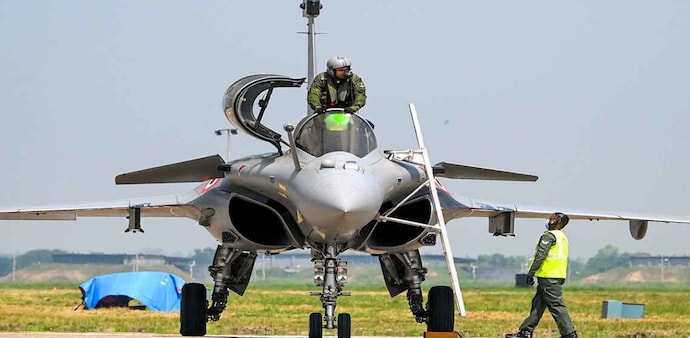
The Defence Acquisition Council is preparing to deliberate on the proposed purchase of 114 Rafale fighter jets. The US and Russia have both offered the F-35 and Su-57 to India, but New Delhi appears to be settling on the French aircraft. A former IAF fighter pilot has now explained why, in his view, Rafale is the only logical choice for India.
Writing in The Print, Group Captain Ajay Ahlawat, a retired IAF fighter pilot, said the proposal comes at a time when the Air Force is grappling with declining squadron strength, production delays in domestic programmes, and a growing two-front threat from Pakistan and China.
The IAF's challenges, he said, are exacerbated by rapid advancements in Chinese military capabilities and deepening China-Pakistan ties, evident during Operation Sindoor.
In this context, the IAF's sanctioned strength of 42.5 fighter squadrons, each typically comprising 16-18 aircraft, is deemed insufficient. He cited studies and reports, including a recently concluded study chaired by the Defence Secretary on enhancing the IAF's capabilities, that have recommended an increase in the sanctioned strength of the IAF's fighter squadrons.
The suggested number of squadrons varies from 55 to 65. However, as of early 2026, the IAF operates only about 30 operational squadrons-the lowest since the 1960s, he writes. "This shortfall is compounded by impending phase-outs over the next decade - nearly half the current fleet, including Jaguar, MiG-29, and Mirage 2000 squadrons. This will reduce the strength even more unless adequately replenished."
The former pilot said the 'fill rate' - the pace at which new aircraft are inducted - remains alarmingly low. He pointed to stalled deliveries of the indigenous Light Combat Aircraft (LCA) Mk1A due to delays in sensor and weapons integration, certification issues, and delayed engine supplies from GE Aerospace. He said, "The current fill-rate is effectively zero."
India needs a 'fill rate' of 40 aircraft per year to reach 42 squadrons by 2035, by which time the Jaguars and the MiG-29 would start phasing out, Ahlawat said. "The desire to provide 65 fighter squadrons to the IAF seems unachievable at this moment."
Why Rafale?
Addressing the question of why India should acquire a 4.5-generation platform when others are inducting fifth-generation jets, Ahlawat said that India's threat environment demands a balanced mix: fifth-generation stealth aircraft for high-end missions and 4.5-generation jets for the bulk of operations.
On the fifth-generation front, India is committed to AMCA, with prototypes promised by 2028 and serial production by 2035. AMCA (Advanced Medium Combat Aircraft) is India's indigenous fifth-generation stealth fighter jet programme.
The former pilot said that both the US-made F-35 and the Russian-built Su-57 have been evaluated, but neither fits our long-term strategic needs. "Both platforms have been appraised but found wanting in one area or another. Delivery timelines, geopolitical realities, performance, cost, OEM dependency, and share of technology transfer are some of the reasons for this decision."
Ahlawat argued that India would need between 10 and 12 squadrons of fifth-generation aircraft to make a meaningful impact, and said buying just one or two squadrons from abroad would further complicate already strained supply chains.
"The bulk of our Air Force will continue to be made up of fourth and 4.5-generation aircraft," he said, adding that these numbers should have been met through LCA Mk1A and LCA Mk2. "However, while we wait for our domestic programmes to deliver - which could take a while - India will need to import capability."
"In that regard, Rafale is the only logical choice," the former group captain said. "The IAF can absorb the aircraft in large numbers and within a short period of time, as we already have the requisite infrastructure and processes in place. With two operational Rafale squadrons in the IAF and nearly 1.5 squadrons being stood up in the Navy, there is no dearth of trained manpower either."
At this stage, he further said, evaluating and inducting any other imported 4.5 gen aircraft is neither cost-effective nor strategically sensible. "It must be stated, even at the cost of repetition, that India would not have been forced to pay for expensive imports of a capability it can produce locally had projected timelines not slipped."
The proposed Rs 3.25 lakh crore deal to procure 114 French-made Rafale fighter jets is expected to receive Defence Ministry clearance this week, just ahead of French President Emmanuel Macron's visit to Delhi. Macron will be in India from 17 to 19 February.
The Defence Acquisition Council is preparing to deliberate on the proposed purchase of 114 Rafale fighter jets. The US and Russia have both offered the F-35 and Su-57 to India, but New Delhi appears to be settling on the French aircraft. A former IAF fighter pilot has now explained why, in his view, Rafale is the only logical choice for India.
Writing in The Print, Group Captain Ajay Ahlawat, a retired IAF fighter pilot, said the proposal comes at a time when the Air Force is grappling with declining squadron strength, production delays in domestic programmes, and a growing two-front threat from Pakistan and China.
The IAF's challenges, he said, are exacerbated by rapid advancements in Chinese military capabilities and deepening China-Pakistan ties, evident during Operation Sindoor.
In this context, the IAF's sanctioned strength of 42.5 fighter squadrons, each typically comprising 16-18 aircraft, is deemed insufficient. He cited studies and reports, including a recently concluded study chaired by the Defence Secretary on enhancing the IAF's capabilities, that have recommended an increase in the sanctioned strength of the IAF's fighter squadrons.
The suggested number of squadrons varies from 55 to 65. However, as of early 2026, the IAF operates only about 30 operational squadrons-the lowest since the 1960s, he writes. "This shortfall is compounded by impending phase-outs over the next decade - nearly half the current fleet, including Jaguar, MiG-29, and Mirage 2000 squadrons. This will reduce the strength even more unless adequately replenished."
The former pilot said the 'fill rate' - the pace at which new aircraft are inducted - remains alarmingly low. He pointed to stalled deliveries of the indigenous Light Combat Aircraft (LCA) Mk1A due to delays in sensor and weapons integration, certification issues, and delayed engine supplies from GE Aerospace. He said, "The current fill-rate is effectively zero."
India needs a 'fill rate' of 40 aircraft per year to reach 42 squadrons by 2035, by which time the Jaguars and the MiG-29 would start phasing out, Ahlawat said. "The desire to provide 65 fighter squadrons to the IAF seems unachievable at this moment."
Why Rafale?
Addressing the question of why India should acquire a 4.5-generation platform when others are inducting fifth-generation jets, Ahlawat said that India's threat environment demands a balanced mix: fifth-generation stealth aircraft for high-end missions and 4.5-generation jets for the bulk of operations.
On the fifth-generation front, India is committed to AMCA, with prototypes promised by 2028 and serial production by 2035. AMCA (Advanced Medium Combat Aircraft) is India's indigenous fifth-generation stealth fighter jet programme.
The former pilot said that both the US-made F-35 and the Russian-built Su-57 have been evaluated, but neither fits our long-term strategic needs. "Both platforms have been appraised but found wanting in one area or another. Delivery timelines, geopolitical realities, performance, cost, OEM dependency, and share of technology transfer are some of the reasons for this decision."
Ahlawat argued that India would need between 10 and 12 squadrons of fifth-generation aircraft to make a meaningful impact, and said buying just one or two squadrons from abroad would further complicate already strained supply chains.
"The bulk of our Air Force will continue to be made up of fourth and 4.5-generation aircraft," he said, adding that these numbers should have been met through LCA Mk1A and LCA Mk2. "However, while we wait for our domestic programmes to deliver - which could take a while - India will need to import capability."
"In that regard, Rafale is the only logical choice," the former group captain said. "The IAF can absorb the aircraft in large numbers and within a short period of time, as we already have the requisite infrastructure and processes in place. With two operational Rafale squadrons in the IAF and nearly 1.5 squadrons being stood up in the Navy, there is no dearth of trained manpower either."
At this stage, he further said, evaluating and inducting any other imported 4.5 gen aircraft is neither cost-effective nor strategically sensible. "It must be stated, even at the cost of repetition, that India would not have been forced to pay for expensive imports of a capability it can produce locally had projected timelines not slipped."
The proposed Rs 3.25 lakh crore deal to procure 114 French-made Rafale fighter jets is expected to receive Defence Ministry clearance this week, just ahead of French President Emmanuel Macron's visit to Delhi. Macron will be in India from 17 to 19 February.