
'If I wanted a deal, why would I fast for 26 days?' Sonam Wangchuk rejects 'compromise' claims after ending hunger strike
Explaining why he chose to end the hunger strike, Wangchuk said his foremost concern was the safety of students and peaceful protesters
- Jul 25, 2026,
- Updated Jul 25, 2026 11:30 AM IST
Social activist Sonam Wangchuk has strongly dismissed allegations that he struck a deal with the Centre to end his 26-day hunger strike, saying those questioning his integrity were ignoring the physical and personal sacrifices he made during the protest.
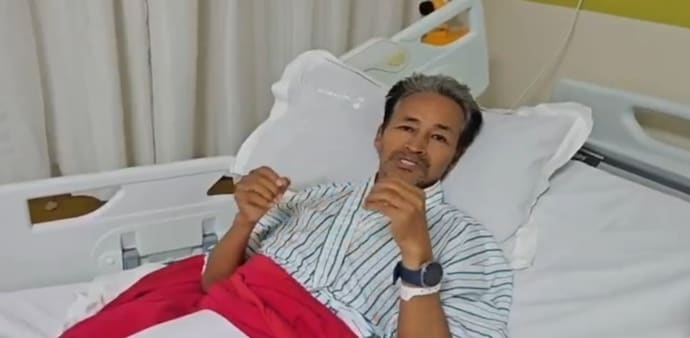
In an emotional video message released on Friday, Wangchuk asked, "Do I still need to prove my sincerity?", asserting that his decision to end the fast came only after the government provided written assurances on key demands.
Responding to criticism that surfaced after Union ministers J.P. Nadda and Jitendra Singh were present when he broke his fast, Wangchuk said, "After 26 days of hunger, do I still need to prove my sincerity? If a bargain had to be made, would someone stay hungry for 26 days? Could I not have sat in an air-conditioned room and made a deal instead of fasting on the roadside in Delhi's heat?"
The activist said he was "hurt" by allegations that he had compromised with the government. "Since morning, people have been calling me or showing me posts, saying questions are being raised against me. Will I now have to get a character certificate regarding how pure my fast was?" he asked, urging critics to watch his full 22-minute video before drawing alligations.
Explaining why he chose to end the hunger strike, Wangchuk said his foremost concern was the safety of students and peaceful protesters. He revealed that he insisted on a written assurance from the Centre that no criminal cases would be filed against those participating in the movement.
"Last night, around midnight, I was told the ministers had agreed to give the assurance in writing. I was in a hurry because there was apprehension that a major crackdown could happen. I remembered what happened in Ladakh in September 2025 and feared something similar here. I felt that if I ended my fast and appealed for peace, the situation could be diffused," he said.
Wangchuk also alleged that after being shifted from the protest site to Safdarjung Hospital, he was treated "like a prisoner." He claimed he was denied free movement, prevented from meeting visitors and not allowed access to his mobile phone or laptop. According to him, he had wanted to end his fast in the presence of supporters and Members of Parliament, but circumstances did not allow it.
His clarification came after Congress MP Imran Masood alleged that Wangchuk had reached a "personal deal" with the government, comparing him to veteran activist Anna Hazare. The remarks triggered a political row, with BJP leaders defending Wangchuk and accusing the Congress of trying to discredit the student-led movement.
Wangchuk ended his 26-day hunger strike late Thursday after receiving written assurances from the Centre, including that no legal action would be taken against peaceful protesters, Parliament would discuss examination reforms, and the government would positively consider compensation for families of students who allegedly died by suicide following the NEET paper leak controversy. While ending his fast, Wangchuk maintained that the movement for accountability and education reforms would continue, saying the conclusion of his hunger strike was "not the end, but the beginning of accountability."
Social activist Sonam Wangchuk has strongly dismissed allegations that he struck a deal with the Centre to end his 26-day hunger strike, saying those questioning his integrity were ignoring the physical and personal sacrifices he made during the protest.
In an emotional video message released on Friday, Wangchuk asked, "Do I still need to prove my sincerity?", asserting that his decision to end the fast came only after the government provided written assurances on key demands.
Responding to criticism that surfaced after Union ministers J.P. Nadda and Jitendra Singh were present when he broke his fast, Wangchuk said, "After 26 days of hunger, do I still need to prove my sincerity? If a bargain had to be made, would someone stay hungry for 26 days? Could I not have sat in an air-conditioned room and made a deal instead of fasting on the roadside in Delhi's heat?"
The activist said he was "hurt" by allegations that he had compromised with the government. "Since morning, people have been calling me or showing me posts, saying questions are being raised against me. Will I now have to get a character certificate regarding how pure my fast was?" he asked, urging critics to watch his full 22-minute video before drawing alligations.
Explaining why he chose to end the hunger strike, Wangchuk said his foremost concern was the safety of students and peaceful protesters. He revealed that he insisted on a written assurance from the Centre that no criminal cases would be filed against those participating in the movement.
"Last night, around midnight, I was told the ministers had agreed to give the assurance in writing. I was in a hurry because there was apprehension that a major crackdown could happen. I remembered what happened in Ladakh in September 2025 and feared something similar here. I felt that if I ended my fast and appealed for peace, the situation could be diffused," he said.
Wangchuk also alleged that after being shifted from the protest site to Safdarjung Hospital, he was treated "like a prisoner." He claimed he was denied free movement, prevented from meeting visitors and not allowed access to his mobile phone or laptop. According to him, he had wanted to end his fast in the presence of supporters and Members of Parliament, but circumstances did not allow it.
His clarification came after Congress MP Imran Masood alleged that Wangchuk had reached a "personal deal" with the government, comparing him to veteran activist Anna Hazare. The remarks triggered a political row, with BJP leaders defending Wangchuk and accusing the Congress of trying to discredit the student-led movement.
Wangchuk ended his 26-day hunger strike late Thursday after receiving written assurances from the Centre, including that no legal action would be taken against peaceful protesters, Parliament would discuss examination reforms, and the government would positively consider compensation for families of students who allegedly died by suicide following the NEET paper leak controversy. While ending his fast, Wangchuk maintained that the movement for accountability and education reforms would continue, saying the conclusion of his hunger strike was "not the end, but the beginning of accountability."