
'If improving lives means debt, I'll take the debt': Stalin minister defends Tamil Nadu's fiscal record
"We have not made it much worse than what we inherited in either of the two primary metrics: debt-to-GSDP or interest-to-revenue," says P Thiaga Rajan
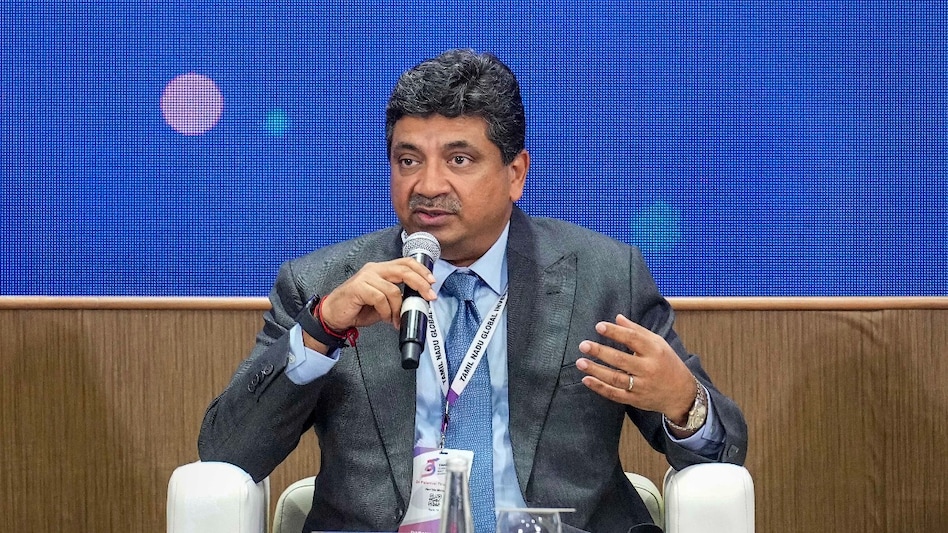
- Feb 23, 2026,
- Updated Feb 23, 2026 4:55 PM IST
With Tamil Nadu's debt projected to cross Rs 10 lakh crore, the state's IT Minister P Thiaga Rajan on Monday mounted a detailed defence of the government's fiscal approach. He argued that debt must be judged not by headline numbers but by ratios and social outcomes.
Also read: New twist in battle for Tamil Nadu: DMDK joins DMK; how much does it hurt AIADMK?
Responding to criticism that the state's debt has doubled from Rs 5.5 lakh crore five years ago to over Rs 10 lakh crore, Rajan said the absolute stock of debt "will always keep increasing - everywhere in the world."
"You have to look at debt as a percentage of GSDP (Gross State Domestic Product)," he said while speaking to CNN-News18. "The macroeconomic equation is that as wealth is created and individual savings go up, the only balancing factor in macroeconomics is borrowing by governments and companies. So as the total wealth of the world increases, total corporate and government debt increases. The question is: how fast is it increasing and what is it costing you?" he said.
"If the measure is debt-to-GSDP, actually, we are no worse off than what was handed to us when we took office in 2021. The real decay in the debt-to-GDP ratio came between 2014 and 2021 - those were seven really bad years for us," the minister added.
Rajan, however, said the "real decay" in the ratio occurred between 2014 and 2021. He noted that debt-to-GSDP had fallen from around 27–28% to 16% between 2003 and 2014, while interest-to-revenue dropped from 22% to 11%. But from 2014 to 2021, he said, debt rose again to about 24%, and further to 27% during the Covid year, while interest burden climbed back to nearly 20% of revenue.
"We have not made it much worse than what we inherited in either of the two primary metrics: debt-to-GSDP or interest-to-revenue," he said.
Tamil Nadu's revised estimate for 2025–26 pegs debt at Rs 9.52 lakh crore, projected to rise to ₹10.71 lakh crore by March 2027.
Interest burden and trade-offs
The minister acknowledged that rising debt increases interest payments, which now run into tens of thousands of crores annually. But he stressed that interest must be assessed as a share of revenue. "As the debt goes up, interest payment goes up. That is more problematic for you," he said. "You must pay interest first before you do anything else, including salaries."
Yet, he framed the debate as a policy trade-off. "If you tell me that the cost of improving my fiscal metrics is that I must have social outcomes of Gujarat, much lower graduation rates from school, much less access to healthcare, and much greater multidimensional poverty, then I would say it is okay, I will take the debt," he said.
"Because for me, the number one job of a government is to improve the lives of its citizens. If I have to do that with debt, within reasonable limits, I will do that."
Welfare and growth: which comes first?
Defending the state's welfare-heavy "Dravidian model", the minister argued that strong social safety nets and growth are not mutually exclusive.
"Across the world, there's a high correlation between states where there is a good safety net, broad participation in education and health and nutrition and high growth," he said. "The question is which leads to which."
"In our view, we have always focused on the social stuff first," he added. "Make sure everybody gets nutrition, education - the rest will come."
He pointed to a rise in electronics exports in recent years, arguing that investment follows human capital. "It's very hard for me to say 'Should I have high welfare or high growth?' I'm saying if you have a good society, you will have high growth. A good society is at least partially defined by adequate welfare."
Assembly elections in Tamil Nadu are due in April-May.
With Tamil Nadu's debt projected to cross Rs 10 lakh crore, the state's IT Minister P Thiaga Rajan on Monday mounted a detailed defence of the government's fiscal approach. He argued that debt must be judged not by headline numbers but by ratios and social outcomes.
Also read: New twist in battle for Tamil Nadu: DMDK joins DMK; how much does it hurt AIADMK?
Responding to criticism that the state's debt has doubled from Rs 5.5 lakh crore five years ago to over Rs 10 lakh crore, Rajan said the absolute stock of debt "will always keep increasing - everywhere in the world."
"You have to look at debt as a percentage of GSDP (Gross State Domestic Product)," he said while speaking to CNN-News18. "The macroeconomic equation is that as wealth is created and individual savings go up, the only balancing factor in macroeconomics is borrowing by governments and companies. So as the total wealth of the world increases, total corporate and government debt increases. The question is: how fast is it increasing and what is it costing you?" he said.
"If the measure is debt-to-GSDP, actually, we are no worse off than what was handed to us when we took office in 2021. The real decay in the debt-to-GDP ratio came between 2014 and 2021 - those were seven really bad years for us," the minister added.
Rajan, however, said the "real decay" in the ratio occurred between 2014 and 2021. He noted that debt-to-GSDP had fallen from around 27–28% to 16% between 2003 and 2014, while interest-to-revenue dropped from 22% to 11%. But from 2014 to 2021, he said, debt rose again to about 24%, and further to 27% during the Covid year, while interest burden climbed back to nearly 20% of revenue.
"We have not made it much worse than what we inherited in either of the two primary metrics: debt-to-GSDP or interest-to-revenue," he said.
Tamil Nadu's revised estimate for 2025–26 pegs debt at Rs 9.52 lakh crore, projected to rise to ₹10.71 lakh crore by March 2027.
Interest burden and trade-offs
The minister acknowledged that rising debt increases interest payments, which now run into tens of thousands of crores annually. But he stressed that interest must be assessed as a share of revenue. "As the debt goes up, interest payment goes up. That is more problematic for you," he said. "You must pay interest first before you do anything else, including salaries."
Yet, he framed the debate as a policy trade-off. "If you tell me that the cost of improving my fiscal metrics is that I must have social outcomes of Gujarat, much lower graduation rates from school, much less access to healthcare, and much greater multidimensional poverty, then I would say it is okay, I will take the debt," he said.
"Because for me, the number one job of a government is to improve the lives of its citizens. If I have to do that with debt, within reasonable limits, I will do that."
Welfare and growth: which comes first?
Defending the state's welfare-heavy "Dravidian model", the minister argued that strong social safety nets and growth are not mutually exclusive.
"Across the world, there's a high correlation between states where there is a good safety net, broad participation in education and health and nutrition and high growth," he said. "The question is which leads to which."
"In our view, we have always focused on the social stuff first," he added. "Make sure everybody gets nutrition, education - the rest will come."
He pointed to a rise in electronics exports in recent years, arguing that investment follows human capital. "It's very hard for me to say 'Should I have high welfare or high growth?' I'm saying if you have a good society, you will have high growth. A good society is at least partially defined by adequate welfare."
Assembly elections in Tamil Nadu are due in April-May.