
India almost lost its first homegrown MRI. How Tata, Zoho stepped in to keep healthcare affordable
Founded by electronics engineer Arjun Arunachalam, Voxelgrids spent more than a decade developing India's first indigenous MRI scanner
- Aug 7, 2026,
- Updated Aug 7, 2026 12:53 PM IST
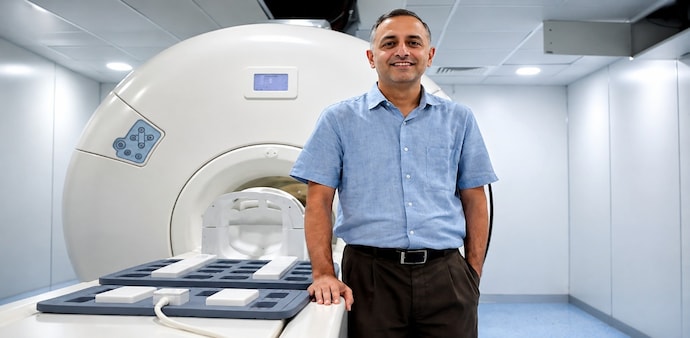
Voxelgrids founder Arjun Arunachalam, recalling the moment his startup turned down a multinational's buyout offer despite facing a severe funding crunch during the Covid-19 pandemic.
India's first indigenous MRI machine nearly slipped into foreign hands before timely financial backing from Tata Trusts, and later, Zoho founder Sridhar Vembu helped Bengaluru-based startup Voxelgrids continue its mission of building affordable, homegrown MRI technology.
A Buyout
Founded by electronics engineer Arjun Arunachalam, Voxelgrids spent more than a decade developing India's first indigenous MRI scanner. During the COVID-19 pandemic, when funding became scarce, a multinational medical technology company approached the startup with an acquisition offer.
READ THIS: 'We've been working this way for 30 yrs': Zoho's Mani Vembu says GenZ didn't invent flexible work
Despite financial uncertainty, Arunachalam chose to reject the deal. "We thought partnering with the company would risk our innovation. We wanted to ensure that this technology remained India's own," he told India Today Digital.
The decision meant continuing the difficult journey of building one of the world's most sophisticated medical devices without the backing of a global corporation.
Tata Trusts and Zoho became the lifeline
The startup's fortunes changed when Tata Trusts, under the leadership of the late Ratan Tata, stepped in with crucial financial support. The investment helped Voxelgrids continue its research and product development without giving up ownership.
Later, Zoho founder Sridhar Vembu also backed the company, providing additional support that enabled the startup to stay focused on commercialising its indigenous MRI technology. Their backing ensured that India's first homegrown MRI project remained in Indian hands.
DON'T MISS: 'Tata was my smartest career decision': Former Syndicate Bank chairman recalls ₹960 job offer
Why an indigenous MRI is a big deal
India currently imports nearly all of its MRI machines, with annual imports estimated at around ₹3,500 crore. Voxelgrids believes its indigenous scanner can significantly reduce that dependence.
According to the company, the MRI machine can be manufactured at nearly 40% lower cost than imported alternatives and is around 50% lighter, making installation easier. More importantly, the company estimates that MRI scan costs could eventually fall by up to 70%, making advanced diagnostic imaging more affordable and accessible across the country.
From GE Healthcare to building India's own MRI
Arjun Arunachalam specialised in MRI physics at the University of Wisconsin-Madison before working at GE Healthcare in the United States. After returning to India and briefly teaching at IIT Bombay, he realised Indian researchers had limited access to advanced MRI systems and virtually no opportunity to innovate in the field.
"I wanted to do something meaningful in India and stay here," Arunachalam said, explaining the motivation behind founding Voxelgrids. Today, the company says nearly every component of its MRI scanner, from hardware and electronics to imaging software, has been designed in-house.
ALSO READ: Swiss teacher can buy an iPhone in days, Indian teacher needs months: Sridhar Vembu explains the gap
A milestone for India's healthcare ecosystem
Beyond being a technological achievement, Voxelgrids' indigenous MRI represents a significant step towards healthcare self-reliance. By reducing dependence on imported equipment and lowering diagnostic costs, the innovation could make advanced medical imaging more accessible while strengthening India's position in high-end medical technology manufacturing.
Voxelgrids founder Arjun Arunachalam, recalling the moment his startup turned down a multinational's buyout offer despite facing a severe funding crunch during the Covid-19 pandemic.
India's first indigenous MRI machine nearly slipped into foreign hands before timely financial backing from Tata Trusts, and later, Zoho founder Sridhar Vembu helped Bengaluru-based startup Voxelgrids continue its mission of building affordable, homegrown MRI technology.
A Buyout
Founded by electronics engineer Arjun Arunachalam, Voxelgrids spent more than a decade developing India's first indigenous MRI scanner. During the COVID-19 pandemic, when funding became scarce, a multinational medical technology company approached the startup with an acquisition offer.
READ THIS: 'We've been working this way for 30 yrs': Zoho's Mani Vembu says GenZ didn't invent flexible work
Despite financial uncertainty, Arunachalam chose to reject the deal. "We thought partnering with the company would risk our innovation. We wanted to ensure that this technology remained India's own," he told India Today Digital.
The decision meant continuing the difficult journey of building one of the world's most sophisticated medical devices without the backing of a global corporation.
Tata Trusts and Zoho became the lifeline
The startup's fortunes changed when Tata Trusts, under the leadership of the late Ratan Tata, stepped in with crucial financial support. The investment helped Voxelgrids continue its research and product development without giving up ownership.
Later, Zoho founder Sridhar Vembu also backed the company, providing additional support that enabled the startup to stay focused on commercialising its indigenous MRI technology. Their backing ensured that India's first homegrown MRI project remained in Indian hands.
DON'T MISS: 'Tata was my smartest career decision': Former Syndicate Bank chairman recalls ₹960 job offer
Why an indigenous MRI is a big deal
India currently imports nearly all of its MRI machines, with annual imports estimated at around ₹3,500 crore. Voxelgrids believes its indigenous scanner can significantly reduce that dependence.
According to the company, the MRI machine can be manufactured at nearly 40% lower cost than imported alternatives and is around 50% lighter, making installation easier. More importantly, the company estimates that MRI scan costs could eventually fall by up to 70%, making advanced diagnostic imaging more affordable and accessible across the country.
From GE Healthcare to building India's own MRI
Arjun Arunachalam specialised in MRI physics at the University of Wisconsin-Madison before working at GE Healthcare in the United States. After returning to India and briefly teaching at IIT Bombay, he realised Indian researchers had limited access to advanced MRI systems and virtually no opportunity to innovate in the field.
"I wanted to do something meaningful in India and stay here," Arunachalam said, explaining the motivation behind founding Voxelgrids. Today, the company says nearly every component of its MRI scanner, from hardware and electronics to imaging software, has been designed in-house.
ALSO READ: Swiss teacher can buy an iPhone in days, Indian teacher needs months: Sridhar Vembu explains the gap
A milestone for India's healthcare ecosystem
Beyond being a technological achievement, Voxelgrids' indigenous MRI represents a significant step towards healthcare self-reliance. By reducing dependence on imported equipment and lowering diagnostic costs, the innovation could make advanced medical imaging more accessible while strengthening India's position in high-end medical technology manufacturing.