
Nandan Nilekani says India's AI edge isn't chips—it's this opportunity that could create millions of jobs
Speaking at the NCAER India Policy Forum 2026, Nilekani argued that while countries in the West are investing heavily in AI infrastructure, including larger models, semiconductor chips and data centres
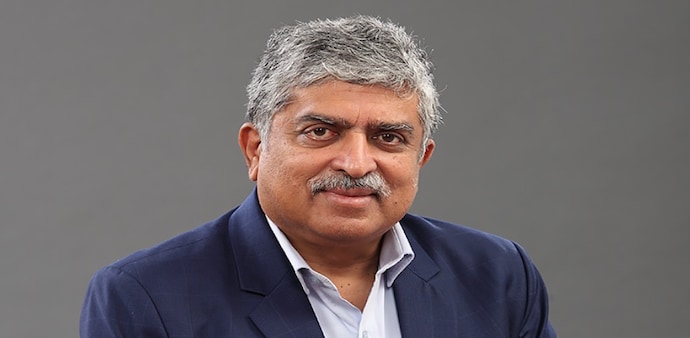
- Aug 7, 2026,
- Updated Aug 7, 2026 10:59 AM IST
India is well-positioned to become the world's "AI use-case capital" by building practical, large-scale artificial intelligence applications, rather than competing in the race for advanced chips and frontier AI models, Infosys co-founder Nandan Nilekani said on Thursday.
Speaking at the NCAER India Policy Forum 2026, Nilekani argued that while countries in the West are investing heavily in AI infrastructure, including larger models, semiconductor chips and data centres, the bigger opportunity for India lies in developing AI solutions that solve real-world problems at scale.
"The Western focus on AI is on infrastructure, larger models, more chips, more data centres. But infrastructure eventually gets commoditised. The value shifts to the application layer, and India can become the AI use-case capital of the world," Nilekani said.
AI must work in Indian languages
Nilekani emphasised that India's greatest advantage is its ability to develop AI that caters to its diverse population. According to him, AI adoption can only reach over a billion people if it understands India's multilingual and voice-first communication patterns.
"If you want AI to work for a billion people, it has to work in Indian languages, in voice, and even in the way Indians naturally mix languages," he said.
He added that India's Digital Public Infrastructure (DPI), including platforms such as Aadhaar and UPI, provides a strong foundation for deploying AI across sectors like agriculture, healthcare and education. Rather than focusing solely on developing cutting-edge AI models, India should leverage these digital rails to create practical applications that improve productivity and public services.
Startups will drive the AI economy
Nilekani also highlighted entrepreneurship as the biggest engine of job creation in the AI era. He noted that India's startup ecosystem has expanded from fewer than 10,000 startups a decade ago to around 1.5 lakh today and could surpass one million by 2035 if it continues growing at around 20% annually.
DON'T MISS: Terrier Cyber Quest 2026: Indian Army opens registrations for national cyber challenge. How to apply
"These companies will not only create entrepreneurs but also create jobs," Nilekani said. He urged policymakers to simplify regulations and reduce compliance burdens so that more entrepreneurs can build businesses.
Rethinking jobs in the AI era
Addressing concerns over AI-led automation, Nilekani said the future of employment may not lie with large corporations. He warned that structured enterprises are more vulnerable to automation because repetitive tasks are easier for AI to replace.
"We have to rethink how jobs get created. It may not be one company employing a million people, but a million companies employing one person each," he said.
According to Nilekani, millions of small businesses and startups, supported by AI-powered tools, digital credit infrastructure and easier market access, will become the primary creators of jobs over the coming decade.
ALSO READ: From AI classrooms to smarter governance: Karnataka teams up with Anthropic to boost AI adoption
Beyond AI
Nilekani also emphasised the need for portable social security benefits and digital credentials that allow workers to move seamlessly between salaried jobs, gig work and entrepreneurship. He added that India must continue to grow rapidly to fully utilise its demographic dividend while addressing long-term challenges such as climate change, healthcare, education and urbanisation.
India is well-positioned to become the world's "AI use-case capital" by building practical, large-scale artificial intelligence applications, rather than competing in the race for advanced chips and frontier AI models, Infosys co-founder Nandan Nilekani said on Thursday.
Speaking at the NCAER India Policy Forum 2026, Nilekani argued that while countries in the West are investing heavily in AI infrastructure, including larger models, semiconductor chips and data centres, the bigger opportunity for India lies in developing AI solutions that solve real-world problems at scale.
"The Western focus on AI is on infrastructure, larger models, more chips, more data centres. But infrastructure eventually gets commoditised. The value shifts to the application layer, and India can become the AI use-case capital of the world," Nilekani said.
AI must work in Indian languages
Nilekani emphasised that India's greatest advantage is its ability to develop AI that caters to its diverse population. According to him, AI adoption can only reach over a billion people if it understands India's multilingual and voice-first communication patterns.
"If you want AI to work for a billion people, it has to work in Indian languages, in voice, and even in the way Indians naturally mix languages," he said.
He added that India's Digital Public Infrastructure (DPI), including platforms such as Aadhaar and UPI, provides a strong foundation for deploying AI across sectors like agriculture, healthcare and education. Rather than focusing solely on developing cutting-edge AI models, India should leverage these digital rails to create practical applications that improve productivity and public services.
Startups will drive the AI economy
Nilekani also highlighted entrepreneurship as the biggest engine of job creation in the AI era. He noted that India's startup ecosystem has expanded from fewer than 10,000 startups a decade ago to around 1.5 lakh today and could surpass one million by 2035 if it continues growing at around 20% annually.
DON'T MISS: Terrier Cyber Quest 2026: Indian Army opens registrations for national cyber challenge. How to apply
"These companies will not only create entrepreneurs but also create jobs," Nilekani said. He urged policymakers to simplify regulations and reduce compliance burdens so that more entrepreneurs can build businesses.
Rethinking jobs in the AI era
Addressing concerns over AI-led automation, Nilekani said the future of employment may not lie with large corporations. He warned that structured enterprises are more vulnerable to automation because repetitive tasks are easier for AI to replace.
"We have to rethink how jobs get created. It may not be one company employing a million people, but a million companies employing one person each," he said.
According to Nilekani, millions of small businesses and startups, supported by AI-powered tools, digital credit infrastructure and easier market access, will become the primary creators of jobs over the coming decade.
ALSO READ: From AI classrooms to smarter governance: Karnataka teams up with Anthropic to boost AI adoption
Beyond AI
Nilekani also emphasised the need for portable social security benefits and digital credentials that allow workers to move seamlessly between salaried jobs, gig work and entrepreneurship. He added that India must continue to grow rapidly to fully utilise its demographic dividend while addressing long-term challenges such as climate change, healthcare, education and urbanisation.