
India-EU FTA ‘politically embarrassing for the US’, will accelerate other deals, says Kanwal Sibal
India-EU FTA: “This deal will accelerate other deals that are being negotiated and also help in pushing for reviewing earlier unsatisfactory deals with Japan and Asean,” said Sibal.
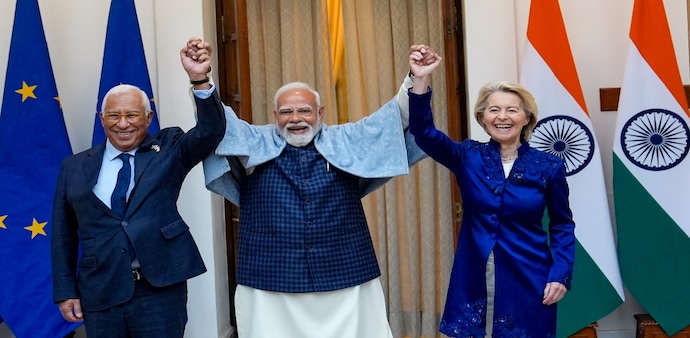
- Jan 28, 2026,
- Updated Jan 28, 2026 8:45 AM IST
The India-EU free trade agreement (FTA) that comes amid US President Donald Trump’s heavy-handedness in dealing with both the 27-nation bloc as well as New Delhi, with demands of them giving in to Washington’s demands, is “politically embarrassing for the US”, said former foreign secretary Kanwal Sibal.
In the context of Trump’s tariffs and pressure, both the EU and India were incentivised to finalise their own trade deal.
“The India-EU FTA is a major development. It comes in the wake of the fragmentation of the global trading system, the wrecking of the WTO’s rules based trading order by the US and the weaponising of tariffs by the US. With punitive US tariffs on India, Trump’s animus towards the EU and forcing a one- sided trade on it currently suspended by the EU parliament, both the EU and India were incentivised to finalise their own trade deal. This deal is politically embarrassing for the US,” he said.
Sibal drew parallels between what Trump wants and what India-EU decided on. While Trump used tariffs to reject a fair and mutually-beneficial deal and “extract undue concessions from India”, the EU deal was balanced, and both sides widened their options.
“This deal will accelerate other deals that are being negotiated and also help in pushing for reviewing earlier unsatisfactory deals with Japan and Asean,” said Sibal.
INDIA-EU FTA
India and the European Union agreed on a comprehensive free trade pact that will progressively reduce tariffs on EU vehicles and a wide range of European goods. Indian exports will gain unprecedented duty-free access to the EU market. The agreement, described as the largest in India’s history, is set to be signed later this year and is expected to be implemented by 2026 or early 2027. It will create an integrated market of around 2 billion people, combining India’s economy with the EU, the world’s second-largest economic bloc.
The pact covers goods, services, investment, professional and student mobility, and technical cooperation. Both sides will enjoy tariff reductions or eliminations and expanded trade opportunities. The EU will remove duties on over 93 per cent of Indian goods, including textiles, apparel, chemicals, and leather. Remaining exports will face phased reductions or quota-based concessions. Indian textiles, currently subject to up to 12 per cent duty in the EU, will have zero-duty access, helping exporters compete better with countries like Bangladesh.
For the EU, over 90 per cent of its goods will gain duty-free access to India over 10 years, with 30 per cent of European goods seeing tariffs removed immediately. Key European exports benefiting include automobiles, wines, spirits, beer, olive oil, fruit, processed foods, and meat products, many of which currently face duties from 33 per cent to 150 per cent in India.
A major feature is the reduction of tariffs on European motor vehicles. Tariffs on cars will fall from 110 per cent to 10 per cent for up to 250,000 vehicles annually, a quota more than six times that granted to the UK. The commerce ministry said the quota-based liberalisation will allow EU automakers to introduce models in higher price bands and open possibilities for Make in India and exports from India. In 2024, Europe exported motor vehicles worth 1.6 billion euros to India, and the agreement is expected to boost this figure significantly.
Machinery, electrical equipment, aircraft and spacecraft, optical, medical, and surgical equipment, plastics, chemicals, iron and steel, and pharmaceuticals from the EU will also enjoy duty-free access in India. The agreement excludes concessions for certain sensitive sectors. India will not reduce duties on dairy, soya meal, and cereals, while the EU will protect sugar, beef, meat, and poultry sectors. In services, the EU has offered India access to 144 out of 155 sub-sectors, and India will open 102 sub-sectors to the EU. The pact includes measures to facilitate student mobility and post-study work visas between the two markets.
The India-EU free trade agreement (FTA) that comes amid US President Donald Trump’s heavy-handedness in dealing with both the 27-nation bloc as well as New Delhi, with demands of them giving in to Washington’s demands, is “politically embarrassing for the US”, said former foreign secretary Kanwal Sibal.
In the context of Trump’s tariffs and pressure, both the EU and India were incentivised to finalise their own trade deal.
“The India-EU FTA is a major development. It comes in the wake of the fragmentation of the global trading system, the wrecking of the WTO’s rules based trading order by the US and the weaponising of tariffs by the US. With punitive US tariffs on India, Trump’s animus towards the EU and forcing a one- sided trade on it currently suspended by the EU parliament, both the EU and India were incentivised to finalise their own trade deal. This deal is politically embarrassing for the US,” he said.
Sibal drew parallels between what Trump wants and what India-EU decided on. While Trump used tariffs to reject a fair and mutually-beneficial deal and “extract undue concessions from India”, the EU deal was balanced, and both sides widened their options.
“This deal will accelerate other deals that are being negotiated and also help in pushing for reviewing earlier unsatisfactory deals with Japan and Asean,” said Sibal.
INDIA-EU FTA
India and the European Union agreed on a comprehensive free trade pact that will progressively reduce tariffs on EU vehicles and a wide range of European goods. Indian exports will gain unprecedented duty-free access to the EU market. The agreement, described as the largest in India’s history, is set to be signed later this year and is expected to be implemented by 2026 or early 2027. It will create an integrated market of around 2 billion people, combining India’s economy with the EU, the world’s second-largest economic bloc.
The pact covers goods, services, investment, professional and student mobility, and technical cooperation. Both sides will enjoy tariff reductions or eliminations and expanded trade opportunities. The EU will remove duties on over 93 per cent of Indian goods, including textiles, apparel, chemicals, and leather. Remaining exports will face phased reductions or quota-based concessions. Indian textiles, currently subject to up to 12 per cent duty in the EU, will have zero-duty access, helping exporters compete better with countries like Bangladesh.
For the EU, over 90 per cent of its goods will gain duty-free access to India over 10 years, with 30 per cent of European goods seeing tariffs removed immediately. Key European exports benefiting include automobiles, wines, spirits, beer, olive oil, fruit, processed foods, and meat products, many of which currently face duties from 33 per cent to 150 per cent in India.
A major feature is the reduction of tariffs on European motor vehicles. Tariffs on cars will fall from 110 per cent to 10 per cent for up to 250,000 vehicles annually, a quota more than six times that granted to the UK. The commerce ministry said the quota-based liberalisation will allow EU automakers to introduce models in higher price bands and open possibilities for Make in India and exports from India. In 2024, Europe exported motor vehicles worth 1.6 billion euros to India, and the agreement is expected to boost this figure significantly.
Machinery, electrical equipment, aircraft and spacecraft, optical, medical, and surgical equipment, plastics, chemicals, iron and steel, and pharmaceuticals from the EU will also enjoy duty-free access in India. The agreement excludes concessions for certain sensitive sectors. India will not reduce duties on dairy, soya meal, and cereals, while the EU will protect sugar, beef, meat, and poultry sectors. In services, the EU has offered India access to 144 out of 155 sub-sectors, and India will open 102 sub-sectors to the EU. The pact includes measures to facilitate student mobility and post-study work visas between the two markets.