
India reviews US invite to join Trump's Gaza Board of Peace ahead of February 19 meet
With the first meeting scheduled for 19 February, New Delhi has confirmed receipt of the invitation but has yet to decide whether it will participate
- Feb 13, 2026,
- Updated Feb 13, 2026 7:35 AM IST
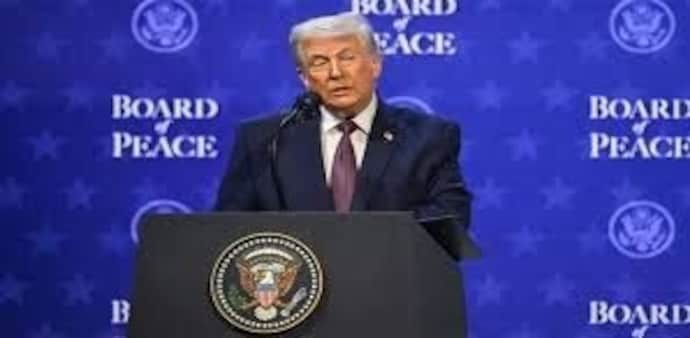
India is weighing its next move after the United States invited it to join US President Donald Trump’s proposed Board of Peace for the Gaza Strip. With the first meeting scheduled for 19 February, New Delhi has confirmed receipt of the invitation but has yet to decide whether it will participate.
Addressing reporters in New Delhi, Ministry of External Affairs spokesperson Randhir Jaiswal said India is examining the proposal.
"As far as the Board of Peace is concerned, we have received an invitation from the US government to join the Board of Peace. We are currently considering this proposal and reviewing it," Jaiswal said.
In a separate interaction captured on video, he reiterated: "We have received an invitation from the US side to join the Board of Peace. We are currently examining the proposal. As you know, India has consistently supported efforts aimed..."
India's cautious response
Jaiswal underlined India’s broader position on West Asia, linking any potential decision to its longstanding diplomatic stance.
"As you are aware, India has consistently supported efforts that promote peace, stability, and dialogue in West Asia. Our Prime Minister has also welcomed all such initiatives that pave the way for long-term and lasting peace in the entire region, including Gaza," he said.
The Board of Peace was constituted under the umbrella of United Nations Security Council Resolution 2803. The resolution welcomed its establishment as a transitional authority to support governance, reconstruction and stability in Gaza. It is also tied to plans for an International Stabilisation Force, a multinational peacekeeping entity authorised to help maintain the ceasefire and assist in demilitarisation and reconstruction efforts.
Who is on Trump's Board of Peace
The board is chaired by the United States. Its founding Executive Board includes US Secretary of State Marco Rubio, Trump special envoy Steve Witkoff, former British prime minister Tony Blair, World Bank president Ajay Banga, Jared Kushner and Marc Rowan, among others. A Gaza Executive Board is tasked with supporting governance efforts on the ground.
Several countries have already agreed to join or participate. Leading Arab and Muslim states, including Saudi Arabia, Egypt, Qatar, Turkey, Jordan, Pakistan, Indonesia and the United Arab Emirates, have signalled acceptance, viewing the initiative as a mechanism to consolidate the Gaza truce and support reconstruction. Morocco, Bahrain and Israel have also agreed to join.
Reports indicate that invitations were extended to around 60 countries, with more than 27 nations said to have agreed so far. Argentina, Armenia, Azerbaijan, Bahrain, Belarus, Egypt, Hungary, Indonesia, Jordan, Kazakhstan, Kosovo, Morocco, Pakistan, Paraguay, Qatar, Saudi Arabia, Turkey, the UAE, Uzbekistan and Vietnam are among those listed as members.
However, several traditional Western democracies have opted not to participate. Major Western powers such as France, Germany, the United Kingdom and Spain have either declined, delayed a decision, or adopted a cautious approach, reflecting scepticism.
India is weighing its next move after the United States invited it to join US President Donald Trump’s proposed Board of Peace for the Gaza Strip. With the first meeting scheduled for 19 February, New Delhi has confirmed receipt of the invitation but has yet to decide whether it will participate.
Addressing reporters in New Delhi, Ministry of External Affairs spokesperson Randhir Jaiswal said India is examining the proposal.
"As far as the Board of Peace is concerned, we have received an invitation from the US government to join the Board of Peace. We are currently considering this proposal and reviewing it," Jaiswal said.
In a separate interaction captured on video, he reiterated: "We have received an invitation from the US side to join the Board of Peace. We are currently examining the proposal. As you know, India has consistently supported efforts aimed..."
India's cautious response
Jaiswal underlined India’s broader position on West Asia, linking any potential decision to its longstanding diplomatic stance.
"As you are aware, India has consistently supported efforts that promote peace, stability, and dialogue in West Asia. Our Prime Minister has also welcomed all such initiatives that pave the way for long-term and lasting peace in the entire region, including Gaza," he said.
The Board of Peace was constituted under the umbrella of United Nations Security Council Resolution 2803. The resolution welcomed its establishment as a transitional authority to support governance, reconstruction and stability in Gaza. It is also tied to plans for an International Stabilisation Force, a multinational peacekeeping entity authorised to help maintain the ceasefire and assist in demilitarisation and reconstruction efforts.
Who is on Trump's Board of Peace
The board is chaired by the United States. Its founding Executive Board includes US Secretary of State Marco Rubio, Trump special envoy Steve Witkoff, former British prime minister Tony Blair, World Bank president Ajay Banga, Jared Kushner and Marc Rowan, among others. A Gaza Executive Board is tasked with supporting governance efforts on the ground.
Several countries have already agreed to join or participate. Leading Arab and Muslim states, including Saudi Arabia, Egypt, Qatar, Turkey, Jordan, Pakistan, Indonesia and the United Arab Emirates, have signalled acceptance, viewing the initiative as a mechanism to consolidate the Gaza truce and support reconstruction. Morocco, Bahrain and Israel have also agreed to join.
Reports indicate that invitations were extended to around 60 countries, with more than 27 nations said to have agreed so far. Argentina, Armenia, Azerbaijan, Bahrain, Belarus, Egypt, Hungary, Indonesia, Jordan, Kazakhstan, Kosovo, Morocco, Pakistan, Paraguay, Qatar, Saudi Arabia, Turkey, the UAE, Uzbekistan and Vietnam are among those listed as members.
However, several traditional Western democracies have opted not to participate. Major Western powers such as France, Germany, the United Kingdom and Spain have either declined, delayed a decision, or adopted a cautious approach, reflecting scepticism.