
India working on ₹40,000 crore deep-sea gas pipeline amid Hormuz crisis: Report
The pipeline route will reportedly pass through the Arabian Sea via Oman and the UAE, avoiding geopolitically sensitive areas.
- May 14, 2026,
- Updated May 14, 2026 9:51 AM IST
India is reportedly fast-tracking plans to secure uninterrupted gas supplies from the Gulf through a direct deep-sea pipeline amid the Strait of Hormuz crisis. The government is prioritising energy security to reduce dependence on volatile LNG spot markets.
According to a report in The Economic Times that cited a petroleum ministry official, the proposed pipeline from Oman is estimated to cost ₹40,000 crore, or $4.7-4.8 billion, and is expected to take five to seven years to complete. The ministry will ask state-run firms GAIL, Engineers India, and Indian Oil Corporation to prepare a detailed feasibility report based on a pre-feasibility study by The South Asia Gas Enterprise (SAGE), a private consortium, it said.
MUST READ | BT Explainer: After oil & gas, India needs to diversify critical mineral imports. Why?
A positive feasibility report would enable formal government-level talks with Oman on gas supply, financing, and project execution. Officials said the pipeline route will pass through the Arabian Sea via Oman and the UAE, avoiding geopolitically sensitive areas, it said. This pipeline would allow India to access gas from Oman, the UAE, Saudi Arabia, Iran, Turkmenistan, and Qatar, a region with 2,500 trillion cubic feet of gas reserves, as per the report.
The pipeline could be laid at depths of up to 3,450 metres, making it one of the deepest undersea pipelines globally. Advances in deep-sea pipe-laying and repair technology have made the project feasible. SAGE has already laid about 3,000 metres of test pipeline along the route at a cost of ₹25 crore to study seabed conditions.
DON'T MISS | Big gas rule change! These households may have to give up LPG connection by June
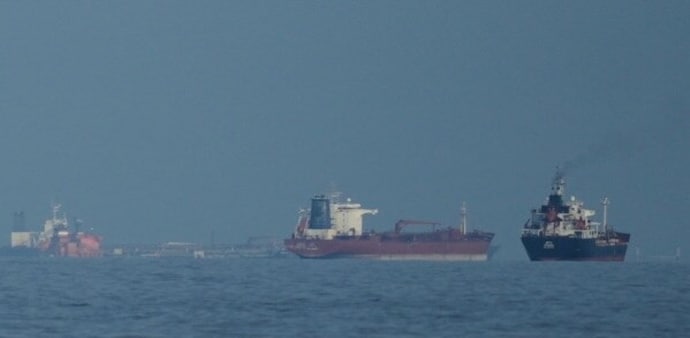
The move comes as the Strait of Hormuz remains a focal point of a wider crisis. Senior US and Chinese officials recently agreed that no country should charge shipping tolls in the strait. The US State Department said Chinese Foreign Minister Wang Yi and US Secretary of State Marco Rubio discussed the issue in April. This agreement precedes a summit between US President Donald Trump and Chinese President Xi Jinping, where Iran's control of the waterway is expected to be discussed.
Iran's near-complete closure of the trade route since joint Israeli-US airstrikes on February 28 has unsettled global energy markets. China’s embassy expressed hope for cooperation to restore normal traffic through the strait, which handles one-fifth of the world’s oil and gas supply. Tehran has demanded the right to collect tolls on shipping as a condition to end the conflict, while the US has imposed a naval blockade on Iran.
India is reportedly fast-tracking plans to secure uninterrupted gas supplies from the Gulf through a direct deep-sea pipeline amid the Strait of Hormuz crisis. The government is prioritising energy security to reduce dependence on volatile LNG spot markets.
According to a report in The Economic Times that cited a petroleum ministry official, the proposed pipeline from Oman is estimated to cost ₹40,000 crore, or $4.7-4.8 billion, and is expected to take five to seven years to complete. The ministry will ask state-run firms GAIL, Engineers India, and Indian Oil Corporation to prepare a detailed feasibility report based on a pre-feasibility study by The South Asia Gas Enterprise (SAGE), a private consortium, it said.
MUST READ | BT Explainer: After oil & gas, India needs to diversify critical mineral imports. Why?
A positive feasibility report would enable formal government-level talks with Oman on gas supply, financing, and project execution. Officials said the pipeline route will pass through the Arabian Sea via Oman and the UAE, avoiding geopolitically sensitive areas, it said. This pipeline would allow India to access gas from Oman, the UAE, Saudi Arabia, Iran, Turkmenistan, and Qatar, a region with 2,500 trillion cubic feet of gas reserves, as per the report.
The pipeline could be laid at depths of up to 3,450 metres, making it one of the deepest undersea pipelines globally. Advances in deep-sea pipe-laying and repair technology have made the project feasible. SAGE has already laid about 3,000 metres of test pipeline along the route at a cost of ₹25 crore to study seabed conditions.
DON'T MISS | Big gas rule change! These households may have to give up LPG connection by June
The move comes as the Strait of Hormuz remains a focal point of a wider crisis. Senior US and Chinese officials recently agreed that no country should charge shipping tolls in the strait. The US State Department said Chinese Foreign Minister Wang Yi and US Secretary of State Marco Rubio discussed the issue in April. This agreement precedes a summit between US President Donald Trump and Chinese President Xi Jinping, where Iran's control of the waterway is expected to be discussed.
Iran's near-complete closure of the trade route since joint Israeli-US airstrikes on February 28 has unsettled global energy markets. China’s embassy expressed hope for cooperation to restore normal traffic through the strait, which handles one-fifth of the world’s oil and gas supply. Tehran has demanded the right to collect tolls on shipping as a condition to end the conflict, while the US has imposed a naval blockade on Iran.