
India’s big fat wedding season is here: From years of savings to gold and loans, inside the $130 billion wedding economy
Bloomberg said the average Indian wedding costs about five times the country’s per capita GDP, much higher than in several other major countries.
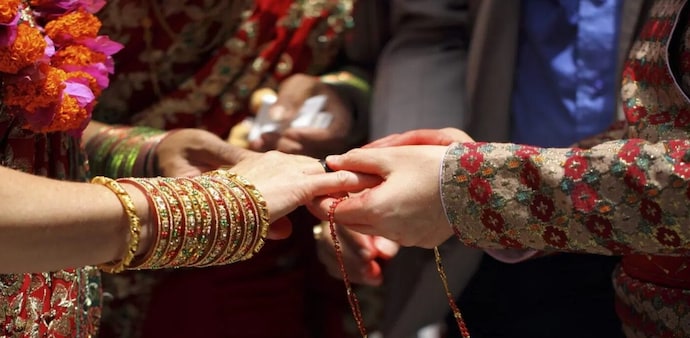
- Nov 17, 2026,
- Updated Nov 17, 2026 1:34 PM IST
India’s wedding season is beginning, and for millions of families, the celebrations also mark the start of a major spending cycle. From gold and jewellery to venues, clothes, food, travel and photography, weddings bring together expenses across several parts of the economy.
According to Bloomberg, India’s weddings generate an estimated $130 billion in annual spending, or 3.25% of the country’s 2025 nominal GDP.
For many families, the financial commitment starts well before the wedding itself. Some save for years, some accumulate gold over time and some even borrow against jewellery to meet wedding expenses.
So, why does India spend so much on weddings?
Why weddings matter so much in India
Marriage continues to be one of the biggest family milestones in India. The Founder and Chairman of the Indian Weddings Industry Association, who also heads Falcon Exhibitions and founded Falcon Social, said weddings have long been an important part of Indian family life.
“In an Indian scenario, there are three important things which are part of everybody's life. One, when a child is born, so that is the starting of the family. Second is to buy a house for the family. Third is to do a wedding for the children,” he told Bloomberg.
India’s different cultures also mean that weddings can look very different from one state to another.
“A wedding in Kashmir would be different. Weddings in Tamil Nadu would be different. A wedding in Punjab would be different. A wedding in Goa would be different. But traditions are deep-rooted,” he said.
That tradition comes with a big price tag. Bloomberg said the average Indian wedding costs about five times the country’s per capita GDP, much higher than in several other major countries.
Don't Miss: 2,194 gold hallmarking audits missed in five years: Who is checking the labs certifying your jewellery?
For families, a wedding is often a social responsibility
Marriage remains central to family life in India. Sonalde Desai, professor and director of the National Center of Applied Economic Research in New Delhi, said 97% of Indian women are married by the age of 30.
“India, actually, is very different. Marriage remains the big portion of people's life. Virtually, every Indian woman gets married. You know, 97% of Indian women are married by the age 30. So family remains central in India,” Desai said.
Arranged marriages also remain common. Desai said roughly 93% to 94% of marriages are arranged by parents, although men and women are increasingly given a choice in selecting their partners.
This also means that a wedding is often seen as a family event. For some families, how the wedding looks can become a matter of social standing.
“There is also a sense that, you know, you somehow need to arrange for a wedding in which there is a sort of a certain level of show or conspicuous consumption, which makes sure that your family status looks better to the other party, to other relatives, and so on,” Desai said.
Some families spend years of income on one wedding
For many households, the pressure to spend can be difficult to manage.
Desai recalled speaking to her driver, who was planning his daughter’s wedding and expected to spend around four years of his salary on it.
“He said, ‘But no, you see, I have been to everybody's wedding. Now it is my turn to return it. If I don't do it, it will look bad in my society and my caste. Also, it might affect my ability to marry off my younger child,’” Desai said.
The example shows how wedding spending is not always based simply on what a family can comfortably afford. Social expectations can also play a big role.
Gold is a big part of the wedding economy
Gold is another major part of Indian weddings. Indian households hold almost 35,000 tonnes of gold, according to Bloomberg. That is more than the gold held by the central banks of the US, Germany, France and China combined.
For families, gold bought for a wedding can also become a financial asset. If they need money later, the jewellery can be pledged to raise a loan.
George Alexander Muthoot, Executive Vice Chairman of the Muthoot Group, said some customers approach the company for gold loans when they need money for a wedding.
“Sometimes they come to us for purchasing gold. ‘My daughter's marriage is there, I want to purchase 200 grams of gold.’ So they take a loan from us,” Muthoot said.
The borrowing is not limited to buying jewellery. Families may also need money for the many functions and other expenses that come with a wedding.
“A lot of marriage expenses for the functions, etc. For that, they also take. So just like you take for your business, some people take for their marriage. It's also an expense,” he said.
Why some families turn to gold loans
When wedding costs rise, families may look at different ways to arrange the money. Gold loans are one such option because the jewellery itself acts as collateral.
Bloomberg said gold accounts for about 11% of outstanding consumer loans in India.
Muthoot said borrowers do not need a credit score to take a gold loan because the loan is primarily backed by the gold being pledged.
“For taking it, availing a gold loan, you do not need to have a credit score. Because the loan is given mainly based on the collateral, which is the gold,” he said.
He said the process can also be quicker and involve less paperwork than some other forms of borrowing.
“We don't look at this repayment capacity. We don't look at this repayment history. We don't look at this credit score, CIBIL score, etc. So, it's a very easy, quick loan,” Muthoot said.
But there is another important factor: trust. Families are handing over valuable jewellery to the lender, often jewellery that may have both financial and emotional value.
“The convenience is the most important factor and the second is a trust factor. They should trust me with their gold,” he said.
Why India’s wedding season is such a big business
The wedding season brings together spending across several parts of the economy at the same time. Families may spend on jewellery, clothes, venues, catering, travel, hotels, photography, decoration, beauty services and entertainment.
For consumers, this means a wedding can involve expenses across several categories, and often several years of financial planning.
The wedding economy is also different from ordinary discretionary spending. For many families, marriage is considered a major responsibility, which means spending can continue even when it puts pressure on household finances.
That is what makes India’s wedding market so large. A wedding is not just about the bride and groom. It involves families, relatives, communities and a long list of businesses that make money from the celebration.
With an estimated $130 billion in annual spending, India’s wedding market has become a major consumer and financial force, powered by tradition, family expectations, gold and, for some households, borrowing.