














 Composer Anirudh married businesswoman Kavya Maran in a dreamy wedding in Greece. (Photo credit: Instagram/anirudhofficial)
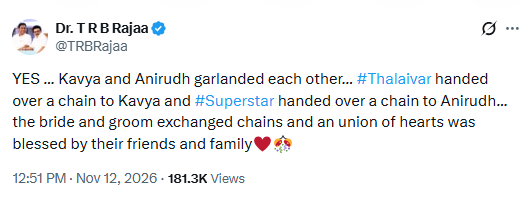
Music composer Anirudh Ravichander and Executive Director of Sun TV Network Kavya Maran have brought the concept of self-respect marriage into the spotlight after choosing a traditional wedding in Greece. The couple tied the knot on November 11, in a ceremony that placed mutual commitment and equality at the centre of their union, moving away from conventional priest-led religious rituals.
READ THIS: Anirudh Ravichander And Kaviya Maran Marry In Greece: Wedding Details And Celebrity Guests

 Nvidia, the chipmaking giant's China concerns: What did short seller Culper Research flag in its May report?
 Who will lead Nvidia after Jensen Huang? Colette Kress, Ian Buck and 5 others in focus
 BT EXCLUSIVE: IBBI can’t say how many big personal insolvency plans ended in deep haircuts & says it won’t compile the data
 Why Nvidia could fire Jensen Huang but Meta and Tesla cannot remove Zuckerberg, Musk -- Devina Mehra explains
 ‘Must compliment Elon Musk…’: Sunil Bharti Mittal on pushing the boundaries of satcom connectivity
 J&K Security Alert: 2 Attacks Across 3 Districts Trigger Alert; LeT Hunt Intensifies
 Nvidia's $500 Billion Stock Rout: Jensen Huang Exit, China Row & What Happens Next?
 Not America, Not China. Tomorrow Is Only For India': Chandrababu Naidu's Big Tech Push
 Jensen Huang Faces Fresh Personal Allegations; Nvidia’s Boardroom Under Spotlight
 Cauvery Water War: Karnataka Stands Firm On Mekedatu, Tamil Nadu Pushes Back

 Grasim Industries Q2 earnings: Revenue hits record high, net profit zooms 187%
 Cupid, Meesho shares trade at all-time highs; more upside likely?
 Bharti Airtel share buyback soon? How Sunil Bharti Mittal's telecom giant is rewarding investors
 Friday the 13th: Sensex, Nifty fall; key factors weighing on markets, outlook
 Amber Enterprises shares jump 11%; UBS flags weak margins
 'Spy agencies are trying after all': Telegram's Pavel Durov jokes about Instagram models amid Nvidia controversyGrasim Industries Q2 earnings: Revenue hits record high, net profit zooms 187%
 Karnataka: PM Modi Flags Off Bengaluru Metro's Pink Line, Takes A Ride With CM DK Shivakumar!J&K Security Alert: 2 Attacks Across 3 Districts Trigger Alert; LeT Hunt IntensifiesNvidia's $500 Billion Stock Rout: Jensen Huang Exit, China Row & What Happens Next?


