
'It was a proportionate measure': In reply to SC, Union Home Secy defends internet shutdown on Oct 10
In a four-page affidavit filed late on Wednesday night, Mohan said the suspension from 10 pm on October 9 to 10 pm on October 10 within a four-kilometre radius of Raisina Hills was necessary. Here's why
- Oct 15, 2026,
- Updated Oct 15, 2026 8:14 AM IST
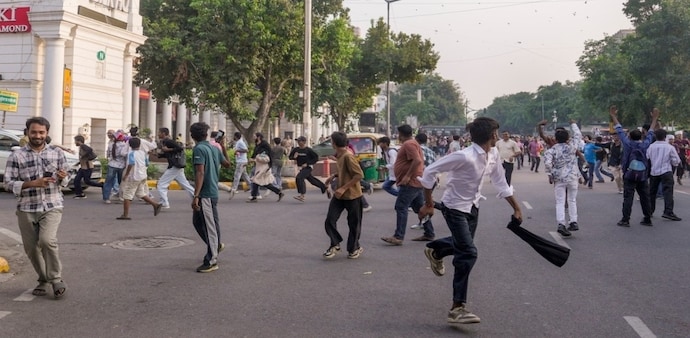
With concerns over public order surrounding the October 10 protests, Union Home Secretary Govind Mohan has tendered an unconditional apology to the Supreme Court while defending the temporary suspension of cellular internet services around Raisina Hills.
In a four-page affidavit filed late on Wednesday night, Mohan said the suspension from 10 pm on October 9 to 10 pm on October 10 within a four-kilometre radius of Raisina Hills was necessary to prevent disturbance to public order and maintain peace. He also requested the court to modify its October 11 order to permit such restrictions when necessary and in accordance with the law.
DON'T READ | Setback to CJP: Saurav Das, Ashutosh Ranka sent to 5-day judicial custody in Tihar Jail
Why cellular internet was suspended near Raisina Hills
Mohan said the Delhi Police's request for the suspension “was found to be a proportionate measure, having regard to the magnitude of the situation and the need to prevent any disturbance of public order in the national capital.”
“The suspension was confined to cellular internet services and did not extend to non-cellular internet services or telecommunication services such as wi-fi and broadband,” he said.
The Supreme Court had issued contempt notices to the Home Secretary, Delhi Police Commissioner and Delhi Metro Rail Corporation chairperson on October 11, a day after the protests were foiled by Delhi Police. The notices concerned the alleged violation of the court's earlier order. On October 11, the court had directed that “internet facilities should function unhindered”.
MUST READ | 'Jantar Mantar least suited': Kiran Bedi backs its de-notification as protest site; here's why
Mohan said suspending internet services for a limited period within a defined geographical area, along with statutory safeguards, was a recognised measure for maintaining public order in appropriate circumstances.
He asked the court to modify its order “to the extent necessary to permit the suspension of internet services in situations of necessity, strictly in accordance with law and subject to applicable statutory requirements and safeguards”.
DMRC denies violating Supreme Court order
In a separate affidavit, the DMRC denied violating the Supreme Court's October 9 order. It said all 271 trains completed their 157 scheduled trips on October 10, while entry and exit restrictions applied at 45 of 303 stations. Interchange services continued at 14 of these stations.
The DMRC said about 32 lakh passengers travelled that day, compared with nearly 58 lakh on a normal second Saturday. It attributed the decline to commuters staying home because of the protest and denied that it resulted from a Metro shutdown. It also tendered an unconditional apology and said the October 9 order had been passed ex parte and was not served on it.
With concerns over public order surrounding the October 10 protests, Union Home Secretary Govind Mohan has tendered an unconditional apology to the Supreme Court while defending the temporary suspension of cellular internet services around Raisina Hills.
In a four-page affidavit filed late on Wednesday night, Mohan said the suspension from 10 pm on October 9 to 10 pm on October 10 within a four-kilometre radius of Raisina Hills was necessary to prevent disturbance to public order and maintain peace. He also requested the court to modify its October 11 order to permit such restrictions when necessary and in accordance with the law.
DON'T READ | Setback to CJP: Saurav Das, Ashutosh Ranka sent to 5-day judicial custody in Tihar Jail
Why cellular internet was suspended near Raisina Hills
Mohan said the Delhi Police's request for the suspension “was found to be a proportionate measure, having regard to the magnitude of the situation and the need to prevent any disturbance of public order in the national capital.”
“The suspension was confined to cellular internet services and did not extend to non-cellular internet services or telecommunication services such as wi-fi and broadband,” he said.
The Supreme Court had issued contempt notices to the Home Secretary, Delhi Police Commissioner and Delhi Metro Rail Corporation chairperson on October 11, a day after the protests were foiled by Delhi Police. The notices concerned the alleged violation of the court's earlier order. On October 11, the court had directed that “internet facilities should function unhindered”.
MUST READ | 'Jantar Mantar least suited': Kiran Bedi backs its de-notification as protest site; here's why
Mohan said suspending internet services for a limited period within a defined geographical area, along with statutory safeguards, was a recognised measure for maintaining public order in appropriate circumstances.
He asked the court to modify its order “to the extent necessary to permit the suspension of internet services in situations of necessity, strictly in accordance with law and subject to applicable statutory requirements and safeguards”.
DMRC denies violating Supreme Court order
In a separate affidavit, the DMRC denied violating the Supreme Court's October 9 order. It said all 271 trains completed their 157 scheduled trips on October 10, while entry and exit restrictions applied at 45 of 303 stations. Interchange services continued at 14 of these stations.
The DMRC said about 32 lakh passengers travelled that day, compared with nearly 58 lakh on a normal second Saturday. It attributed the decline to commuters staying home because of the protest and denied that it resulted from a Metro shutdown. It also tendered an unconditional apology and said the October 9 order had been passed ex parte and was not served on it.