
Malviya Nagar fire tragedy: What Delhi Government’s new fire safety rules say
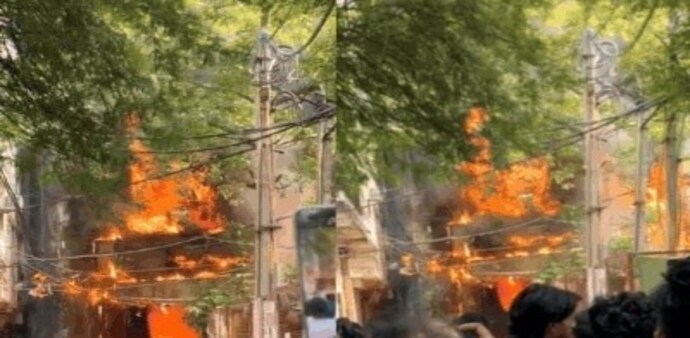
The deadly fire at a hotel in Delhi's Malviya Nagar that claimed at least 21 lives has put the spotlight on fire safety compliance in the capital. The tragedy comes days after the Delhi government introduced sweeping amendments to fire safety rules, including third-party audits and automated monitoring systems.
- Jun 3, 2026,
- Updated Jun 3, 2026 3:12 PM IST
A devastating fire at a hotel in Delhi’s Malviya Nagar on June 3 claimed at least 21 lives and left more than 40 people rescued, drawing fresh attention to fire safety compliance in the national capital. According to officials, many of those killed were foreign nationals, primarily from Central Asian and African countries. The incident has renewed scrutiny of building safety standards, emergency preparedness, and enforcement of fire regulations across Delhi.
Just days before the tragedy, the Delhi government notified the Delhi Fire Service (Amendment) Rules, 2025, introducing major changes to the city’s fire safety framework. The amendments are aimed at modernising inspections, improving monitoring, and strengthening emergency response systems across the capital.
Third-party fire audits
One of the biggest changes is the introduction of third-party fire safety audits. Under the new rules, building owners and occupants can appoint certified fire safety auditors from a list available on the Delhi Fire Service (DFS) portal. These auditors will inspect buildings, issue fire safety certificates, and upload inspection reports online.
The DFS will continue oversight through random checks, with at least 5% of certificates issued every quarter subject to verification by departmental officers. Earlier, fire safety certificates were issued directly by DFS officials following departmental inspections.
Delhi Home Minister Ashish Sood said the changes are part of the government's deregulation efforts and are intended to make the certification process more efficient.
MUST READ: 21 dead in Malviya Nagar hotel fire: Lemon Green Inn licensed only for 6 rooms but ran 25
Automated monitoring
The amended rules also mandate an Automated Continuous Monitoring System (ACMS) for firefighting infrastructure. The system is designed to continuously monitor both active and passive fire safety measures to ensure they remain operational at all times. This requirement was absent under the earlier 2010 rules.
The move is expected to help authorities identify equipment failures or maintenance issues before they become critical during emergencies.
MUST READ: BT EXPLAINER: Can your AC catch fire or explode? What every family must check before summer peaks
Major restructuring
The Delhi government has also reorganised the city’s fire administration structure. Under the previous framework, Delhi was divided into three fire zones and six divisions. The new rules expand the structure to five fire zones—Central, East, West, North and South—and 13 fire divisions aligned with Delhi’s current administrative districts.
The revised framework includes new divisions such as Burari, Badli, Najafgarh, Matiala, Bijwasan, Chhatarpur, Deoli, Karawal Nagar, Yamuna Vihar, Narela and Mundka, among others. Authorities say the restructuring is intended to improve monitoring, coordination and emergency response times as the city continues to expand.
Fire safety certificate rules
The notification clarifies that residential buildings exceeding 15 metres in height or comprising five or more storeys, excluding hotels and guest houses, must continue to obtain Fire Safety Certificates (FSCs). There has been no significant relaxation in these requirements.
As investigators examine the causes of the Malviya Nagar hotel fire, the tragedy is likely to intensify focus on whether fire safety norms are being effectively implemented and whether the new regulatory framework can prevent similar incidents in the future.
MUST READ: Delhi Vivek Vihar Fire: What we know so far about the blaze that claimed 9 lives
A devastating fire at a hotel in Delhi’s Malviya Nagar on June 3 claimed at least 21 lives and left more than 40 people rescued, drawing fresh attention to fire safety compliance in the national capital. According to officials, many of those killed were foreign nationals, primarily from Central Asian and African countries. The incident has renewed scrutiny of building safety standards, emergency preparedness, and enforcement of fire regulations across Delhi.
Just days before the tragedy, the Delhi government notified the Delhi Fire Service (Amendment) Rules, 2025, introducing major changes to the city’s fire safety framework. The amendments are aimed at modernising inspections, improving monitoring, and strengthening emergency response systems across the capital.
Third-party fire audits
One of the biggest changes is the introduction of third-party fire safety audits. Under the new rules, building owners and occupants can appoint certified fire safety auditors from a list available on the Delhi Fire Service (DFS) portal. These auditors will inspect buildings, issue fire safety certificates, and upload inspection reports online.
The DFS will continue oversight through random checks, with at least 5% of certificates issued every quarter subject to verification by departmental officers. Earlier, fire safety certificates were issued directly by DFS officials following departmental inspections.
Delhi Home Minister Ashish Sood said the changes are part of the government's deregulation efforts and are intended to make the certification process more efficient.
MUST READ: 21 dead in Malviya Nagar hotel fire: Lemon Green Inn licensed only for 6 rooms but ran 25
Automated monitoring
The amended rules also mandate an Automated Continuous Monitoring System (ACMS) for firefighting infrastructure. The system is designed to continuously monitor both active and passive fire safety measures to ensure they remain operational at all times. This requirement was absent under the earlier 2010 rules.
The move is expected to help authorities identify equipment failures or maintenance issues before they become critical during emergencies.
MUST READ: BT EXPLAINER: Can your AC catch fire or explode? What every family must check before summer peaks
Major restructuring
The Delhi government has also reorganised the city’s fire administration structure. Under the previous framework, Delhi was divided into three fire zones and six divisions. The new rules expand the structure to five fire zones—Central, East, West, North and South—and 13 fire divisions aligned with Delhi’s current administrative districts.
The revised framework includes new divisions such as Burari, Badli, Najafgarh, Matiala, Bijwasan, Chhatarpur, Deoli, Karawal Nagar, Yamuna Vihar, Narela and Mundka, among others. Authorities say the restructuring is intended to improve monitoring, coordination and emergency response times as the city continues to expand.
Fire safety certificate rules
The notification clarifies that residential buildings exceeding 15 metres in height or comprising five or more storeys, excluding hotels and guest houses, must continue to obtain Fire Safety Certificates (FSCs). There has been no significant relaxation in these requirements.
As investigators examine the causes of the Malviya Nagar hotel fire, the tragedy is likely to intensify focus on whether fire safety norms are being effectively implemented and whether the new regulatory framework can prevent similar incidents in the future.
MUST READ: Delhi Vivek Vihar Fire: What we know so far about the blaze that claimed 9 lives