
Mumbai-Ahmedabad bullet train: Why India decided not to wait for Japan's E10 trains
A Railway Ministry official said India opted for an indigenous bullet train and an international signalling system after Japan's next-generation E10 Shinkansen trains were unlikely to be available before 2034.
- Jul 20, 2026,
- Updated Jul 20, 2026 3:02 PM IST
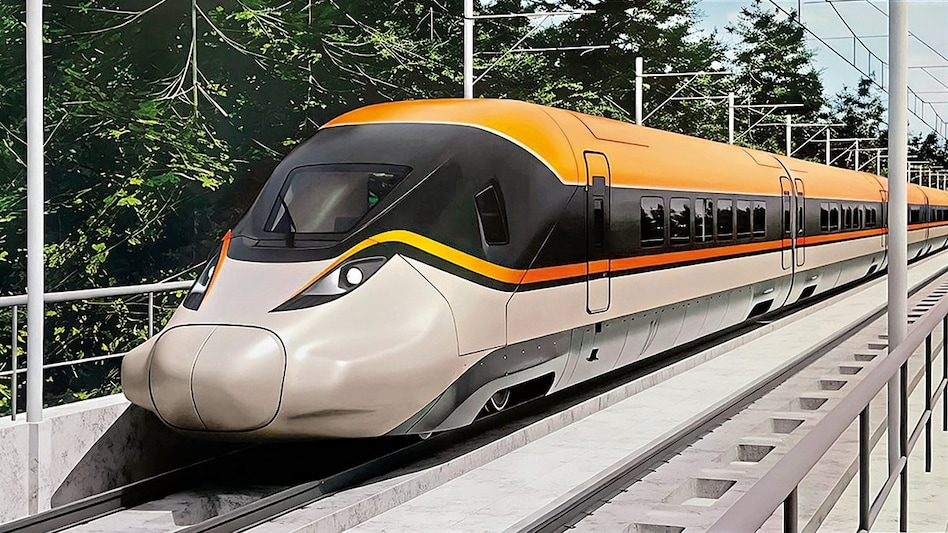
India opted to develop its own bullet train for the Mumbai-Ahmedabad High Speed Rail (MAHSR) corridor after Japan could not commit to supplying its next-generation E10 Shinkansen trains before 2034, a senior Railway Ministry official told The Indian Express.
The official's remarks came after Hideki Makihara, former Justice Minister and a member of Japan's ruling Liberal Democratic Party, criticised India's handling of the project and suggested that decisions taken by the Indian side had slowed its progress.
In a post on X on Friday, Makihara said India had shown "sheer recklessness" in the bullet train project. Referring to the signalling system, he wrote, "I feel 100% that the reason this has not moved forward is entirely on the Indian side. No result from Prime Minister Takaichi's visit either — 'India Shinkansen' failure: Japan excluded from the signal system, the key to safety."
Japan yet to provide offers for key systems
Responding to the criticism, the Railway Ministry official said Japan had not yet been able to provide offers for the E10 trains, the signalling system and the Operation Control Centre (OCC) because the train is still under development.
Don't Miss: From Hyderabad to Silicon Valley: Who is Uday Ruddarraju, the Indian-origin techie leading OpenAI’s compute push?
"The Japanese side has still not been able to share the offers for E10 trains, signalling system, and Operation Control Centre (OCC) systems because the train is still under design," the official said.
The 508-km Mumbai-Ahmedabad High Speed Rail project was originally planned with Japanese technology. Under the arrangement, Japan was expected to provide the Shinkansen trains, signalling system and OCC, while India would handle the civil construction work.
Why India changed its approach
According to the official, project studies and experiences from countries such as Taiwan and South Korea showed that the first section of the corridor could be commercially operational by August 2027. Waiting for the E10 trains until 2034 would have significantly delayed operations.
"The feasibility report and the experience of Taiwan and South Korea indicated that the first section of the project can be made commercially operational by August 2027. Since Japanese E10 would arrive in 2034, both sides decided that the project should be operated with Indian designed bullet trains and the open standard-based signalling system. We learnt that the real reason for Japanese suppliers not being able to share offers was the phasing out of the E5 series in Japan," the official said.
International signalling system to be used
The official added that India and Japan had also agreed on the use of an international signalling system for the project.
"Both sides also agreed that the Indian train should run on the open standards-based international signalling system, ETCS. This same system is being used, with variations, in Korea, Taiwan, China, and Europe. RRTS rapid rail is also designed with this system," the senior official said.
The Mumbai-Ahmedabad High Speed Rail project is India's first bullet train corridor and spans 508 km between the two cities.
India opted to develop its own bullet train for the Mumbai-Ahmedabad High Speed Rail (MAHSR) corridor after Japan could not commit to supplying its next-generation E10 Shinkansen trains before 2034, a senior Railway Ministry official told The Indian Express.
The official's remarks came after Hideki Makihara, former Justice Minister and a member of Japan's ruling Liberal Democratic Party, criticised India's handling of the project and suggested that decisions taken by the Indian side had slowed its progress.
In a post on X on Friday, Makihara said India had shown "sheer recklessness" in the bullet train project. Referring to the signalling system, he wrote, "I feel 100% that the reason this has not moved forward is entirely on the Indian side. No result from Prime Minister Takaichi's visit either — 'India Shinkansen' failure: Japan excluded from the signal system, the key to safety."
Japan yet to provide offers for key systems
Responding to the criticism, the Railway Ministry official said Japan had not yet been able to provide offers for the E10 trains, the signalling system and the Operation Control Centre (OCC) because the train is still under development.
Don't Miss: From Hyderabad to Silicon Valley: Who is Uday Ruddarraju, the Indian-origin techie leading OpenAI’s compute push?
"The Japanese side has still not been able to share the offers for E10 trains, signalling system, and Operation Control Centre (OCC) systems because the train is still under design," the official said.
The 508-km Mumbai-Ahmedabad High Speed Rail project was originally planned with Japanese technology. Under the arrangement, Japan was expected to provide the Shinkansen trains, signalling system and OCC, while India would handle the civil construction work.
Why India changed its approach
According to the official, project studies and experiences from countries such as Taiwan and South Korea showed that the first section of the corridor could be commercially operational by August 2027. Waiting for the E10 trains until 2034 would have significantly delayed operations.
"The feasibility report and the experience of Taiwan and South Korea indicated that the first section of the project can be made commercially operational by August 2027. Since Japanese E10 would arrive in 2034, both sides decided that the project should be operated with Indian designed bullet trains and the open standard-based signalling system. We learnt that the real reason for Japanese suppliers not being able to share offers was the phasing out of the E5 series in Japan," the official said.
International signalling system to be used
The official added that India and Japan had also agreed on the use of an international signalling system for the project.
"Both sides also agreed that the Indian train should run on the open standards-based international signalling system, ETCS. This same system is being used, with variations, in Korea, Taiwan, China, and Europe. RRTS rapid rail is also designed with this system," the senior official said.
The Mumbai-Ahmedabad High Speed Rail project is India's first bullet train corridor and spans 508 km between the two cities.